In the realm of industrial automation, consumer electronics, and smart systems, two fundamental sensing technologies play a pivotal role: proximity sensors and light sensors. While their names might suggest a simple function, their applications and underlying principles are diverse and sophisticated, driving efficiency, safety, and user interaction in countless devices we use daily.
Proximity sensors are designed to detect the presence or absence of an object within a specific range without any physical contact. This non-contact detection is their defining characteristic. They achieve this by emitting a field or beam of electromagnetic radiation, such as infrared light, ultrasonic waves, or an electromagnetic field, and then analyzing the reflected signal or changes in the field. Common types include inductive sensors (ideal for detecting metals), capacitive sensors (capable of detecting nearly any material, including liquids), ultrasonic sensors (using sound waves for longer ranges), and photoelectric sensors (using light beams). You encounter them when your smartphone screen turns off during a phone call, in automatic doors at supermarkets, in factory assembly lines to count objects, and in automotive systems for parking assistance.
Light sensors, or ambient light sensors, are specifically tuned to measure the intensity, presence, or color of light in their environment. Their core function is to quantify light levels. The most common type is the photoresistor (LDR), whose electrical resistance decreases with increasing light intensity. More advanced versions include photodiodes and phototransistors, which offer faster response times and greater precision. The most direct application is in the automatic brightness adjustment of smartphone, tablet, and laptop screens. This not only enhances user comfort but also significantly conserves battery power. Beyond consumer tech, they are integral to streetlights that turn on at dusk, digital camera exposure control, and scientific instrumentation.
The intersection of these technologies is fascinating. Many modern proximity sensors, particularly the photoelectric variety, inherently rely on light (often infrared) to function. Conversely, a system designed to measure light might need to ignore sudden, close-range interruptions—a problem solved by integrating proximity sensing logic. This synergy is evident in advanced driver-assistance systems (ADAS), where LiDAR (Light Detection and Ranging) uses pulsed laser light to measure distances to objects, combining precise light measurement with proximity mapping.
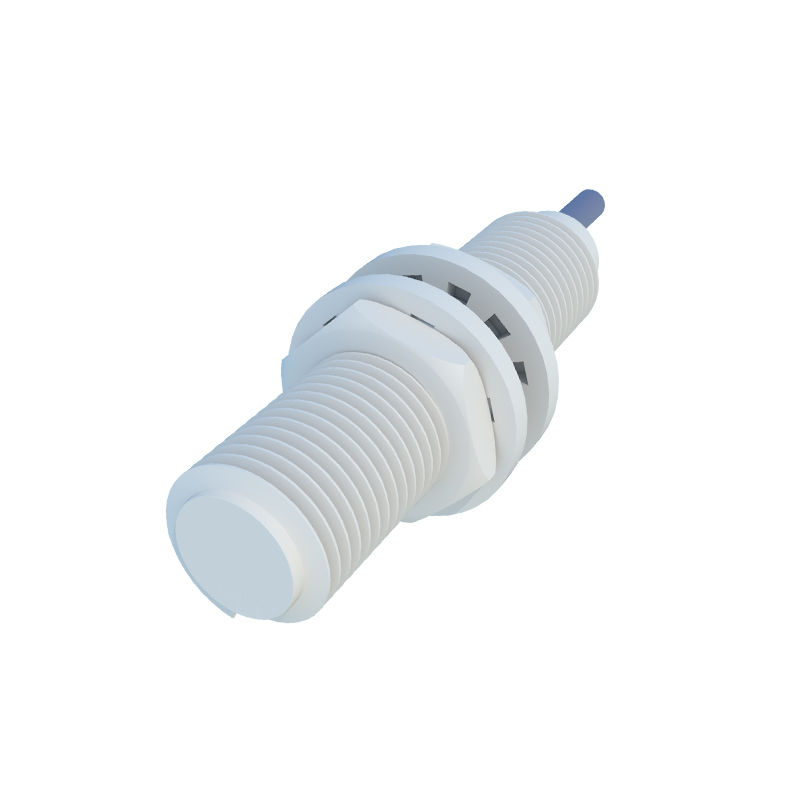
Choosing between or integrating these sensors depends on the application's core requirement. Is the goal to detect an object's presence regardless of lighting conditions? A capacitive or ultrasonic proximity sensor might be best. Is the goal to measure ambient light levels for energy savings or display optimization? A dedicated ambient light sensor is the clear choice. For complex tasks like gesture recognition in devices, a combination of specialized infrared proximity/light sensors and algorithms is employed.
The evolution of these sensors continues. They are becoming smaller, more energy-efficient, and smarter with integrated digital signal processing. Trends point towards greater integration into the Internet of Things (IoT), enabling environments that dynamically respond to both the presence of people and ambient light conditions for optimal comfort and energy management. In automotive sectors, they are critical for autonomous vehicle perception systems. In industrial settings, they enable more flexible and safer human-robot collaboration.
Understanding the distinct roles of proximity detection versus light measurement is crucial for engineers and designers. Proximity sensors answer the question "Is something there?" while light sensors answer "How bright is it here?" Together, they form the sensory foundation for a more automated, responsive, and intelligent world, translating physical phenomena into the digital signals that drive modern innovation. Their continued refinement will undoubtedly unlock new possibilities in automation, personal electronics, and smart infrastructure, making interactions with technology more seamless and environments more adaptive.