Proximity sensors are fundamental components in today's automated world, silently performing critical tasks across countless industries. Unlike traditional mechanical switches, these non-contact devices detect the presence or absence of an object within a specified range without any physical touch. Their operation is based on various principles, including electromagnetic fields, infrared light, and ultrasonic sound waves, making them versatile for diverse environments, from clean rooms to harsh industrial floors.
One of the most ubiquitous applications is in the smartphone industry. The small sensor near the earpiece detects when the phone is held to the user's face during a call. This triggers the screen to turn off, preventing accidental cheek-touches from hanging up or activating other functions, while also conserving battery life. Similarly, many modern laptops use proximity sensors to detect when a user is present, waking the device from sleep mode for a seamless experience and locking it when the user steps away for enhanced security.
In the realm of automotive engineering, proximity sensors are indispensable for safety and convenience. They form the backbone of parking assistance systems. Ultrasonic sensors embedded in the front and rear bumpers measure the distance to nearby obstacles, providing the driver with audible or visual cues to prevent collisions. Advanced systems even enable semi-autonomous parking. Furthermore, these sensors are crucial for emerging safety features like blind-spot detection and automatic emergency braking, where they continuously monitor the vehicle's surroundings.
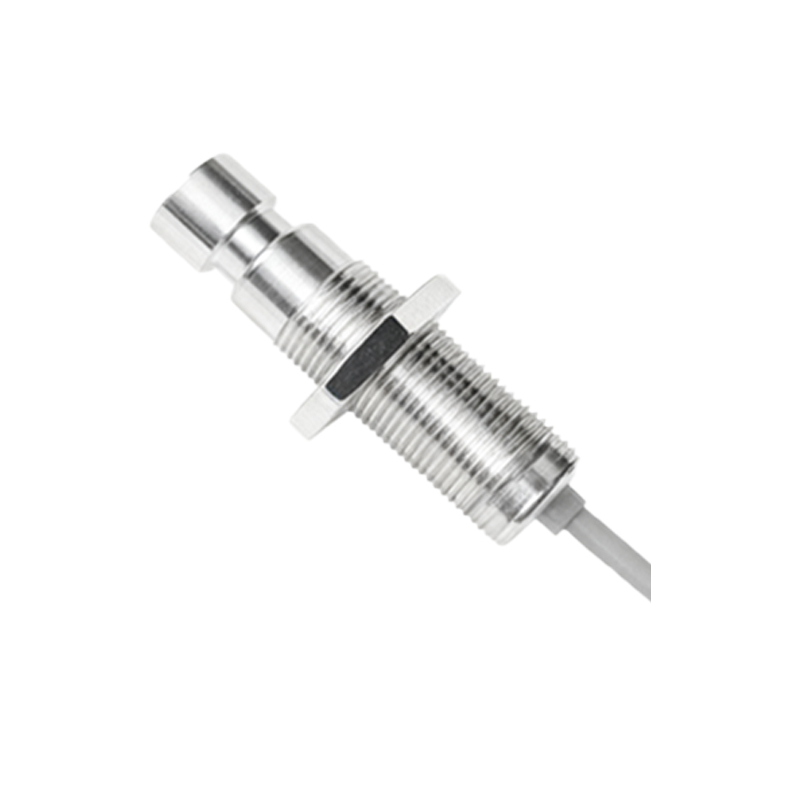
Industrial automation heavily relies on the precision and reliability of proximity sensors. On assembly lines, inductive sensors detect the position of metal parts, ensuring robotic arms place components accurately or counting items as they pass on a conveyor belt. Capacitive sensors can detect non-metallic materials like wood, plastic, or liquids, useful in packaging or fluid level monitoring. In hazardous areas, their non-contact nature allows for safe operation near high temperatures or corrosive materials where physical switches would fail.
The consumer electronics sector extends their use beyond phones. Interactive kiosks and digital signage often employ infrared proximity sensors to detect a user's approach, activating the display to engage the customer and save energy. In smart homes, sensors can turn on lights as a person enters a room or trigger security alarms when an unexpected presence is detected near a window or door. Even modern faucets and soap dispensers use infrared sensors for touch-free, hygienic operation.
Aviation and aerospace represent another critical field. Proximity sensors are used for landing gear status confirmation, ensuring the gears are fully extended or retracted. They monitor component positions within engines and control systems, providing vital data for flight computers. Their robustness is essential for functioning reliably under extreme vibration and temperature variations.
Looking ahead, the role of proximity sensors is set to expand with the growth of the Internet of Things (IoT) and robotics. In collaborative robotics (cobots), sensors create a safety perimeter, allowing robots to slow down or stop when a human worker gets too close. In smart agriculture, they can help in automated guidance systems for tractors or monitoring equipment positions. As technology advances, these sensors will continue to become smaller, more energy-efficient, and more intelligent, integrating further into the fabric of our daily lives and industrial processes, enabling smarter, safer, and more efficient interactions between machines and the physical world.