Forget the pristine lab data and marketing slicks. After twenty years of integrating optical sensors into everything from battlefield gear to mining rigs, I've learned that real-world performance is a brutal editor of theoretical specs. Let's cut straight to the hard-won, often unspoken truths about PixArt optical sensors and laser displacement sensors.
Experience Correction: The Myth of "Guaranteed" Precision
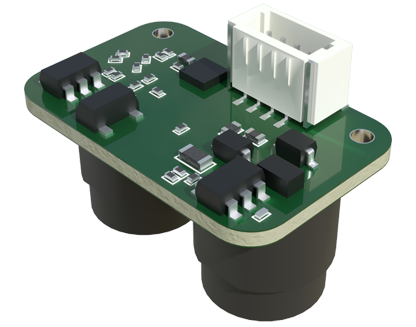
The datasheet for a high-DPI PixArt sensor promises flawless tracking. In theory, it's impeccable. In practice, install it on a vibrating industrial control panel, or a gaming mouse used on a slightly reflective surface, and that precision crumbles. The unstated variable is surface dependency. Optical sensors don't track "surfaces"; they track microscopic texture contrasts. A perfectly smooth, homogeneous surface—common in industrial or modern office settings—creates a signal dropout. The real spec to scrutinize isn't just DPI, but the minimum surface contrast ratio the sensor can resolve, a figure often buried. For laser sensors, the advertised micron-level accuracy assumes a perfectly opaque, matte target. Introduce a semi-transparent material like glass or clear plastic, and the laser beam partially penetrates and reflects from internal layers, giving a false reading that can be orders of magnitude off. The "accuracy" is conditional on material properties never listed in the standard application notes.
Boundary Conditions: Where These Technologies Fail
Knowing when *not* to use a technology is more valuable than knowing how to use it. PixArt-derived optical sensors are a poor choice for any application involving high-speed, consistent linear motion on predictable surfaces (e.g., conveyor belt encoding). Here, a simple optical encoder is more robust and cost-effective. The strength of these sensors is in handling chaotic, non-linear motion, but that's precisely where they are oversold. In environments with high ambient IR noise—such as under direct sunlight or near industrial heaters—the sensor's own IR LED can be drowned out, causing erratic behavior. Shrouding is not always a practical fix.
For laser triangulation sensors, the failure zones are stark. First, highly reflective or mirror-like surfaces: the laser spot scatters unpredictably, leading to signal saturation or loss. Second, varying target colors: a black surface absorbs more light than a white one, altering the received signal amplitude and introducing a systematic error often called "material dependency" that requires tedious per-material calibration. Third, rapidly changing environmental temperature: this shifts the internal baseline of the sensor's receiver array, causing drift. Using a laser sensor for outdoor structural monitoring without temperature compensation is a recipe for meaningless data. Finally, they are fundamentally unsuitable for measuring liquids or vapors; the beam refracts and scatters.
Counter-Intuitive Conclusion: Sometimes, a "Worse" Sensor is the Better Engine
This is the heresy that saves projects: a sensor with lower nominal resolution can deliver superior system-level performance. We obsessed over 20,000 DPI PixArt sensors for a high-speed sorting robot, only to face constant processing lag and noise. Switching to a 4000 DPI model with a superior, proprietary surface-adaptive algorithm resulted in *faster* and more reliable object tracking. The bottleneck wasn't raw data density but the system's ability to process clean, decisive positional changes. The higher-DPI sensor was generating noise that the MCU had to filter, adding latency. The lesson: sensor performance is a function of the entire signal chain, not an isolated spec.
Similarly, with laser sensors, a shorter measurement range often yields better stability. A 100mm-range sensor used at its 95mm limit operates with a shallow light-reception angle, making it vulnerable to target tilt. The same sensor used in its optimal 30-60mm range is far more robust. The industry's push for longer ranges as a premium feature can actually increase application risk. Furthermore, in dirty environments, a visible red laser is frequently superior to a Class 2 IR laser. While IR is "eye-safe" and less intrusive, the visible red dot allows operators to instantly verify beam location and diagnose occlusion by debris—an invaluable maintenance insight that IR invisibility sacrifices. The safety trade-off is often worth the operational transparency.
The core insight is this: sensor selection is not a game of maximizing specifications. It is an exercise in minimizing vulnerability to the specific chaos of your application's environment. The datasheet is the starting point for questions, not the answer.