Proximity sensors are integral components in countless modern devices and industrial systems, silently enabling automation, safety, and enhanced user interaction. At the heart of their operation lies a fundamental principle: the conversion of a detected physical presence or distance into a usable electrical signal. While the specific implementation varies by sensor type—inductive, capacitive, ultrasonic, or optical—the underlying concept can often be described by a core relationship or "formula" that governs their sensing capability.
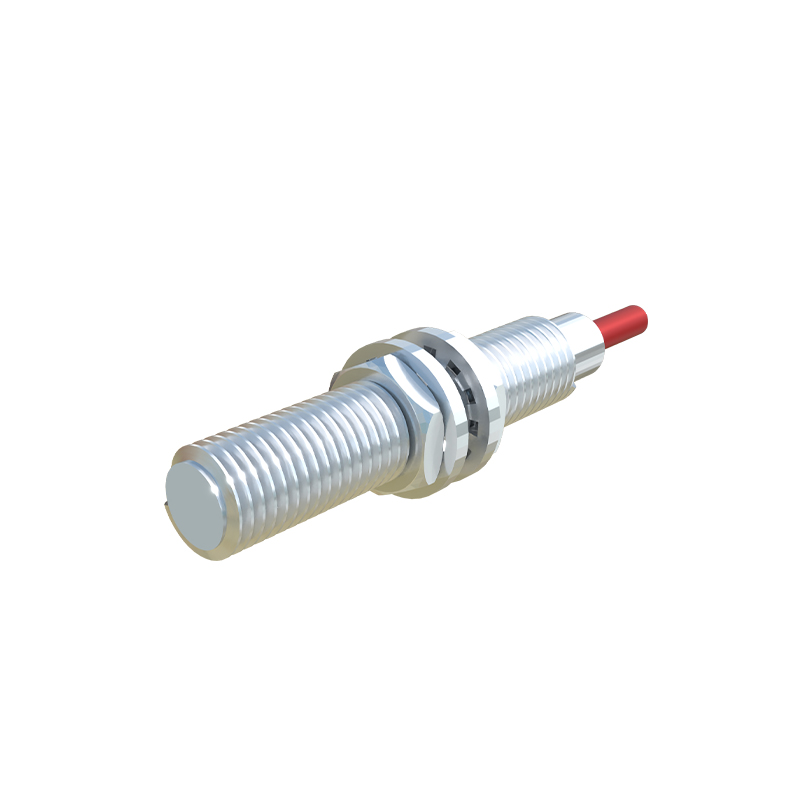
The term "proximity sensor formula" does not refer to a single, universal equation. Instead, it represents a set of physical principles and mathematical relationships that define the sensor's operational range, sensitivity, and output. For instance, in an inductive proximity sensor, which detects metallic objects, the key principle is electromagnetic induction. The sensor generates an oscillating electromagnetic field. When a metallic object enters this field, eddy currents are induced on the object's surface, which in turn load the sensor's oscillator circuit. The change in oscillation amplitude is detected and triggers a switch. The effective sensing distance (S) for a standard inductive sensor is largely predetermined by its design and coil geometry, but it can be influenced by the target material's properties, such as its conductivity and permeability.
Capacitive sensors, capable of detecting both metallic and non-metallic materials, operate on a different principle. They function by measuring changes in capacitance. The sensor and the target act as two plates of a capacitor. The capacitance (C) is approximately given by the formula C = ε₀εᵣA/d, where ε₀ is the permittivity of free space, εᵣ is the relative permittivity of the material between the "plates" (including air and the target), A is the effective area, and d is the distance to the target. As a target object approaches, the effective εᵣ and the geometry change, altering the capacitance. The sensor's electronics measure this change, and when it exceeds a set threshold, an output signal is activated. Therefore, the "formula" here is embedded in the sensor's calibration to respond to a specific rate of change in capacitance versus distance.
For ultrasonic sensors, the formula is more explicit and based on the time-of-flight principle. These sensors emit high-frequency sound pulses and measure the time taken for the echo to return. The distance (D) to the target is calculated using the simple formula: D = (v t) / 2, where 'v' is the speed of sound in the medium (approximately 343 m/s in air at 20°C) and 't' is the measured time interval between the emitted pulse and the received echo. The division by two accounts for the round trip of the sound wave. This formula is directly implemented in the sensor's microcontroller to provide precise distance measurements, making ultrasonic sensors ideal for level monitoring and obstacle detection.
Optical proximity sensors, often using infrared (IR) light, rely on the intensity of reflected light. A simple model for the received light intensity (I) can be inversely proportional to the square of the distance (d) to the target (I ∝ 1/d²), following the inverse-square law for light propagation, though this is heavily modified in practice by target reflectivity, emitter output, and receiver sensitivity. Modern versions use modulated light signals to filter out ambient light interference. The sensor's output is typically a digital switch or an analog signal proportional to the reflected intensity, calibrated for a specific sensing range.
Understanding these foundational formulas and principles is crucial for proper sensor selection and application. Key practical considerations include the sensor's nominal sensing distance, which is defined for a standard target under specified conditions. Hysteresis, a built-in difference between the switch-on and switch-off points, is essential to prevent output chatter when a target is at the borderline of the sensing range. Factors like temperature, supply voltage, and target material composition can all affect the real-world sensing performance, effectively acting as variables in the sensor's operational "equation."
In application, these formulas translate into real-world functionality. On a smartphone, a capacitive or optical proximity formula allows the screen to turn off during a call. In an automotive assembly line, an inductive sensor's reliable detection formula ensures a robot welds at the correct position. In a warehouse, ultrasonic sensors use their time-of-flight formula to manage inventory levels autonomously. The mastery of these underlying relationships enables engineers to design systems that are not only automated but also intelligent, safe, and efficient.