Forget the pristine lab curves and glossy marketing brochures. After two decades of deploying water-level laser sensors in mines, chemical plants, and coastal wastewater facilities, I can tell you the published spec sheet is the beginning of the conversation, not the end. The real value lies in the deviations, the failures, and the counterintuitive truths that only emerge under duress. Let's cut to the chase.
Experience Correction: The Reality of "Precision" in Hostile Environments.
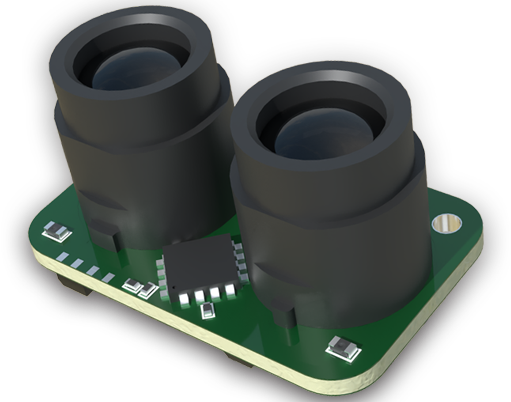
Manufacturers tout ±1mm accuracy. In a controlled environment, it's achievable. Now, introduce a 40°C ambient temperature swing in a desert reservoir or a steady vibration from adjacent pumping machinery. Your actual accuracy can degrade to ±5mm or worse, not due to sensor failure, but due to unaccounted-for thermal drift on the mounting bracket and atmospheric refraction changes. The laser path is stable; its entire support structure and the medium it travels through are not. A critical, often overlooked fix is to mandate an independent, mechanically isolated mounting pillar—decoupled from the tank or channel structure—and to implement real-time atmospheric compensation using a local P/T/RH sensor, not standard values. The beam doesn't lie, but its interpretation can.
Boundary Conditions: Where This Technology Will Fail You.
Laser sensors are not a universal solution. Deploying one in the following scenarios is a recipe for costly failure or dangerous misreading.
1. Condensing Steam or Heavy Aerosol Plumes: A laser beam will scatter intensely when passing through visible steam or dense mist (e.g., above a hot process tank or in a primary clarifier during rain). The return signal becomes noisy or drops out entirely. In these conditions, a non-optical technology like radar or guided wave radar is objectively superior.
2. Heavy, Rapid Surface Turbulence: Measuring a violently churning surface in a surge tank or below a waterfall is problematic. The beam reflects off wave peaks, giving a rapidly fluctuating reading. The "average" output is often meaningless. The solution isn't a better laser; it's relocating the measurement point to a stilling well or using a pressure transducer.
3. Applications Requiring Intrinsic Safety in Explosive Atmospheres: While many laser sensors have explosion-proof housings, the laser source itself is not inherently safe. In a Zone 0 environment (continuous explosive atmosphere), their use is often prohibited or requires extraordinarily costly and complex purging systems. Here, pneumatic or magnetic level gauges remain the default choice.
Counterintuitive Conclusion: A Dirty Lens Can Be More Accurate Than a "Clean" One.
The universal directive is to "keep the lens clean." However, in environments with constant, fine particulate dust (e.g., cement silos, coal handling), a perfectly clean lens is a transient state. Data shows that a thin, *uniform* layer of dust on the lens creates a predictable, stable signal attenuation. The system can be calibrated against this baseline, and readings remain consistent. The real enemy is not dust, but *differential* fouling—where one side of the lens is dirty, distorting the wavefront—or large droplets that cause erratic refraction. Therefore, the operational goal shifts from "prevent all fouling" (impossible) to "ensure fouling is uniform." This can mean installing a simple, passive dust shield that ensures even deposition, or scheduling lens inspections not based on time, but on signal stability metrics. Sometimes, the optimal calibration is performed with the sensor in its "typically dirty" operational state, not its pristine lab condition. This acceptance and management of controlled degradation is a hallmark of veteran-led installations.
The bottom line: The laser sensor is a powerful tool, but its efficacy is 90% defined by the harsh physics of its installation environment and the wisdom applied to its integration. Choose it not for its top-line specs, but for its performance within the narrow band of conditions it can truly master.