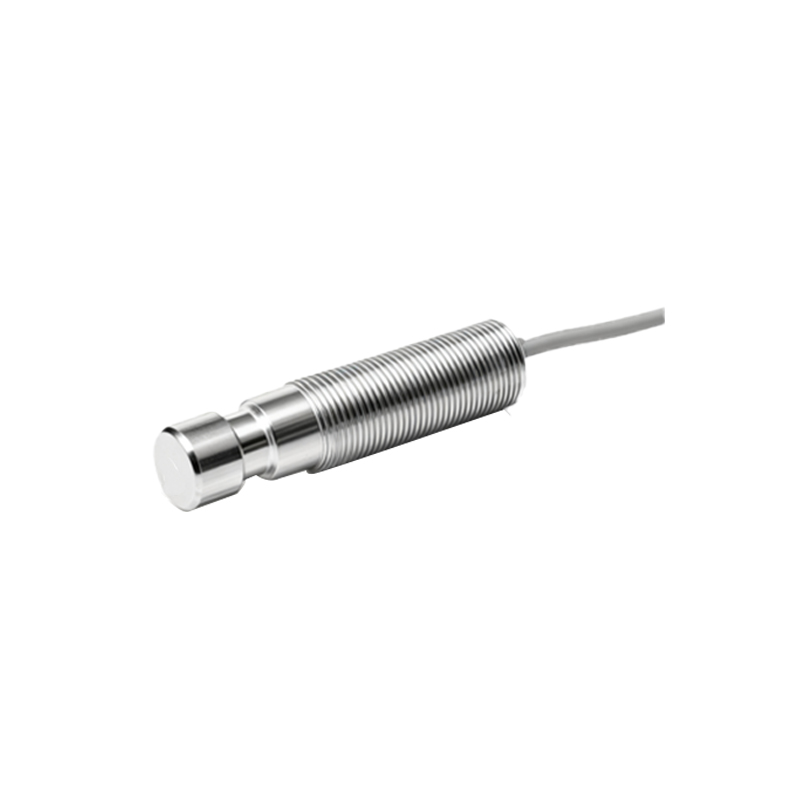
Forget the pristine data sheets. After twenty years of deploying proximity sensors in environments ranging from deep-sea ROVs to high-speed bottling lines, the glossy brochures often feel like works of fiction. Miniaturization isn't just about making things smaller; it's a fundamental re-engineering of compromises, and the trade-offs are rarely discussed in polite company. Let's cut to the chase.
Experience Correction: The Myth of "Equivalent Performance" in Miniature Form. The prevailing marketing claim is that a new micro-sensor offers "performance equivalent to its larger predecessor." This is a dangerous half-truth. While sensing distance and repeatability might match under lab conditions (23°C, 60% RH, static target), the reality diverges sharply in the field. Take the ubiquitous 8mm cylindrical inductive sensor. A miniaturized M8 version might spec the same 2mm sensing distance. However, in a high-vibration milling application, the reduced mass of the sensor's internal ferrite core makes it significantly more susceptible to micro-resonances, causing signal jitter that can lead to false triggers. We've measured repeatability errors ballooning from a claimed ±0.02mm to over ±0.1mm at frequencies above 200Hz. The smaller housing also has less thermal mass. In a foundry ambient of 80°C, a standard sensor's internal coil might reach 105°C. The same coil in a miniature housing, with less metal to dissipate heat, can soar past 120°C, accelerating insulation breakdown and cutting MTBF by 40-60%. The parameter they don't publish? Thermal derating curves for dynamic versus static operation.
Boundary Conditions: Where the Miniature Fails Catastrophically. Deploying micro-sensors requires ruthless scene selection. They are not simply "drop-in replacements."
1. High-Impact Particulate Environments: Miniature capacitive or ultrasonic sensors for level detection in powdered materials (flour, toner) are a ticking time bomb. Their smaller sensing face area clogs faster, and the reduced internal volume means even minor coating drastically attenuates the signal. A 5mm sensor face might require cleaning every 4 hours versus 24 hours for a 12mm sensor in the same silo. The failure mode isn't gradual; it's a binary "no reading" the moment a cohesive layer forms.
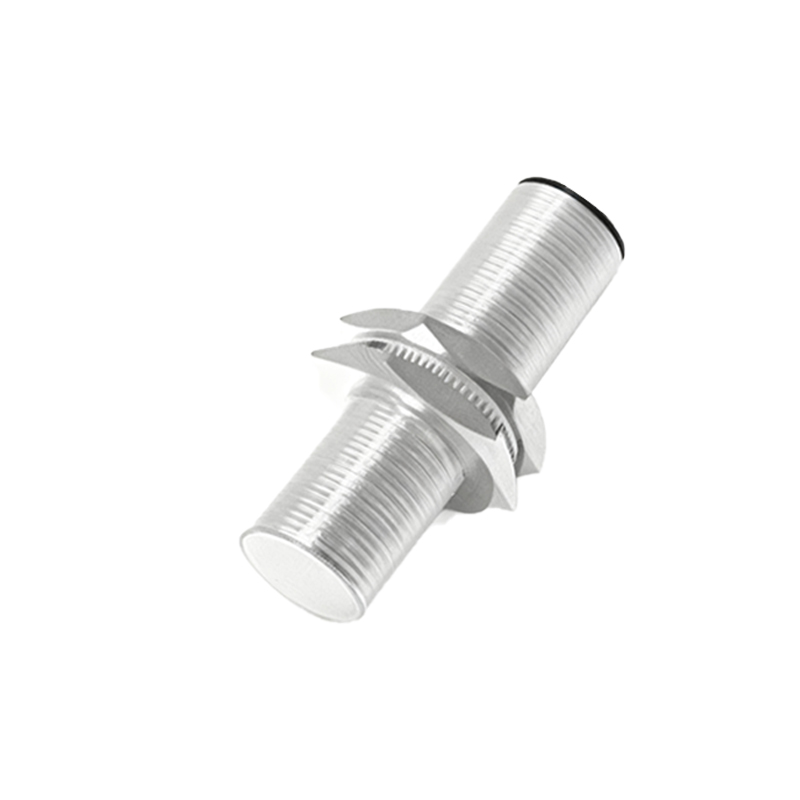
2. Electromagnetically "Dirty" Enclosures: The push for smaller PLCs and drives means control panels are denser. A miniature sensor's cable, often with thinner shielding, run in a shared conduit with VFD cables, becomes a perfect antenna. We've seen induced noise voltages exceeding 8V AC on 24V DC lines, causing erratic behavior. The solution isn't a better sensor; it's physical separation. If you can't maintain a 15cm gap from power lines, use a larger, better-shielded sensor or a remote amplifier.
3. Any Application Involving Mechanical Stress or Leverage: The M5 threaded body is a liability if the sensor is used as a mechanical limit stop, even occasionally. The shear strength of the stainless steel housing is often less than 50 N·m. A misaligned actuator arm brushing against it can snap the sensor clean off. This isn't a sensor; it's a precision electronic component. Treat it as such.
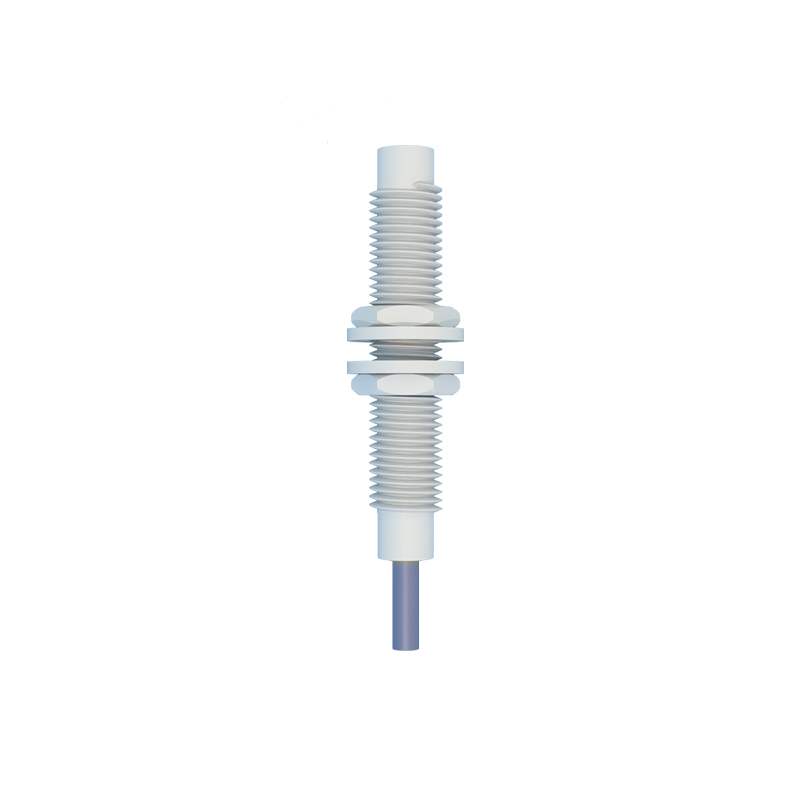
Counterintuitive Conclusion: Sometimes, a Smaller Sensor Demands a Larger, More Expensive System. The most perverse insight is that miniaturization can increase total system cost and complexity. A client insisted on M8 inductive sensors for a robotic gripper to save space. The sensors worked until the gripper moved at full speed, inducing eddy currents in the aluminum arm itself—a non-issue with larger sensors mounted farther away. The fix? We had to specify and install a dedicated, high-frequency (1kHz+) carrier version with differential output and a specialized signal conditioner to filter the self-induced noise. The sensor unit cost tripled, and the supporting electronics added $200 per station. The "space-saving" miniaturization led to a bulkier control cabinet. In another case, the reduced sensing field of a miniature laser triangulation sensor failed to average surface roughness on a cold-rolled steel strip, giving noisy thickness readings. We had to integrate a secondary averaging filter in the PLC, increasing scan time and engineering hours. The lesson: The cost of a sensor is not its unit price; it's the total cost of achieving reliable data in your specific environment. Miniaturization often shifts cost from hardware to engineering and infrastructure.
The allure of tiny sensors is undeniable for modern, dense machinery. But victory lies not in adopting the smallest spec, but in strategically