In the realm of industrial automation, robotics, and consumer electronics, the ability to detect the presence, position, or motion of an object without physical contact is paramount. Two fundamental technologies enabling this are Hall Effect sensors and proximity sensors. While they share the common goal of non-contact detection, their underlying principles, capabilities, and ideal applications differ significantly. Understanding these differences is crucial for selecting the right sensor for a specific task.
The Hall Effect Sensor: Sensing Magnetic Fields
The operation of a Hall Effect sensor is rooted in a fundamental physics phenomenon discovered by Edwin Hall in 1879. The principle states that when a current-carrying conductor or semiconductor is placed perpendicular to a magnetic field, a voltage difference, known as the Hall voltage, is generated across the material. This voltage is proportional to the strength of the magnetic field.
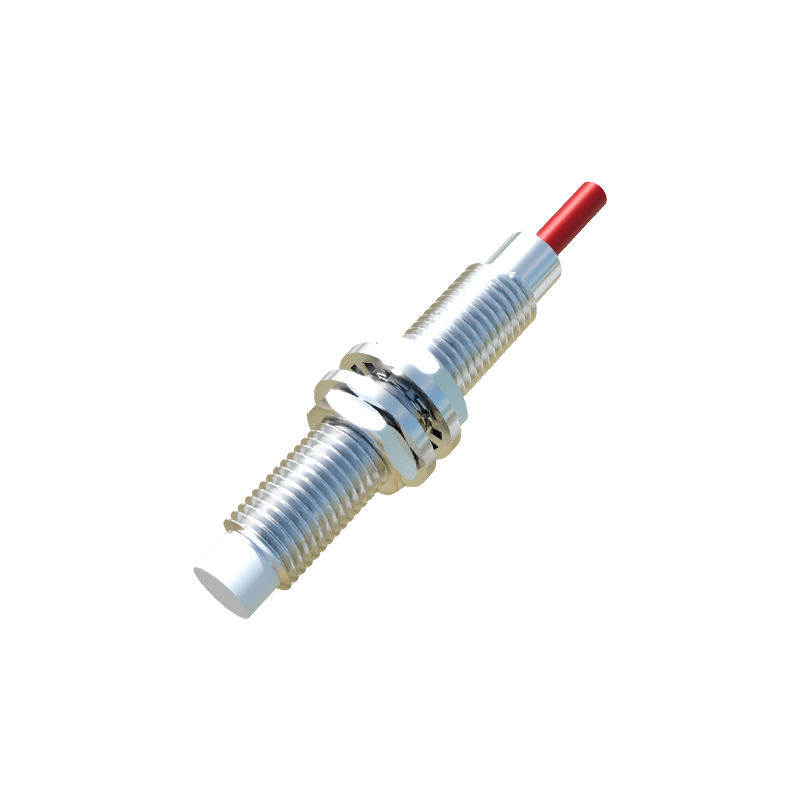
A modern Hall Effect sensor integrates this sensing element with signal conditioning circuitry (like amplifiers and Schmitt triggers) into a single package. When the magnetic flux density at the sensor exceeds a predefined threshold, the device's output switches states. There are two primary types: linear Hall sensors, which provide a continuous voltage output proportional to the magnetic field strength, and digital (or switch) Hall sensors, which provide a simple on/off output.
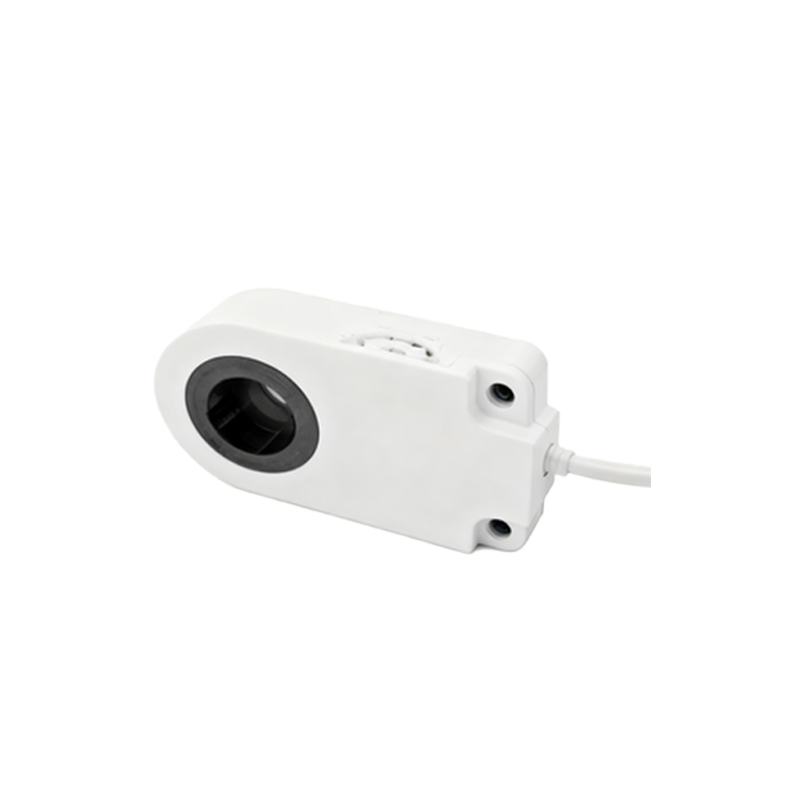
The key characteristic of a Hall Effect sensor is that it responds directly to a magnetic field. This makes it exceptionally reliable for applications involving rotational or linear position sensing of ferromagnetic or magnetized objects. Common examples include:
Speed Sensing: Measuring the RPM of a wheel or gear by detecting passing teeth equipped with magnets.
Position Sensing: Determining the angular position of a brushless DC (BLDC) motor's rotor for precise commutation.
Current Sensing: Measuring AC or DC current by detecting the magnetic field generated around a current-carrying conductor.
Limit Switches: Used as non-contact end-of-travel switches in linear actuators.
Hall sensors are known for their solid-state reliability, high operational speed, and immunity to environmental contaminants like dust, oil, or moisture. However, they require a magnetic field source (a permanent magnet or an electromagnet) to function.
The Proximity Sensor: A Broader Category
"Proximity sensor" is a broader term encompassing various technologies that detect the presence of a nearby object within a specified range without physical contact. The detection mechanism depends on the sensor type, with the most common being inductive, capacitive, and photoelectric.
1. Inductive Proximity Sensors: These sensors generate an oscillating electromagnetic field from a coil. When a metallic object (typically ferrous metals like iron and steel) enters this field, it induces eddy currents within the object, which dampens the oscillation. The sensor detects this change and triggers its output. They are robust, wear-free, and ideal for harsh industrial environments but only detect metals.
2. Capacitive Proximity Sensors: These sensors can detect both metallic and non-metallic objects (plastics, wood, liquids, granules) by measuring changes in capacitance. The sensor forms one plate of a capacitor, and the target object forms the other (or alters the dielectric constant). They are versatile but can be influenced by environmental factors like humidity.
3. Photoelectric Sensors: These use a light emitter (usually LED) and a receiver. They detect an object by either interrupting a light beam (through-beam), reflecting light off the object (retro-reflective), or detecting the reflection from the object itself (diffuse). They offer long sensing ranges and can detect virtually any material but may be affected by ambient light or transparent/reflective surfaces.
Proximity sensors are the workhorses of factory automation. Typical applications include object detection on conveyor belts, liquid level sensing, part counting, and machine safety interlocks.
Choosing Between Hall Effect and Proximity Sensors
The choice is primarily driven by the nature of the target and the required information.
Choose a Hall Effect sensor when the application involves precise detection of a magnetic field, such as measuring rotational speed, angular position, or current. It is the definitive choice when the parameter to be sensed is inherently magnetic or can be made so with a magnet.
Choose an inductive proximity sensor for simple, robust detection of metallic objects in dirty environments.
Choose a capacitive or photoelectric proximity sensor when the target is non-metallic or when longer detection ranges are needed.
In summary, while all these devices provide non-contact sensing, a Hall Effect sensor is a specialized device for magnetic field detection, often used for precise motion control. A proximity sensor is a general-purpose presence detector, with its subtype (inductive, capacitive, photoelectric) defining what material it can sense. By aligning the sensor's core