In the world of automation and smart technology, the ability to detect the presence or absence of an object without physical contact is fundamental. This capability is provided by proximity sensors, devices that have become ubiquitous in industrial, consumer, and automotive applications. Their core function is to sense when an object enters a specific detection field, triggering a corresponding electronic signal. This non-contact operation eliminates mechanical wear and tear, enhances reliability, and allows for high-speed detection that physical switches cannot match.
Proximity sensors operate on several different physical principles, each suited to specific materials and environments. The most common types include inductive, capacitive, and photoelectric sensors. Inductive proximity sensors are the workhorses of metal detection. They generate an electromagnetic field. When a metallic object enters this field, it induces eddy currents within the metal, which in turn causes a change in the sensor's own oscillation amplitude. This change is detected by the sensor's circuitry, signaling the presence of the object. These sensors are exceptionally robust, ideal for harsh industrial environments involving machinery, and they are unaffected by non-metallic substances like dust or oil mist.
Capacitive proximity sensors, on the other hand, can detect both metallic and non-metallic materials, including liquids, plastics, wood, and granular substances. They function by generating an electrostatic field. Any object that enters this field alters the capacitance of the sensor's circuit. This change is measured, and when it exceeds a preset threshold, the sensor switches its output state. This makes capacitive sensors perfect for applications like liquid level detection in tanks, material handling of powders or grains, and even as touch-sensitive interfaces.
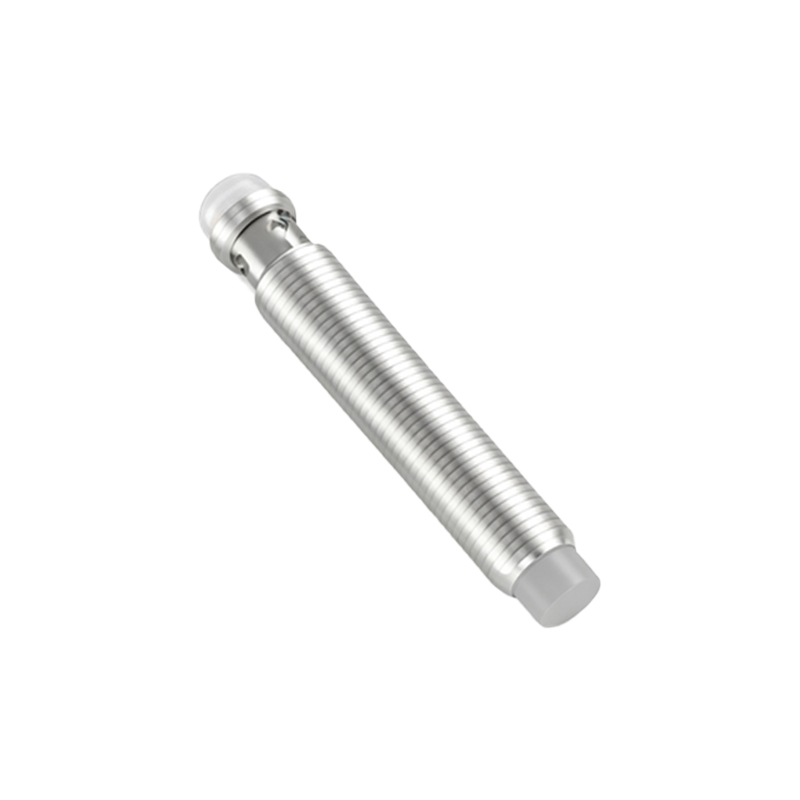
Photoelectric sensors use light to detect objects. They consist of a light emitter (usually an LED) and a receiver. There are three main configurations: through-beam, retro-reflective, and diffuse. Through-beam sensors have separate emitter and receiver units; an object is detected when it breaks the light beam. This offers the longest sensing range and high accuracy. Retro-reflective sensors house the emitter and receiver together, using a reflector to bounce the light back; detection occurs when the beam is interrupted. Diffuse sensors, or proximity-mode sensors, also have co-located emitter and receiver, but they detect light reflected directly off the target object itself. Photoelectric sensors are highly versatile for detecting objects of various colors and materials at greater distances.
The selection of the right proximity sensor depends on a careful analysis of the application requirements. Key factors include the target material (metal, plastic, liquid), the required sensing distance, the operating environment (temperature, presence of contaminants, washdown needs), the required output type (digital NPN/PNP, analog), and the response speed. For instance, an inductive sensor is the clear choice for counting metal gears on a high-speed assembly line, while a capacitive sensor is necessary for monitoring the fill level of a plastic bottle containing shampoo. Environmental robustness, indicated by Ingress Protection (IP) ratings, is critical for sensors exposed to moisture, dust, or cleaning chemicals.
Applications are vast and growing. In manufacturing, they are used for position verification, counting, jam detection, and robotic guidance. In automotive assembly, they ensure parts are correctly positioned before a weld or rivet is applied. In consumer electronics, they deactivate touchscreens when a phone is held to the ear. In the realm of smart buildings, they control lighting and faucets for energy savings. Modern advancements are leading to sensors with integrated IO-Link communication, providing not just a simple on/off signal but detailed diagnostic data like temperature, operating hours, and signal strength, enabling predictive maintenance and smarter factory systems.
Ultimately, proximity sensors are silent enablers of efficiency, safety, and automation. Their non-contact nature provides a significant advantage in longevity and precision over mechanical limit switches. By understanding the distinct technologies—inductive for metals, capacitive for nearly any material, and photoelectric for long-range or precise detection—engineers and designers can effectively integrate these critical components. The ongoing trend towards miniaturization, enhanced intelligence, and network connectivity ensures that proximity sensors will continue to be pivotal in the evolution of the Internet of Things (IoT) and Industry 4.0, making machines more perceptive and responsive than ever before.