Proximity sensors are widely used in industrial automation, consumer electronics, and safety systems to detect the presence or absence of objects without physical contact. These devices operate based on various physical principles, each suited to specific applications and environmental conditions. Understanding how proximity sensors work requires exploring their underlying technologies, which primarily include inductive, capacitive, ultrasonic, and optical methods.
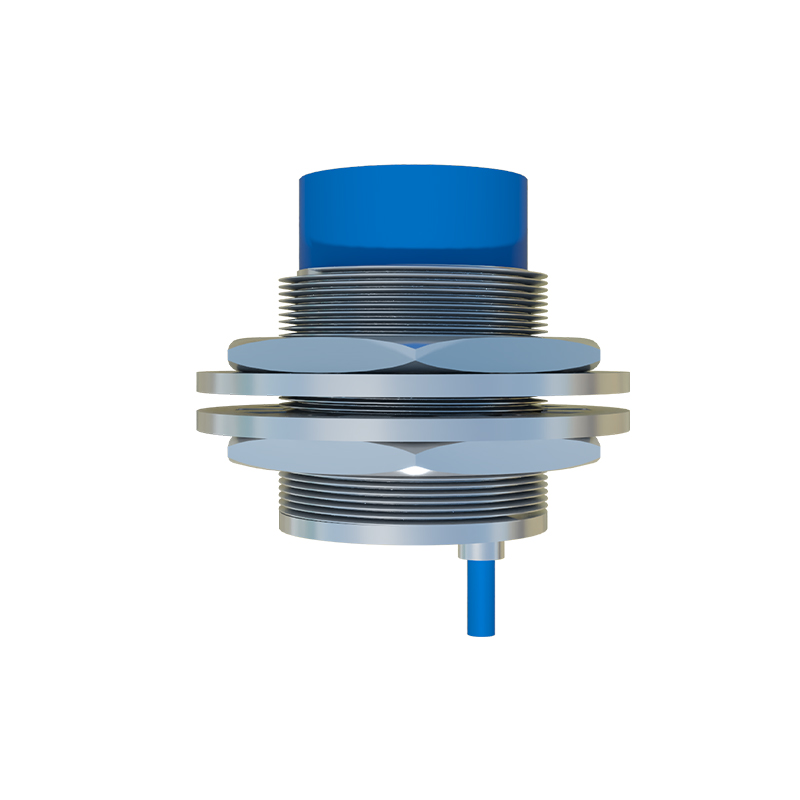
Inductive proximity sensors are commonly employed for detecting metallic objects. They consist of a coil wound around a ferrite core, an oscillator, a signal conditioner, and an output circuit. When an alternating current passes through the coil, it generates an electromagnetic field around the sensor head. If a metallic object enters this field, eddy currents are induced on the object's surface, causing a change in the oscillation amplitude. The sensor's circuitry detects this change and triggers an output signal, such as switching a relay or sending a digital signal to a controller. These sensors are ideal for harsh industrial environments due to their robustness and immunity to non-metallic interference.
Capacitive proximity sensors can detect both metallic and non-metallic materials, including liquids, plastics, and wood. They operate by measuring changes in capacitance between the sensor electrode and the target object. The sensor generates an electrostatic field from its sensing face. When an object enters this field, it alters the dielectric constant, leading to a capacitance change. This change is processed by internal electronics to produce an output. Capacitive sensors are often used in level detection, material handling, and touch-sensitive interfaces, offering versatility but requiring careful calibration to avoid false triggers from environmental factors like humidity.
Ultrasonic proximity sensors use sound waves beyond the human hearing range (typically 20 kHz to 200 kHz) to detect objects. They emit ultrasonic pulses from a transducer and measure the time taken for the echo to return after reflecting off a target. By calculating the time-of-flight, the sensor determines the distance to the object. These sensors are effective for detecting transparent, shiny, or irregularly shaped items that might challenge optical methods. Common applications include parking assistance systems, liquid level monitoring, and conveyor belt automation. However, they can be affected by temperature variations or acoustic interference.
Optical proximity sensors, including infrared (IR) and laser types, rely on light beams to sense objects. They consist of a light emitter (usually an LED or laser diode) and a photodetector. In a through-beam configuration, the emitter and detector are placed opposite each other; an object is detected when it interrupts the light beam. In a reflective setup, the emitter and detector are housed together, and detection occurs when light reflects off the target back to the sensor. Diffuse reflective sensors use the target itself as the reflector. Optical sensors offer high precision and fast response, making them suitable for packaging, robotics, and mobile devices (e.g., screen dimming during calls). They may struggle in dusty or foggy conditions.
Each type of proximity sensor has distinct advantages and limitations. Inductive sensors excel with metals but ignore other materials. Capacitive sensors are more versatile but sensitive to environmental changes. Ultrasonic sensors handle diverse surfaces but require stable conditions. Optical sensors provide accuracy but can be hindered by obstructions. Selection depends on factors like target material, sensing range, response time, and operating environment.
In practice, proximity sensors integrate with control systems to enable automation, enhance safety, and improve efficiency. For instance, in manufacturing, they position parts on assembly lines; in vehicles, they assist with collision avoidance. Regular maintenance, such as cleaning sensing surfaces and checking calibration, ensures reliable operation. As technology advances, smart sensors with embedded diagnostics and IoT connectivity are emerging, offering real-time data and predictive capabilities.
Overall, proximity sensors function by converting physical interactions—whether electromagnetic, capacitive, acoustic, or optical—into electrical signals. Their non-contact nature minimizes wear and tear, extending lifespan and reducing maintenance costs. By choosing the appropriate technology, engineers can optimize performance for specific tasks, driving innovation across industries from automotive to healthcare.