In the realm of industrial automation and smart systems, proximity sensor communication forms the critical link between detection and action. A proximity sensor, by definition, is a non-contact device that detects the presence or absence of an object within its sensing range. However, its true utility is unlocked only when the detected information is reliably transmitted to a control system, such as a Programmable Logic Controller (PLC), a robot controller, or a central computer. This transmission process, governed by specific principles and protocols, is what constitutes proximity sensor communication.
The fundamental principle behind this communication is the conversion of a physical detection event into an electrical signal that can be interpreted by downstream systems. Most industrial proximity sensors, whether inductive, capacitive, or photoelectric, output a simple discrete signal. This is often a change in voltage state, typically switching between 0V (or a low voltage like 5V) and a higher voltage (like 24V DC, a common industrial standard) to represent "object absent" and "object present." This binary communication is direct, fast, and highly reliable for basic presence detection tasks. The sensor is wired directly to the input module of a controller, forming a point-to-point communication link. This method remains the backbone of countless machine control applications due to its simplicity and robustness.
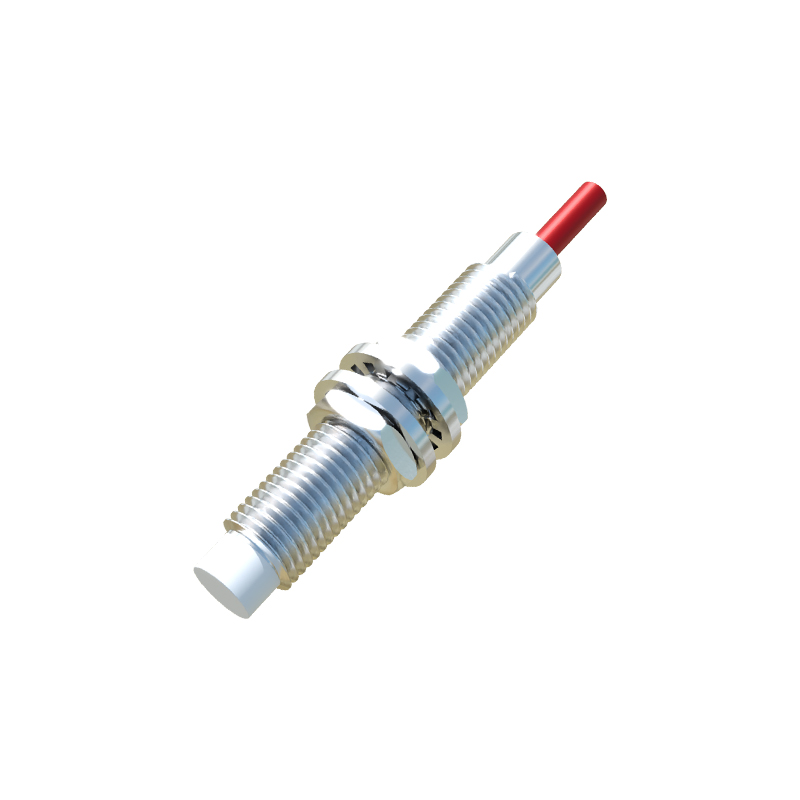
As systems grew more complex, the need for more data from sensors increased. This led to the development of sensors with analog communication outputs. Instead of a simple on/off signal, an analog proximity sensor outputs a continuously variable voltage or current signal (e.g., 0-10V or 4-20mA) that is proportional to the distance to the target. This allows for precise position monitoring, not just detection. The communication of this analog value requires a compatible analog input module on the controller. While providing richer data, analog signals are more susceptible to electrical noise over long cable runs, which can degrade signal integrity.
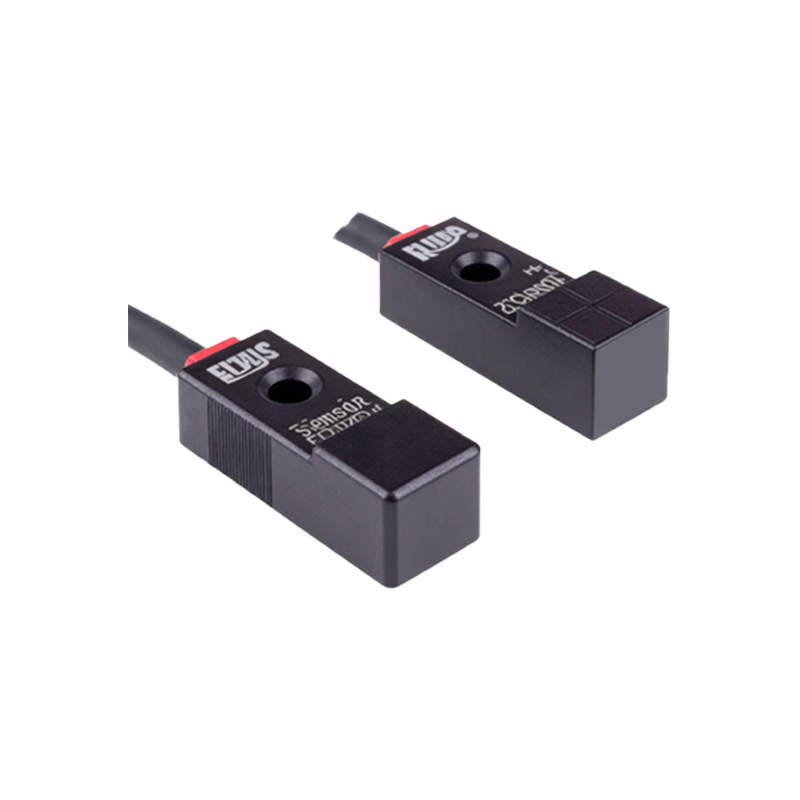
The demand for diagnostics, parameter configuration, and networking in large installations drove the next evolution: digital bus communication. Here, proximity sensors are equipped with microprocessors and communication chips, allowing them to transmit data packets over a shared network cable. This represents a paradigm shift from simple signal transmission to true data communication. Prominent industrial networking protocols are now commonly integrated into "smart" proximity sensors. PROFINET and EtherNet/IP are leading Ethernet-based protocols that enable high-speed, deterministic communication, allowing sensors to send not only switch status but also diagnostic information (like operating temperature, signal strength, or contamination warnings) and receive parameter sets from the controller. IO-Link has become a particularly significant standard for point-to-point sensor communication. It is a serial protocol that operates over standard 3-wire sensor cables, providing a digital pipeline for extensive data exchange. Through IO-Link, a controller can read the sensor's identification, status, process data (both discrete and analog values), and write parameters to tailor its operation—all without physically touching the sensor.
The choice of communication method has profound implications for system design and capability. Discrete I/O wiring is cost-effective for simple applications but becomes cumbersome and expensive in systems with hundreds of sensors. Digital bus systems reduce wiring costs, cabinet space, and commissioning time. More importantly, they enable predictive maintenance. A sensor communicating an internal temperature rise or a gradually decreasing signal margin allows maintenance to be scheduled before a failure causes downtime. This transition from reactive to proactive maintenance is a key benefit of advanced sensor communication.
In practical applications, these communication methods are ubiquitous. On an automotive assembly line, inductive proximity sensors with discrete outputs communicate the position of a chassis to a PLC, which then triggers welding robots. In a food packaging plant, capacitive sensors with analog outputs communicate the precise level of liquid in a tank via a 4-20mA loop to a supervisory system. In a complex material handling system, dozens of photoelectric sensors with PROFINET interfaces communicate their status and health over a single Ethernet cable to a central controller, enabling real-time tracking and efficient sorting of packages.
Implementing a robust communication system requires careful consideration. For discrete and analog signals, proper shielding, cable routing away from noise sources, and correct grounding are essential. For network-based sensors, attention must be paid to network topology, switch selection, and IP address management. Protocol choice is often dictated by the existing control system architecture within a facility.
In conclusion, proximity sensor communication is far more than just turning a switch. It is a sophisticated layer of technology that determines the intelligence, flexibility, and reliability of an automated system. From the basic discrete signal to the rich data streams of industrial Ethernet and IO-Link, the evolution of communication protocols has transformed the humble proximity sensor from a simple detector into a smart, networked node in the Industrial Internet of Things (IIoT). Understanding these communication fundamentals is essential for designing efficient, maintainable, and future-ready automation solutions.