In the intricate dance of modern machinery and smart devices, countless components work in silent harmony. Among these, one category of devices operates with such subtlety that its presence often goes unnoticed by the end-user, yet its function is absolutely critical. These are proximity sensors, the silent sentinels that detect the presence or absence of nearby objects without any physical contact.
At its core, a proximity sensor is a device that can detect the presence of a nearby object within its defined field. It achieves this through various non-contact methods, emitting a field or a beam of electromagnetic radiation, often infrared light, an inductive electromagnetic field, or ultrasonic sound waves. The sensor then looks for changes or returns in that signal. The key principle is the absence of physical contact, which makes these sensors incredibly reliable, durable, and suitable for environments where contamination, wear, or precise positioning is a concern.
The technology behind these sensors is diverse, leading to several distinct types, each with its own strengths and ideal applications. Inductive proximity sensors are the workhorses of industrial automation. They generate an oscillating electromagnetic field and detect the eddy current losses caused when a metallic object enters this field. Robust and incredibly reliable, they are ubiquitous on factory floors, counting parts on a conveyor belt, confirming the position of a robotic arm, or ensuring a machine door is safely closed.
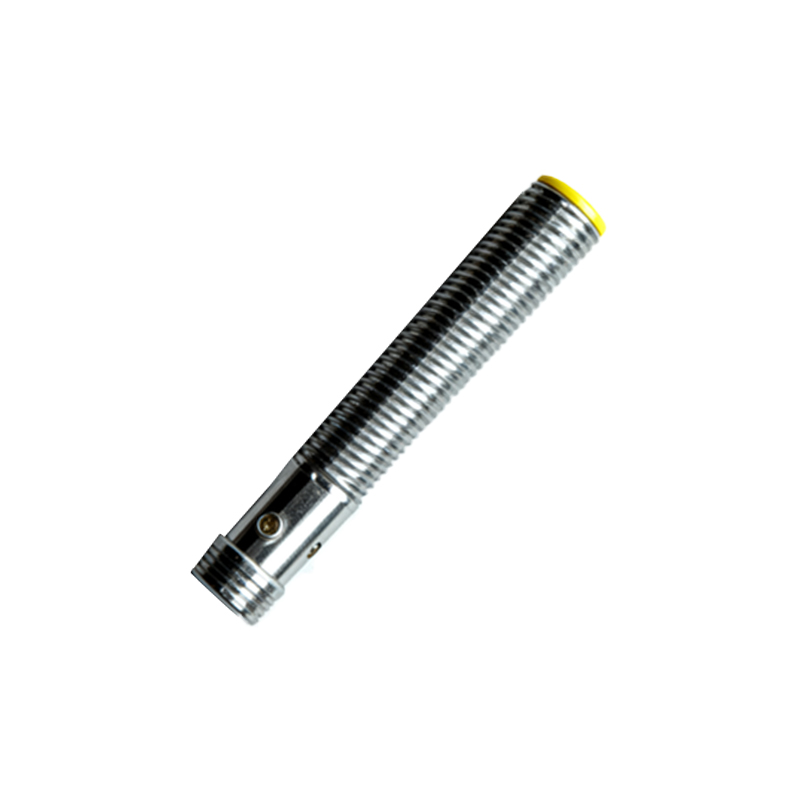
Capacitive proximity sensors, on the other hand, can detect both metallic and non-metallic objects—liquids, plastics, wood, and even granular materials. They function by measuring changes in capacitance between the sensor and the detected object. This makes them perfect for level sensing in tanks, detecting filled bottles on a production line, or serving as touch-sensitive switches.
For longer-range detection and versatility with different surface properties, photoelectric sensors are frequently employed. These use a light emitter (usually LED) and a receiver. An object is detected when it interrupts (breaks) the light beam or reflects it back to the receiver. You'll find these in automated doors, packaging machinery, and safety systems to prevent operator access to dangerous areas.
Ultrasonic sensors measure the time it takes for a sound wave to bounce back from an object, excelling in distance measurement and level sensing for challenging materials like transparent liquids or irregularly shaped objects. Finally, magnetic proximity sensors, often simple reed switches or Hall-effect sensors, detect the presence of a permanent magnet, commonly used for door/window security alarms and simple position verification.
The applications of proximity sensing are vast and deeply integrated into daily life and industry. In your smartphone, a miniature proximity sensor turns off the touchscreen display when you hold the phone to your ear during a call, saving power and preventing accidental cheek-dials. In automotive systems, they are the backbone of parking assist systems, providing the audible warnings as you reverse close to an obstacle. Advanced driver-assistance systems (ADAS) rely on arrays of these sensors for blind-spot monitoring and collision avoidance.
Industrial automation is perhaps the domain most transformed by these devices. They enable precise, high-speed counting, positioning, and inspection. A bottling plant uses them to ensure each bottle is correctly filled and capped. Robotic assembly arms use them to know exactly where a component is before picking it up. They form the critical layer of machine safety, creating invisible "curtains" or zones that, when breached, immediately halt dangerous equipment to protect workers.
Looking forward, the evolution of proximity sensing is intertwined with the growth of the Internet of Things (IoT) and smarter automation. Sensors are becoming smaller, more energy-efficient, and smarter, with embedded diagnostics and digital communication protocols like IO-Link. This allows for not just detection, but also condition monitoring and predictive maintenance—the sensor can report its health or warn of a weakening signal before a failure occurs. Furthermore, sensor fusion, combining data from proximity, vision, and inertial sensors, is creating more perceptive and context-aware systems for robotics and autonomous vehicles.
From the simplest automatic faucet in a public restroom to the most complex robotic cell in an automotive factory, proximity sensors are fundamental enabling technology. They provide the essential sense of "touch-at-a-distance" that allows machines to interact intelligently and safely with the physical world. Their continued development promises to make our machines more responsive, our industries more efficient, and our daily interactions with technology more seamless and intuitive. They truly are the invisible guardians, constantly sensing, enabling, and protecting.