In the realm of sensing technology, Proximity Hall Effect Sensors stand out for their non-contact, reliable, and durable operation. These devices detect the presence or absence of a magnetic field, translating it into an electrical signal to determine the proximity of a ferromagnetic object, typically a permanent magnet. Unlike mechanical switches, they have no moving parts to wear out, making them ideal for harsh environments and applications demanding long-term reliability.
The core principle is the Hall Effect, discovered by Edwin Hall in 1879. When a current-carrying conductor or semiconductor is placed in a perpendicular magnetic field, a voltage difference, known as the Hall voltage, is generated across it. A proximity Hall sensor integrates this Hall element with signal conditioning circuitry. When a magnet approaches the sensor's active area, the magnetic flux density increases, causing a measurable change in the Hall voltage. This change is processed internally to provide a clean, digital on/off output (in a switch or latch type) or a proportional analog output (in a linear type).
There are several key types of Hall effect sensors used for proximity detection. Unipolar Switches activate in the presence of a single magnetic south or north pole and deactivate when the field drops below a release threshold. Bipolar Switches (Latches) require both polarities: a south pole turns them on, and a north pole turns them off, "latching" the state. Omnipolar Switches are versatile, responding to either magnetic pole. For applications requiring distance measurement or strength detection, Linear Hall Sensors provide a continuous voltage output proportional to the magnetic flux density.

The advantages of using proximity Hall sensors are numerous. Their solid-state nature ensures exceptional longevity and resistance to contamination from dust, oil, and moisture. They can operate at very high switching frequencies, far beyond the capability of mechanical components. Since detection is through a magnetic field, they can function through non-ferromagnetic barriers like plastic, aluminum, or glass, enabling sealed designs. Furthermore, they are immune to contact bounce and arcing, making them safe in explosive environments.
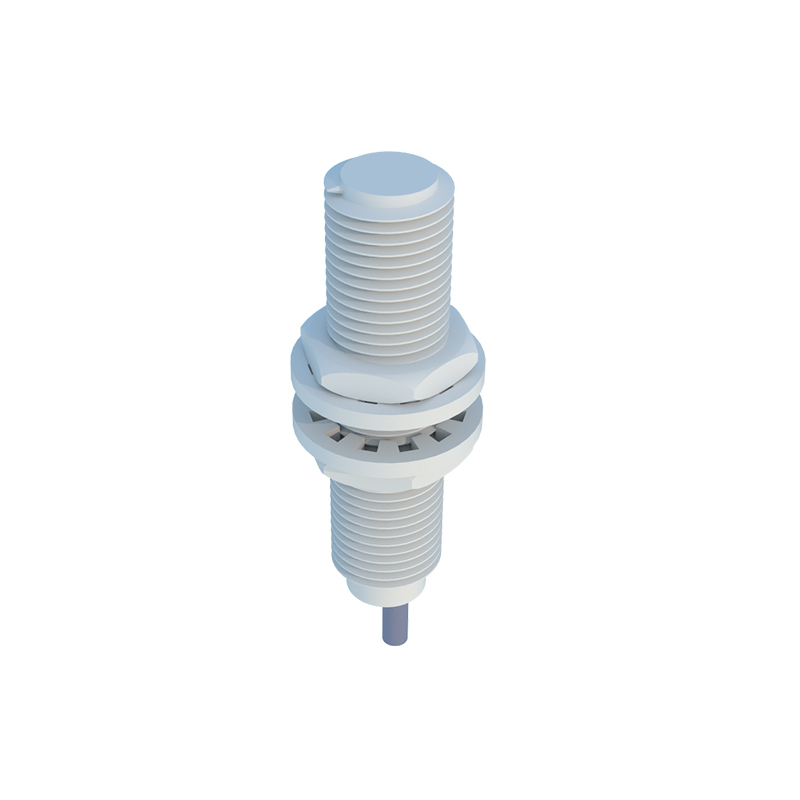
These sensors find applications across countless industries. In automotive systems, they are ubiquitous for sensing wheel speed for ABS, detecting gear position in transmissions, and monitoring seatbelt latches. In industrial automation, they serve as end-of-travel limit switches, spindle position sensors in CNC machines, and part presence detectors on conveyor lines. Consumer electronics utilize them as lid-open/close detectors in laptops and flip phones. They are also critical in medical devices, aerospace, and robotics for precise, maintenance-free position feedback.
Selecting the right proximity Hall sensor requires careful consideration of several parameters. First, define the operating mode: switch, latch, or linear. Next, consider the sensing distance, which depends on the magnet's strength, size, and the sensor's sensitivity. The output type is crucial: open-collector, push-pull, or analog. Supply voltage range (e.g., 3.3V, 5V, 12V) must match your system. Temperature range should accommodate the operating environment. Finally, the package style (through-hole, surface-mount, housed) must suit the mechanical and assembly constraints.
For successful implementation, proper magnet selection and orientation are paramount. The sensor's datasheet specifies the required magnetic flux density (in Gauss or Tesla) for activation. Using a magnet that is too weak or positioning it incorrectly can lead to unreliable operation. Shielding from stray magnetic fields from motors or other components is also essential to prevent false triggering. Always follow the manufacturer's guidelines for PCB layout, especially regarding decoupling capacitors and trace routing for noise immunity.
In conclusion, proximity Hall effect sensors offer a robust and versatile solution for non-contact position sensing. By converting magnetic fields into actionable electrical signals, they enable smarter, more reliable, and maintenance-free systems in automotive, industrial, and consumer applications. Understanding their operating principles, types, and key selection criteria empowers engineers and designers to effectively integrate this powerful technology into their next project, ensuring optimal performance and durability.