In industrial automation and machinery design, proximity sensors play a critical role in detecting the presence or absence of objects without physical contact. Among their many performance specifications, pressure resistance—often referred to as pressure rating or withstand pressure capability—stands as a paramount factor determining sensor reliability and longevity in demanding environments. This characteristic defines the sensor's ability to maintain functionality and structural integrity when exposed to high-pressure conditions, such as those found in hydraulic systems, deep-sea applications, high-pressure cleaning, or within pressurized vessels.
The pressure resistance of a proximity sensor is not a singular attribute but a complex interplay of its design, materials, and sealing technology. The housing material, typically stainless steel (such as 303, 304, or 316 grades), brass, or specialized engineering plastics like PEEK, forms the first line of defense. These materials are chosen for their inherent strength and corrosion resistance. However, the most vulnerable points are often the seals and the interface between the sensing face and the housing. High-quality sensors employ advanced sealing methods, such as laser welding, glass-to-metal seals, or sophisticated elastomeric O-rings (e.g., Viton or EPDM), to create a hermetic barrier. This sealing prevents the ingress of fluids or gases under pressure, which could short-circuit internal electronics, cause diaphragm deformation, or lead to catastrophic failure.
Understanding the specified pressure ratings is crucial for correct sensor selection. Ratings are typically given in units like bar, psi, or MPa, and may include both static and dynamic pressure specifications. A static pressure rating indicates the constant pressure the sensor can endure indefinitely, while a dynamic or surge pressure rating refers to short-term pressure spikes the device can survive. For instance, a sensor rated for 100 bar static pressure might withstand 150 bar dynamic pulses. Exceeding these ratings, even momentarily, can compromise seals, deform housings, or detach sensing elements, leading to inaccurate readings or total failure.
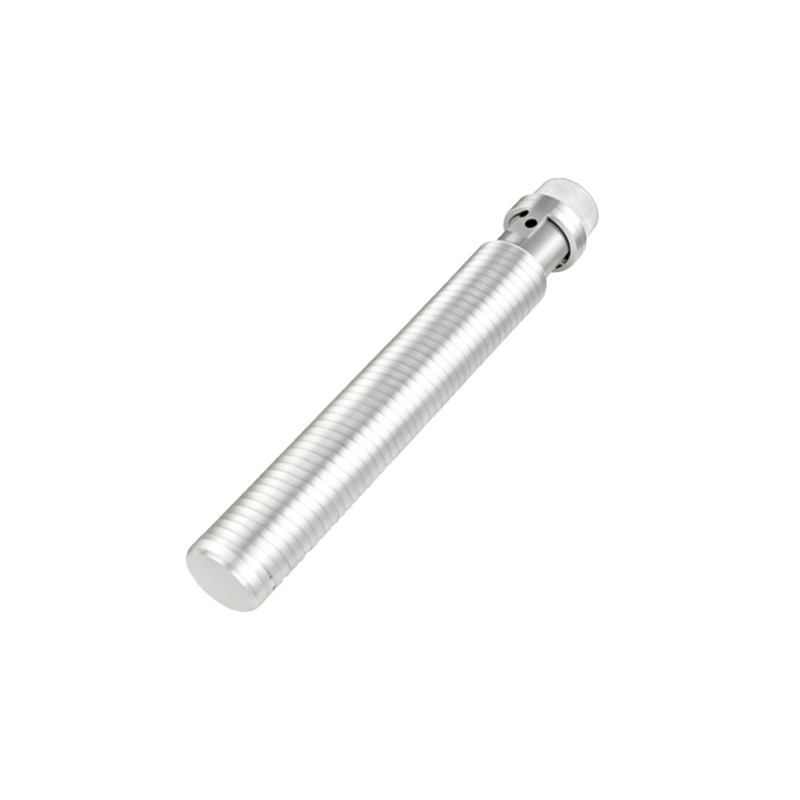
The type of proximity sensing technology also influences pressure resistance. Inductive sensors, common for metal detection, often have robust metallic housings well-suited for high-pressure scenarios. Capacitive sensors, used for non-metallic materials, might have different construction challenges. Furthermore, the sensing face design is critical. A flush-mounted or fully embedded sensor design offers superior pressure resistance compared to a non-flush design, as the sensing face is protected within the housing and does not protrude, reducing the direct force impact.
Beyond the sensor body, the electrical connection point—the cable outlet or connector—is a critical failure point under pressure. Manufacturers address this with molded cable glands, pressure-rated connectors (e.g., complying with IP69K standards), or by potting the internal electronics with epoxy resin to resist pressure penetration and provide mechanical stability. The choice of cable itself is also important; cables with robust, pressure-resistant jackets are essential for a complete system solution.
Failure to account for pressure resistance can have severe consequences. In a hydraulic press, a failed sensor could lead to uncontrolled machine operation. In submersible applications, it could result in flooding and equipment loss. Therefore, engineers must consider not only the nominal operating pressure but also factors like pressure cycling frequency, media compatibility (is the pressure from oil, water, or a corrosive chemical?), and temperature, as high temperatures can weaken sealing materials.
To ensure performance, international standards provide testing frameworks. While no single standard governs all pressure testing for proximity sensors, aspects are covered under ingress protection (IP) codes, particularly IP67 and IP69K for water and high-pressure jet resistance, and various industry-specific standards for hydraulic equipment or hazardous areas. Reputable manufacturers conduct rigorous testing, often subjecting sensors to pressures significantly above their rated maximum for extended periods to verify safety margins.
In conclusion, the pressure resistance of a proximity sensor is a foundational specification that dictates its application scope. It is the result of meticulous engineering in materials science, sealing technology, and mechanical design. Specifiers must carefully match the sensor's pressure rating—considering both static and dynamic conditions—to the application's real-world environment, including media, temperature, and cycle life. Neglecting this parameter risks system failure, while its careful consideration ensures robust, reliable, and long-lasting automation performance, safeguarding both processes and investments.