Inductive proximity sensors are widely used in industrial automation for non-contact detection of metallic objects. While they offer numerous advantages such as durability, high switching frequency, and resistance to harsh environments, they are not without significant drawbacks. Understanding these limitations is crucial for engineers and technicians to ensure proper sensor selection and optimal system performance.
One of the most fundamental limitations is the material-specific detection capability. Inductive sensors are designed to detect ferrous and non-ferrous metals, but they are completely ineffective for sensing non-metallic materials like plastic, wood, glass, or liquids. This inherent characteristic restricts their application scope. For instance, in packaging lines where products may be in cardboard or plastic containers, an inductive sensor cannot detect the product itself, only a metallic component attached to it.
The effective sensing range, or nominal sensing distance (Sn), is another notable constraint. Compared to other technologies like ultrasonic or capacitive sensors, the standard sensing range for inductive sensors is relatively short, typically from a few millimeters up to about 60 millimeters for larger models. This requires precise mechanical alignment and installation. Furthermore, the sensing distance can be reduced when detecting non-ferrous metals like aluminum, copper, or brass. Each metal has a specific reduction factor; for example, the sensing range for stainless steel might be 0.7 to 0.9 times the rated Sn, and for copper, it could be as low as 0.3 to 0.4 times. This necessitates careful calculation and potential derating during the design phase.
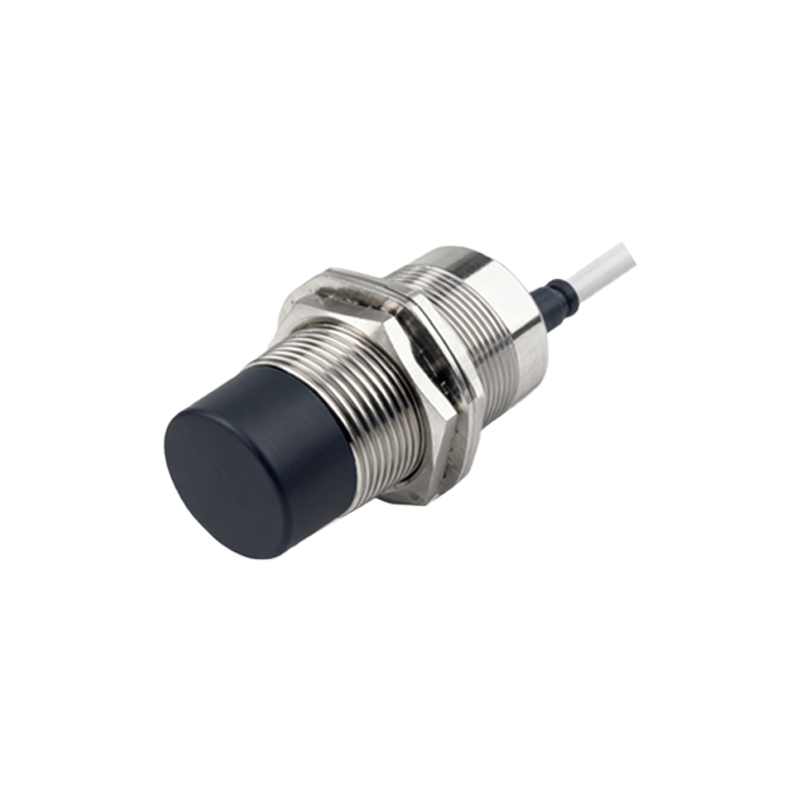
Temperature sensitivity presents a operational challenge. While inductive sensors are robust, their performance is influenced by ambient temperature. High temperatures can affect the oscillator circuit and the properties of the coil, leading to a drift in the switching point—a phenomenon known as temperature drift. Most sensors have a specified compensated temperature range (e.g., -25°C to +70°C). Operating outside this range can cause unreliable switching or permanent damage. Conversely, in very cold environments, housing materials may become brittle.
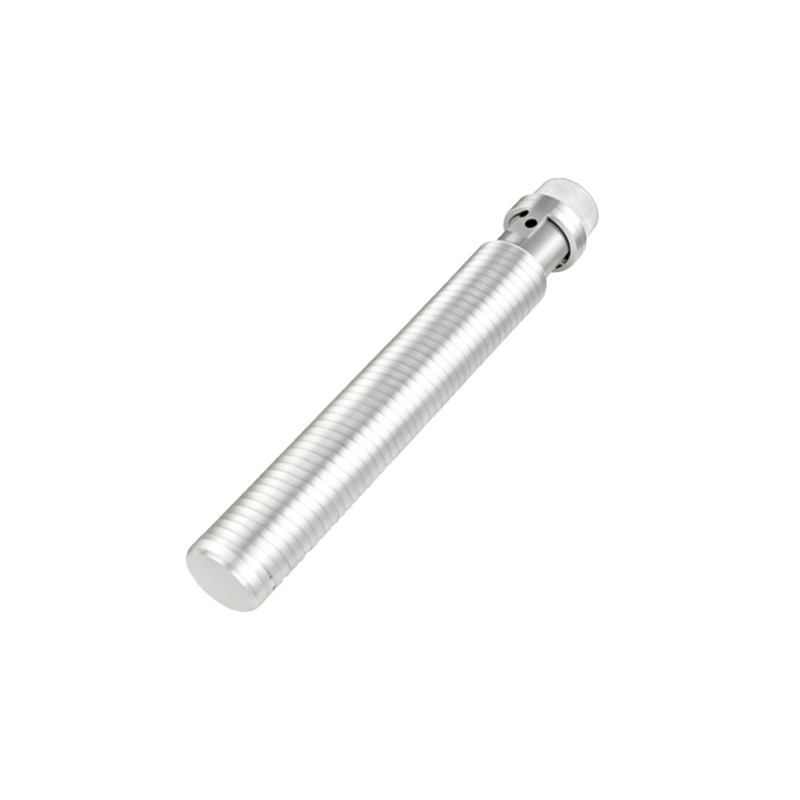
Electrical interference is a critical concern in industrial settings. Inductive sensors can be susceptible to electromagnetic interference (EMI) from nearby sources such as frequency inverters, welding equipment, or high-current cables. This interference can cause false triggering or failure to detect a target. While shielded models offer some protection, they have a shorter sensing range than unshielded types. Additionally, installing multiple sensors in close proximity can lead to mutual interference if they are not spaced correctly, typically requiring a minimum distance of two to three times the sensor diameter.
Physical and mechanical limitations also exist. The sensor face must be kept free of buildup from metal chips, dust, or other conductive debris. A layer of metallic dust can effectively act as a permanent target, causing the sensor to remain in a triggered state—a condition known as "metal masking." Although some models feature weld-field immunity for use near welding robots, direct spatter on the active face can still damage the sensor. The need for a metallic target also means they cannot detect through non-metallic walls or barriers, unlike ultrasonic sensors.
Finally, cost and complexity can be factors for certain applications. For simple metal detection tasks, they are cost-effective. However, if the application requires distinguishing between different metals or detecting very small metallic objects, more sophisticated and expensive versions are needed. The installation often requires precise mounting and alignment, adding to labor time. In systems requiring detection of various material types, a combination of inductive and capacitive sensors might be necessary, increasing overall system complexity and cost.
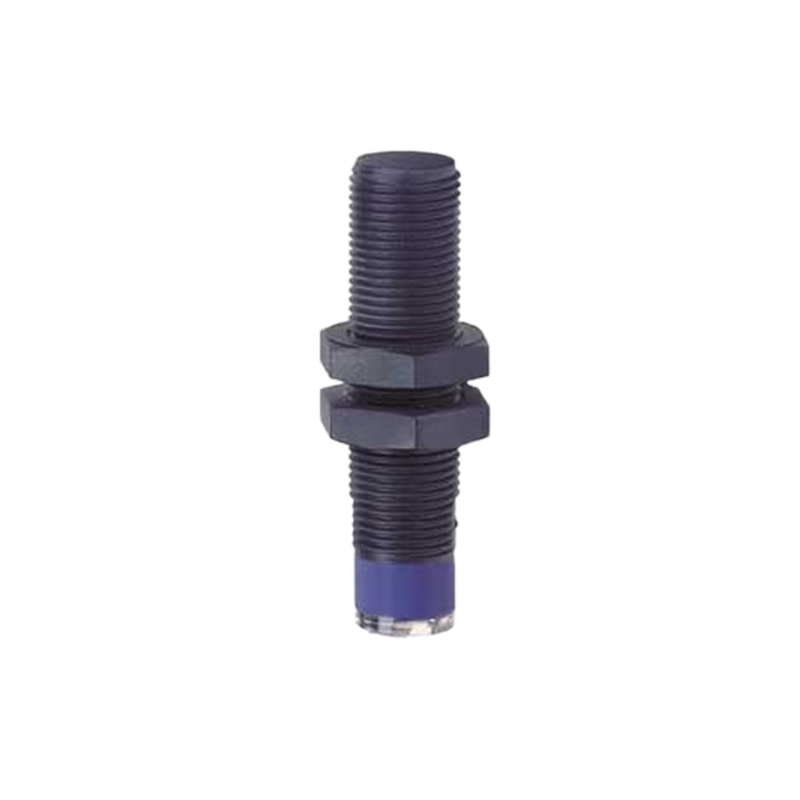
In conclusion, inductive proximity sensors are powerful tools with well-defined boundaries. Their disadvantages—material restriction, limited range, temperature effects, EMI susceptibility, and physical constraints—must be carefully evaluated against the application requirements. A thorough analysis of the operating environment, target material, required sensing distance, and potential interference sources is essential. Often, the solution involves proper sensor selection, correct installation practices, and sometimes, choosing an alternative sensing technology like capacitive, ultrasonic, or photoelectric sensors to achieve reliable and efficient automation.