Forget the pristine data sheets. After two decades of deploying photoelectric and laser sensors in steel mills, chemical plants, and automated warehouses, the real-world performance diverges sharply from catalog promises. This is not a primer; it's a field report.
Experience Corrections: Where Theory Meets Grit
The advertised sensing range for a standard diffuse photoelectric sensor is a fantasy in high-ambient-light environments. In a sun-drenched loading bay, the effective range of a 10-meter sensor can drop by 60-70%. The signal-to-noise ratio collapses. The fix isn't always a "high-power" model, but often a unit with a modulated LED and a narrow-band optical filter—specs buried in the datasheet. For laser sensors, the stated precision (e.g., ±0.1mm) assumes a pristine, high-contrast target. On a vibrating conveyor measuring dark, textured rubber belts, thermal drift of the laser diode and particulate buildup on the lens can introduce a consistent error of up to 0.5mm, necessitating recalibration cycles no manual mentions.
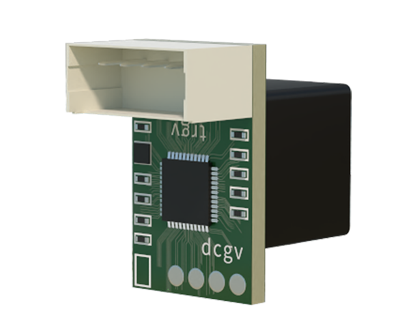
The "sealed" IP67 rating is another misnomer. It tests for static, clean water. In a poultry processing plant, a photoelectric sensor rated IP67 failed within weeks. The culprit wasn't water, but a thin, conductive film of grease and saline mist that bridged internal PCB traces, causing gradual leakage current and eventual failure. The solution was a niche sensor with a conformally coated PCB and a pressurized, nitrogen-purged housing—a feature never highlighted in mainstream marketing.
Boundary Conditions: When to Walk Away
Know the failure modes. Diffuse photoelectric sensors are often chosen for color detection. However, relying on them to distinguish between dark blue and black packaging in low-light, high-speed sorting (e.g., > 300 packages/minute) is a recipe for a 5-15% error rate. The reflectivity difference is too minimal for reliable operation. A laser-based contrast sensor or a dedicated color sensor is the only viable choice, despite the 3x cost increase.
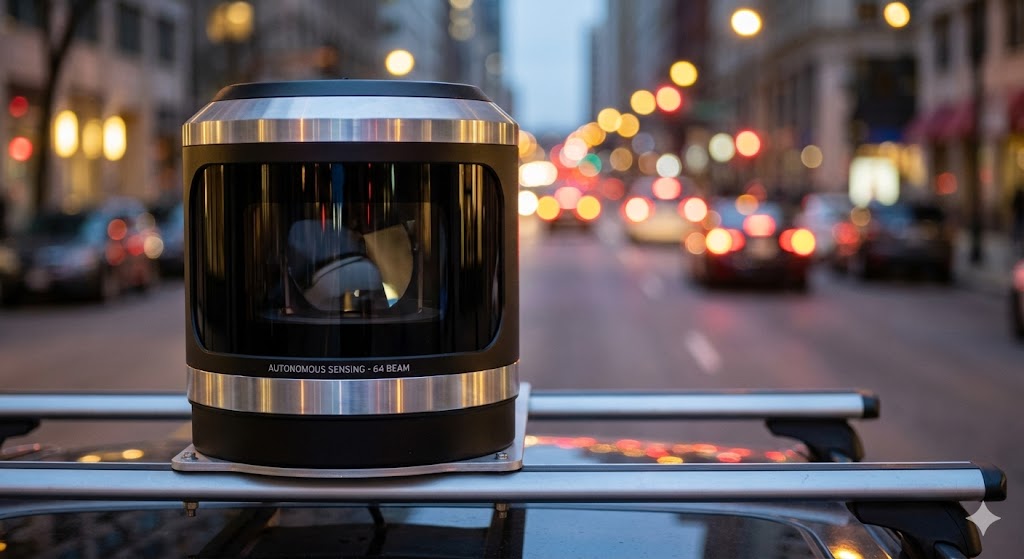
Laser triangulation sensors for precise distance measurement are superb—until you introduce a transparent or highly reflective target. Measuring the fill level of a clear glass bottle or a shiny metal drum will return the distance to the background or a random scatter point, not the target surface. Even with advanced firmware algorithms, the reliability plummets below 80%. In these cases, an ultrasonic sensor or a capacitive probe, despite lower precision, provides 99%+ operational stability.
Perhaps the most critical boundary is airborne oil mist. Both photoelectric and laser beams scatter in dense, sub-micron oil aerosols common in CNC machining centers. A through-beam sensor with a separate receiver might maintain a link, but the received signal strength can attenuate unpredictably, causing intermittent faults. In such environments, inductive proximity sensors or physically contact-based methods are the only robust solutions. Deploying an optical sensor here guarantees unplanned downtime.

Counter-Intuitive Conclusions: Data-Driven Heresies
1. Sometimes, Less Sensitivity is Better. In dusty environments like cement bagging, technicians often crank up the sensitivity of a diffuse sensor to "see through" the dust. This leads to false triggers from the dust cloud itself. The counter-intuitive but correct action is to *reduce* sensitivity and use a sensor with a very small, precise sensing spot (a focused laser diode is ideal), ensuring it only triggers on the actual target breaking through the dust layer, not the ambient particulate.
2. The "Superior" Technology Can Be the Wrong Choice. Laser sensors are often seen as the premium, all-around superior option. However, for detecting a wrinkled, non-reflective black trash bag on a white conveyor, a robust red-light photoelectric sensor with background suppression will outperform a standard laser sensor. The laser's coherent light creates sharp speckle patterns on the uneven surface, leading to unstable readings, while the diffuse LED light provides a more averaged and stable reflection profile.
3. Refresh Rate is a Hidden Killer. Spec sheets boast microsecond response times. What they don't say is that to achieve noise immunity, many sensors use internal signal averaging, effectively slowing the *usable* response. In high-speed bottling lines, a sensor with a 0.1ms theoretical response but a 5ms processing loop will miss every tenth bottle at 2000 bottles/minute. The critical spec is the "minimum detectable object speed" or "output frequency," not the phototransistor's rise time.
4. Cost of Ownership is Inverted. A $200 laser sensor might seem expensive compared to a $50 photoelectric sensor. But if the photoelectric unit requires weekly lens cleaning and monthly replacement in a harsh setting, while the laser unit with a better seal and higher power runs unattended for two years, the laser's total cost of ownership is lower by a factor of four. The capital cost is a poor proxy for value.
The final insight is this: sensor selection is not a comparison of ideal specifications. It is a forensic analysis of the failure environment. The winning choice is the one whose specific weaknesses are least exploited by your unique combination of dirt, vibration, light, and target material. Choose based on that, not on the glossy brochure.