For two decades, I've watched magnetic proximity sensors get specified into applications they were doomed to fail in. The datasheet tells a story of perfect repeatability, IP67 ratings, and generous switching distances. The field tells a different one. Let's cut through the marketing gloss and talk about what actually happens when the rubber meets the road.
Experience Correction: The Gaps Between Spec and Reality
The headline parameter—switching distance—is the first casualty of real-world conditions. You're told a sensor has a 15mm nominal sensing distance for a standard magnet. In a clean lab at 23°C, it does. Now mount it on vibrating steel machinery where ambient temperatures swing from -10°C to 70°C. The ferrous background material becomes a parasitic shunt, stealing magnetic flux. Your effective sensing distance can drop by 40-50%. I've measured it. The alloy of the actuator magnet matters more than anyone admits. A cheap ferrite magnet's field strength decays significantly above 80°C; an AlNiCo or rare-earth magnet is more stable but can induce eddy currents in nearby conductive non-ferrous materials, subtly delaying the switch signal. That 0.1ms delay isn't in the brochure. Furthermore, the "sealed" housing. IP67 assumes immersion in static water. High-pressure spray, common in washdown environments, coupled with thermal cycling, creates a pump effect that eventually breaches seals. Failure is not sudden but a gradual increase in leakage current that causes erratic switching long before a complete short.
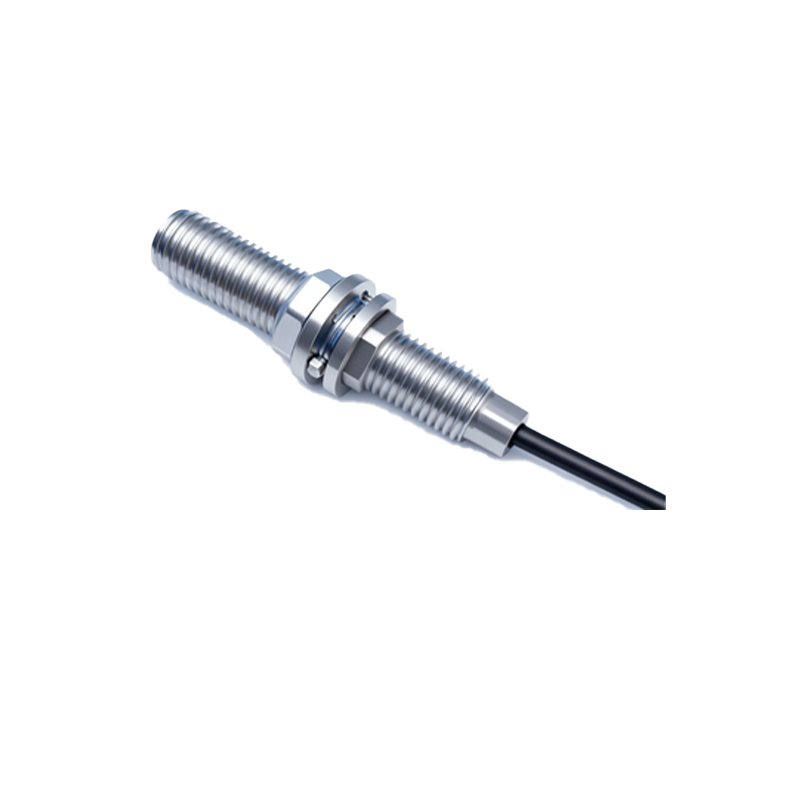
Boundary Conditions: Where to Walk Away
Do not use standard magnetic proximity sensors in the following scenarios, period:
1. High-Speed Ferrous Debris Environments: Think machining centers or steel stamping lines. Tiny ferrous chips will adhere to the sensor face, forming a permanent magnetic bridge. The sensor latches "on" and never releases. Hall-effect variants are slightly more resilient but not immune.
2. Strong External DC Fields: Near large DC motors, solenoids, or welding cables. The sensor's internal reed switch or Hall IC can be biased, shifting its switch point unpredictably or causing a permanent state change. Shielding is often impractical.
3. Ultra-Slow or Micro-Movement Sensing: They are binary switches, not analog position devices. Attempting to use them for detecting sub-millimeter creep or vibration via "chatter" is a fool's errand. The hysteresis—the difference between switch-on and switch-off point—is your enemy here, creating massive dead zones.
4. Safety-Critical Functions as a Primary Element: Never rely on a single, unmonitored magnetic sensor for emergency stop or personnel safety guarding. They fail "on." Use them only as a confirming element within a Category 3/4 safety circuit with cross-monitoring.
5. Extreme Pulsed EMI Environments: Near variable frequency drives (VFDs) or arc welders. The fast-rising edges can induce voltages in the sensor cable or internal circuitry, generating false pulses. Ferrite cores and shielded cables are mandatory, and even then, reliability is not guaranteed.
Counter-Intuitive Conclusion: Sometimes Weaker is Better and Redundancy is Wasteful
Here’s what the application engineers won’t tell you. First, selecting a sensor with a shorter nominal sensing distance than theoretically possible often improves system robustness. A sensor operating at 60% of its maximum rated distance is less susceptible to fluctuations from temperature, voltage, and background material. You trade a generous installation tolerance for long-term stability. It's a calculated de-rating.
Second, adding a redundant sensor in an identical location can increase system failure rate for non-random, common-cause failures. If vibration causes one sensor's internal reed to fatigue, the identical one right next to it is undergoing the same stress and will likely fail shortly after. True redundancy requires diversity—e.g., pairing a magnetic sensor with an inductive one for the same function, if possible.
Finally, the most reliable mounting isn't with stainless steel brackets. Use non-magnetic, non-conductive materials like high-grade aluminum or engineered plastic. A steel bracket can become magnetized over time from the actuator's field, again reducing effective sensing distance. The highest failure point is the cable gland. Over-tightening it distorts the housing, compromising the seal. Use a torque wrench. Your most critical tool for magnetic sensor reliability isn't the sensor itself; it's the installation procedure.