For two decades, I've watched proximity sensors fail not when they stop working, but when they start working too well—triggering on everything but the intended target. The spec sheet promises a sensing range of 10mm with a repeatability of ±0.1mm. On the clean factory floor, it holds. Introduce airborne conductive dust from machining, and that 10mm becomes 5mm, with the sensor sporadically latching onto a passing metal shaving. The "repeatability" spec is now meaningless. This isn't a sensor failure; it's a context failure. The core electrical field is distorted by particulate, a phenomenon rarely quantified in standard environmental ratings.
Experience Correction: The Myth of "Ruggedized" Ratings. An IP67 rating signifies dust-tightness and immersion resistance, not immunity to environmental interference. In a steel mill, the primary threat isn't water or dust ingress, but the sensor's own housing becoming a heat sink. A high-temperature variant rated for 80°C continuous operation will derate its sensing distance by nearly 40% when bolted directly to a sun-baked, 60°C metal frame. The ambient temperature is 35°C, but the local mounting point temperature is the real determinant. Relying on ambient specs guarantees premature, erratic behavior. Data: A standard inductive sensor's sensing distance (Sn) reduces by approximately 10% for every 25°C rise in core temperature above 20°C. Your control logic likely doesn't account for this dynamic Sn.
Boundary Conditions: Where This Technology Reaches Its Hard Limit. Proximity sensors, especially inductive and capacitive types, are not universal detectors. Their failure zones are specific and catastrophic for system integrity.
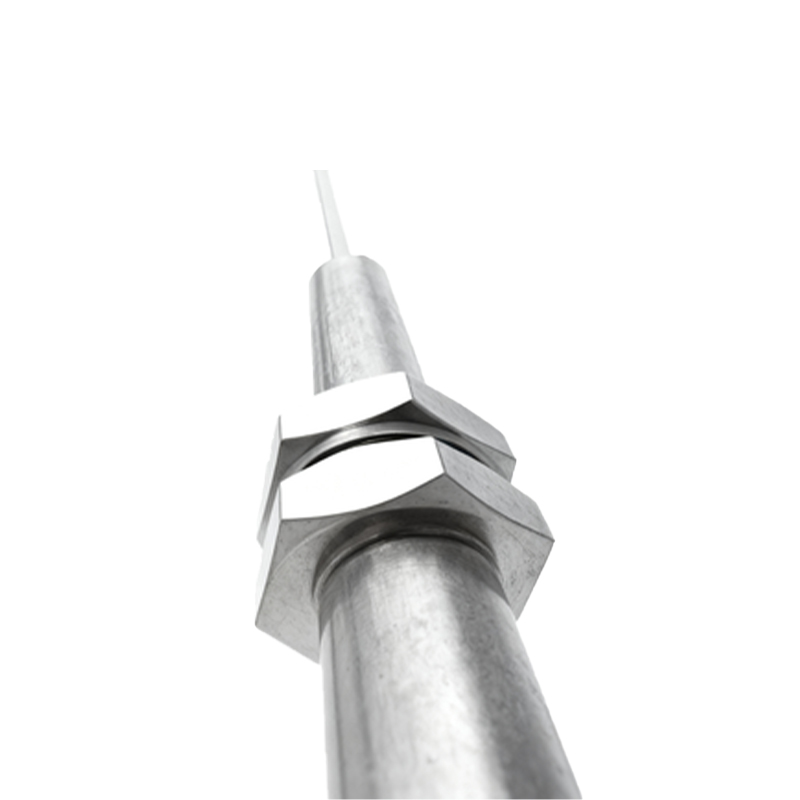
1. High-Viscosity Fluid Coatings: Using an inductive sensor to detect an uncoated metal part is trivial. Attempt the same on a part emerging from a dip-coating process with a slowly curing, conductive epoxy coating. The sensor will reliably detect the part through the wet coating. Once the coating cures and becomes non-conductive, detection fails. The sensor didn't change; the dielectric properties of the target did. This scenario mandates a different sensing principle entirely at the point of cure.
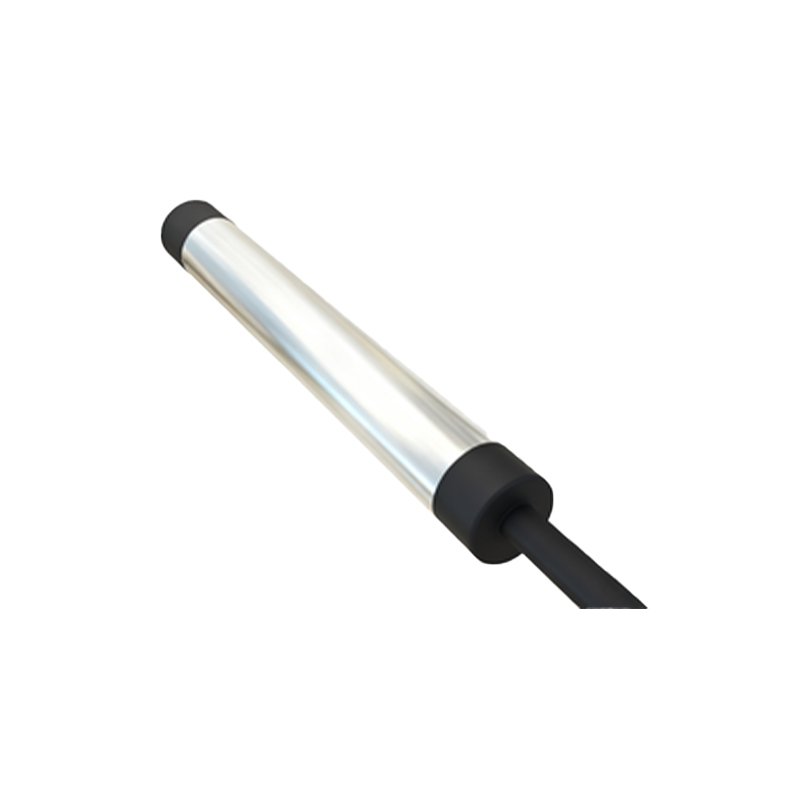
2. Ultra-High-Speed, Non-Ferrous Detection: Detecting aluminum can caps on a filler at 2,000 units per minute. The theoretical response frequency of the sensor is sufficient. However, the eddy currents generated in aluminum are weaker. In practice, the required reduction in sensing distance to ensure a strong enough signal creates a tolerance window so tight that minor mechanical vibration causes missed counts. The solution isn't a "better" prox sensor; it's often a fiber-optic photoelectric paired with a precise mechanical aperture.
3. Ground Plane Saturation in Mobile Hydraulics: Installing a sensor on a excavator's boom to detect cylinder position. The massive, constantly moving steel structure creates a dynamic ground plane that can capacitively couple with the sensor, causing false triggers unrelated to the target. Shielding is often ineffective because the machine frame is the interference source. Here, magnetostrictive or LVDT technology, though more costly, becomes the only viable choice.
Counterintuitive Conclusion: A More Sensitive Sensor is Often the Wrong Sensor. The industry push is for higher sensitivity, longer ranges, and smaller form factors. In harsh environments, this is a recipe for instability. A highly sensitive capacitive sensor designed to detect plastic granules through a non-metallic chute will also detect the buildup of static charge or humidity variation on the chute wall, leading to false "full" signals. The professional move is to de-sensitize the system. This can mean selecting a sensor with a shorter nominal range, adding a physical sight tube or aperture to isolate the sensing field, or using a sensor with a mechanically adjustable potentiometer for sensitivity and running it at 60% of its capability. The goal is not maximal signal strength, but maximal signal-to-noise ratio. Data from a wastewater plant control panel showed that switching from a standard 15mm range capacitive sensor to an 8mm range model for pump dry-run protection reduced nuisance faults by over 70% because it became insensitive to the variable sludge coating on the pipe interior outside the precise detection zone.
The final insight is this: Proximity sensor reliability is not a component issue. It is a system integration issue. The sensor is a data point. The mounting, the environment, the target material history, and the thermal mass of the surrounding machinery form the algorithm. Spec sheets define the component's potential; the harsh reality defines its performance.