For two decades, I've watched pristine sensor datasheets meet the brutal physics of factory floors. The promise of laser-based sensors—non-contact precision, high speed, immunity to ambient light—is seductive. Yet, the gap between catalog performance and operational reliability is where real engineering happens. Let's cut through the marketing.
Experience Correction: The Dust and Vibration Deception
Manufacturers tout IP67 ratings and vibration resistance figures. In controlled labs, they hold. On a CNC machining line cutting carbon fiber composites, or in a mineral processing plant, they become irrelevant anecdotes. The primary failure mode isn't water ingress but sub-micron particulate accretion on the sensor's optical window. This isn't dirt you can wipe off; it's a fine, electrostatically charged dust that builds a film, attenuating the emitted and received signal. Your 0.1% repeatability spec drifts by 3% within hours. The fix isn't a better seal; it's a designed, positive-pressure purge air curtain—a feature rarely highlighted in brochures. Vibration specs (e.g., 10-55 Hz, 2g) are equally misleading. They test sinusoidal vibration. Real industrial vibration is random, multi-axial, and often impacts the *target* more than the sensor. A sensor reading a vibrating metal strip may see apparent distance fluctuations exceeding 50µm, not due to sensor error, but from target oscillation. The solution involves syncing measurement with machine cycle phases—a systems-level approach no sensor vendor will teach you.
Boundary Conditions: Where This Technology Breaks
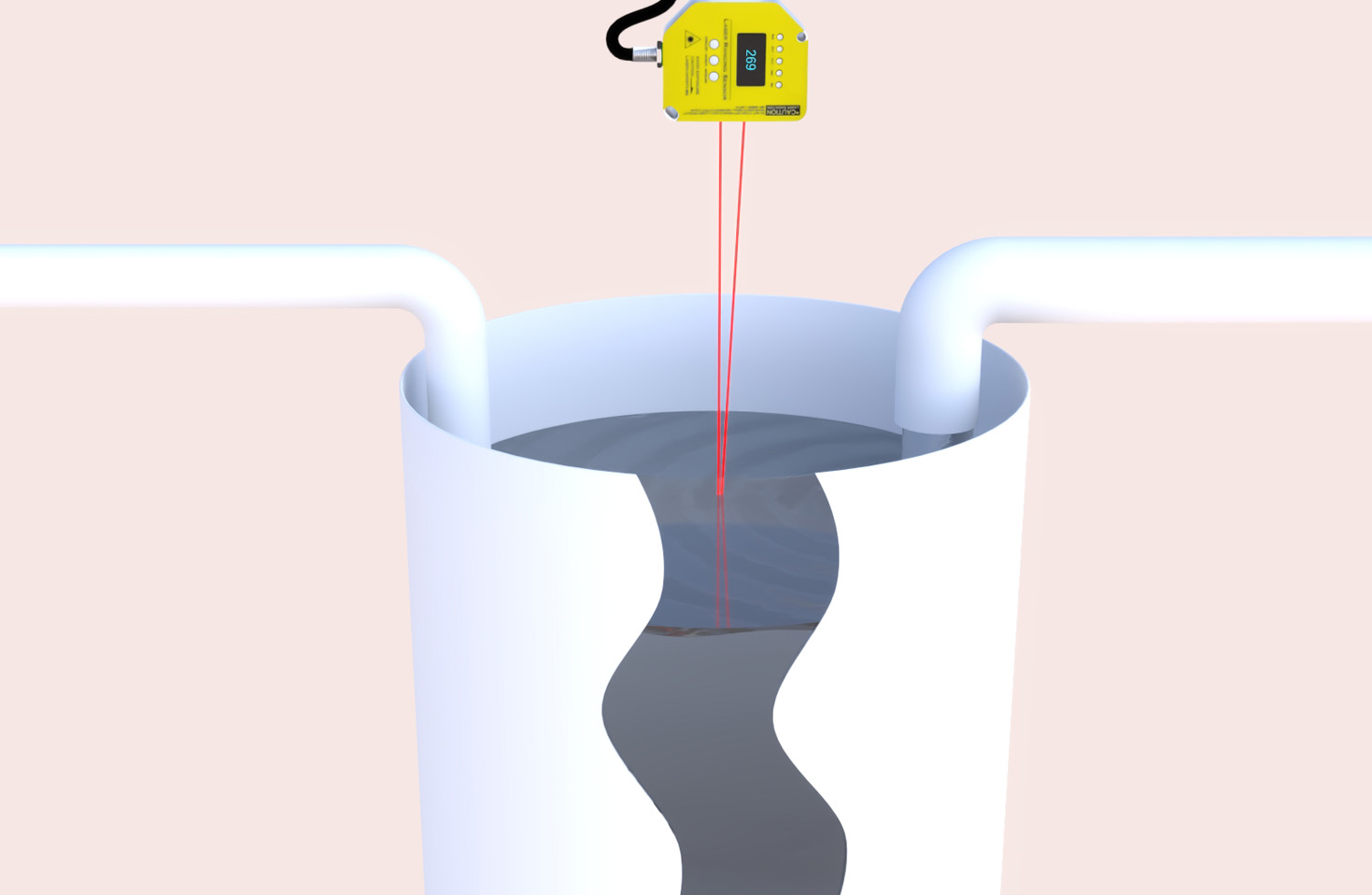
Laser triangulation and time-of-flight sensors are not universal tools. Deploy them in these scenarios at your peril:
1. High-Emissivity, Low-Diffuse Targets: Polished chrome, mirror-finish aluminum, or still liquid surfaces. The laser spot specularly reflects away from the receiver, causing a complete dropout or a false, noisy reading. No amount of filtering software can create a signal that isn't there.
2. Rapid Phase Change Environments: Think of monitoring the fill level of molten glass or polymer. The intense thermal plume above the material creates a gradient in the refractive index of air. This bends the laser path (mirage effect), leading to a consistent offset error that can exceed 10 mm, undetectable by the sensor's internal diagnostics.
3. Biological or Organic Materials: Raw meat, dark foams, deep-pile textiles. These materials exhibit significant laser penetration, not reflection. The returned signal is from a subsurface scattering layer, making the measured distance dependent on material density and moisture content—variables you are not controlling. The reading is stable but wrong.
4. Ambient Coherent Light Interference: Operating near another, un-synchronized laser process (e.g., welding, engraving) is a recipe for disaster. Filtering a 650nm sensor laser from a 1kW 1070nm welding laser is trivial. Filtering it from a stray 655nm barcode scanner is impossible. The result is intermittent, catastrophic measurement spikes.
Counterintuitive Conclusion: Sometimes, a "Worse" Sensor is the Optimal Solution
The industry's relentless drive for higher resolution (nanometer-scale) and faster sampling (kHz+) is often misguided. Here's the paradox: In high-speed, dirty environments, a sensor with a larger, more divergent laser spot (lower spatial resolution) and a slower response time can yield superior, more stable data. Why? The larger spot averages over surface micro-irregularities (scratches, droplets, grain), reducing noise. The slower electronic response acts as a built-in low-pass filter, damping high-frequency electrical noise from variable frequency drives and welding equipment without software lag. You sacrifice theoretical precision for operational robustness. I have consistently achieved better production yield using a "slower" 500Hz sensor with a 3mm spot size than with a 5kHz, 0.1mm spot sensor on the same vibrating conveyor line. The data from the "premium" sensor was graphically impressive but statistically useless. The key metric isn't the sensor's standalone spec; it's the Signal-to-Noise Ratio (SNR) of the *entire measurement chain* in its actual operating context. Optimizing for that often means defying the spec sheet hierarchy.