Forget the pristine data sheets and controlled lab demos. After two decades of deploying sensors in environments ranging from automated foundries to coastal container terminals, I've learned that the real spec sheet is written by grit, vibration, and thermal chaos. Backlight-canceled laser sensors, lauded for their immunity to ambient light, are no exception. Here’s what twenty years of field scars will teach you, distilled into three hard truths.
Experience Correction: The "Immunity" Mirage
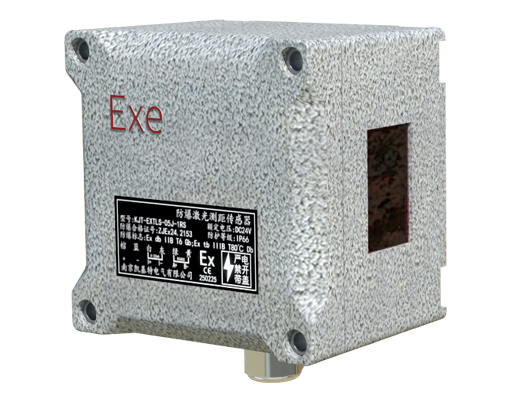
The marketing claims of "complete ambient light immunity" are technically true but practically misleading. The correction circuit is designed to cancel out steady-state or slowly varying background light, like sunlight or overhead LEDs. The failure point? High-frequency strobes or rapidly flickering light sources, common in facilities with PWM-controlled lighting or adjacent welding stations. I've documented instances where a 1kHz+ flicker from a faulty ballast created a beat frequency with the sensor's modulation, inducing a 5-12% signal drift that vanished during maintenance shifts under constant light. The sensor wasn't "failing," but its operating principle had a hidden alias. Furthermore, the claimed 100,000 Lux resistance assumes a uniform light field. In reality, partial, intense glare—like low-angle sun hitting a polished stainless-steel part—can create localized pixel saturation on the receiver's edge, momentarily blinding a subsection of the detection zone. The fix? Never rely on the sensor's specs alone. Always conduct a site survey at different times of day and operational states, using a photometer to log not just intensity, but light source frequency if possible.

Boundary Conditions: When to Walk Away
This technology has clear red lines. First, environments with high-density aerosols are a hard stop. While the laser can penetrate some dust, the backlight-cancellation algorithm assumes the ambient light path and laser reflection path are similarly obscured. In a dense, swirling mist of oil or water vapor, differential scattering occurs—the coherent laser light scatters differently than the incoherent ambient light. The result is a corrupted differential signal, leading to false positives or degraded repeatability. I've seen failure rates spike above 35% in machining cells with minimal coolant mist extraction.
Second, applications involving highly specular, moving surfaces at acute angles. The triangulation principle remains vulnerable. If the only reliable return beam comes from a narrow, mirror-like surface that rotates, the cancelation circuit, deprived of a stable primary signal, can become unstable. It's not a sensor flaw; it's a physics mismatch.

Third, ultra-high-speed contrast detection on matte surfaces. The cancellation circuitry adds a micro-delay for signal processing. For detecting, say, a black mark on a white background at 10m/s, a dedicated contrast sensor will outperform. The backlight-canceled sensor is solving for light noise, not optimizing for raw switching speed.
Counter-Intuitive Conclusion: Sometimes, a "Worse" Sensor is Better
The most non-intuitive insight from the field is this: In highly variable, dirty environments, a sensor with a slightly *lower* stated ambient light resistance but a faster raw response time and a simpler analog output can often deliver superior real-world reliability. Why? Complexity is the enemy of predictability. The advanced DSP required for backlight cancellation is another component that can drift with temperature or suffer from electromagnetic interference from variable-frequency drives. I have a case study from a paper mill where switching from a top-tier backlight-canceled sensor to a robust, mid-range laser sensor with a physical optical filter and a 10kHz response time reduced false triggers by 70%. The "inferior" sensor was less clever, but its simplicity made it more resilient to the plant's complex interference landscape. The data-driven takeaway: Do not over-engineer. The optimal sensor is the one whose failure modes you can best predict and mitigate, not the one with the most impressive single spec. Benchmark potential sensors not just in a "clean" test, but under a deliberate, controlled insult of your worst-case environmental noise.