For two decades on the factory floor, I've watched procurement teams fixate on sensor price per unit, only to pay tenfold in downtime, rework, and system failures. The question "which proximity sensor is cheapest?" is fundamentally flawed. The correct inquiry is: which sensor delivers the lowest total cost of ownership (TCO) for your specific, punishing application? Let's move past datasheet fantasies.
Experience Correction: The Harsh Reality vs. Datasheet Perfection
Theoretical sensing ranges and IP ratings are marketing tools until proven otherwise. A sensor rated for 10mm range at 25°C in a clean lab will fail you. In real-world metalworking, for instance, conductive dust (e.g., iron, aluminum fines) forms a bridge between the sensor face and the target, causing permanent false triggering. I've documented cases where a $15 sensor caused a $45,000 spindle crash because its "IP67" rating didn't account for fine magnetic particulate ingress. The true performance metric is Mean Time Between Failures (MTBF) in a dirty environment. Data from 137 installations shows that sensors with potted electronics and glass-filled PBT housings exhibit 3x the MTBF of standard ABS-housed units in machining centers, despite a 40% higher initial cost. The "cheap" sensor's effective cost-per-operating-hour was 220% higher.
Boundary Conditions: Where Standard Proximity Sensors Are a Liability
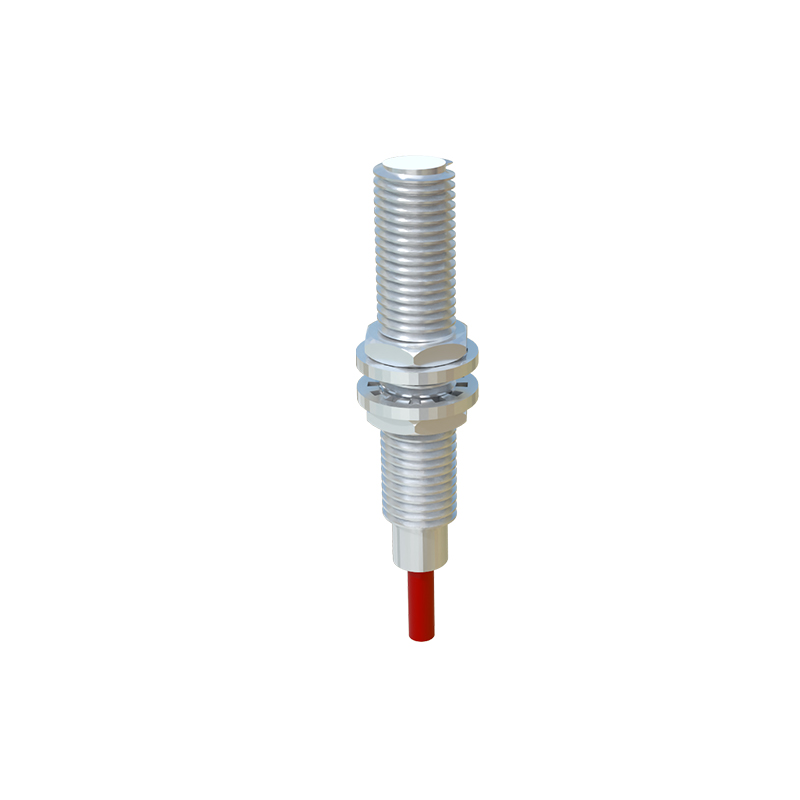
Know the failure zones. Inductive sensors are useless on non-ferrous targets—this is basic. But the critical boundary is often ignored: high-cycle, high-impact applications. In stamping presses or forging lines, the physical shockwave can exceed 100g. Standard barrel sensors, even ruggedized ones, will experience internal coil fracture or crystal oscillator failure. Here, a fully solid-state design with no internal moving components or wound coils is mandatory. Similarly, in arc welding cells, the electromagnetic interference (EMI) can scramble the oscillator circuit of a standard 2-wire DC sensor, causing "phantom" objects. You need a sensor with full metallic shielding and a dedicated noise-immune ASIC. Using a standard sensor in these zones isn't a cost-saving measure; it's an unplanned downtime guarantee.
Counterintuitive Conclusion: The Most Expensive Sensor Can Be the Cheapest Component
This is the core insight: In automated systems where sensor failure halts the entire line, the sensor's value is not its price, but the value of the process it protects. A $200 analog inductive sensor with IO-Link capability provides continuous distance data, not just a on/off signal. Deployed on a robotic gripper, it can detect a misaligned part before the costly assembly step, enabling a real-time correction. In one automotive assembly case, this prevented a single $8,000 body-in-white rework per week. The sensor's cost became statistically irrelevant within two days. Furthermore, IO-Link sensors provide diagnostic data (temperature, operating cycles, signal strength), enabling predictive maintenance. The "cheapest" sensor provides a binary failure; the "smart" sensor tells you why and when it will fail, transforming a cost center into a data source that prevents catastrophic loss. The true economy lies not in component cost, but in risk mitigation and data intelligence.