After two decades on the factory floor, I've learned that datasheets are a starting point, not a gospel. Let's cut through the marketing fluff. Your standard inductive cylindrical sensor, rated for IP67 and a sensing range of 15mm, is lying to you—under specific, common conditions. The industry sells you a perfect-world spec, but your application exists in a world of vibration, conductive contaminants, and thermal shock.
Experience Correction: The Reality of "Rated" Specifications
The claimed 15mm sensing range for an M30 sensor assumes a standard mild steel target. In practice, this range collapses by up to 40% when sensing aluminum, stainless steel (particularly 304/316), or brass. The reduction factor (often buried in a technical annex) is a clue, but it's worse. A sensor rated for 100mA switching capacity will fail prematurely if used continuously at 95mA in an ambient temperature of 60°C. The derating curve is your bible; ignore it, and you'll see catastrophic failures in 6 months, not the promised 5-year MTBF. Vibration? A sensor rated for 10-55Hz, 1.5mm amplitude will suffer internal PCB trace fractures when mounted directly on a high-inertia punch press. The fix isn't a "more rugged" sensor; it's a shock-absorbing mount, decoupling the sensor's body from high-frequency harmonics. The real sensing stability is achieved not at 24V DC nominal, but at a regulated 26V, compensating for line drops in long cable runs.
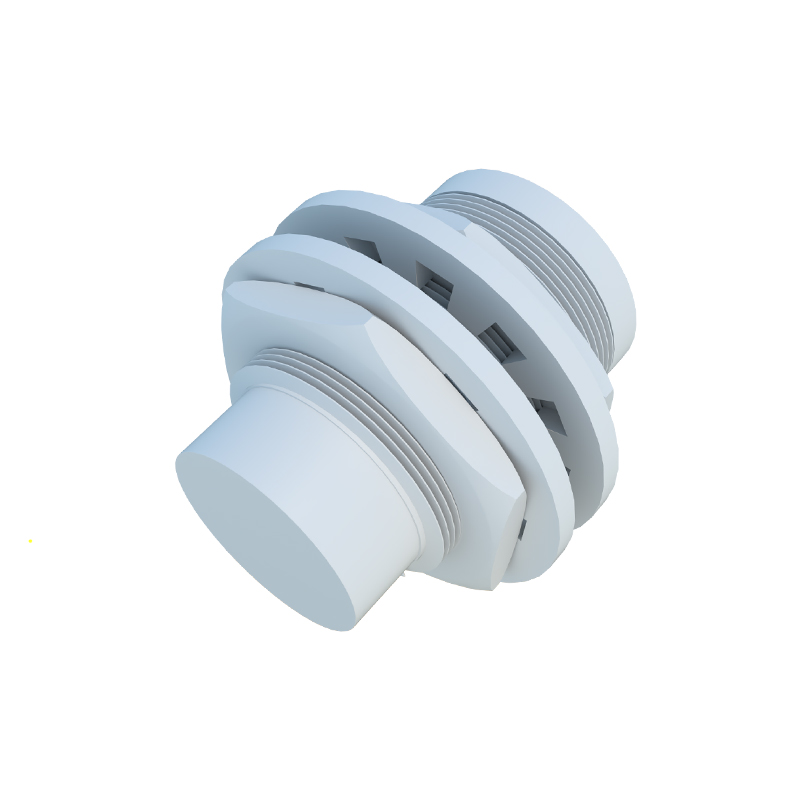
Boundary Conditions: Where It Will Fail
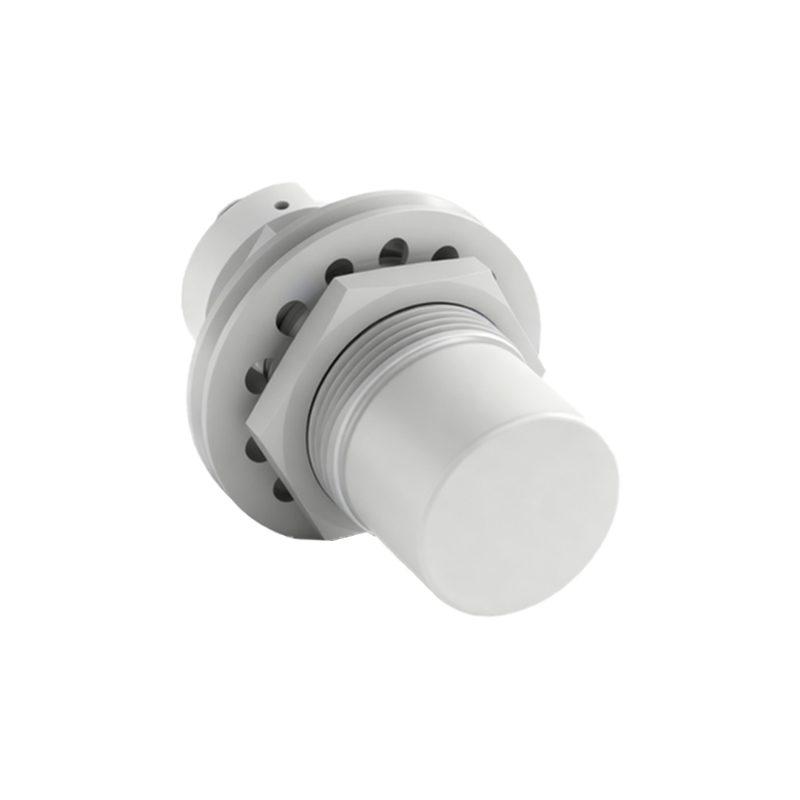
Deploying these sensors is as much about knowing where not to use them.
1. Ferrous Dust Environments: In machining centers producing cast iron or steel powder, a non-flush (standard) cylindrical sensor will accumulate a conductive "beard" on its face. This accumulation creates a false trigger, making the sensor permanently "on." Flush-mounted variants resist this but sacrifice 50-60% of their nominal range. The solution often isn't a better inductive sensor, but a capacitive or ultrasonic one.
2. High-Speed Liquid Jets (Cleaning Cycles): An IP67 rating means immersion, not direct, high-pressure spray. A 80-bar cleaning jet directed at the sensor face will force conductive fluid past the PBT housing-to-lens seal, causing internal corrosion and failure. The IP69K rating is required here, and even then, verify the seal material compatibility with your cleaning agents.
3. Extreme Thermal Gradients: Cycling between a -25°C cold store and a +40°C assembly floor causes internal condensation. When powered, this leads to electrolytic corrosion on the ASIC. The result is a drift in switching hysteresis, causing intermittent false signals that are nearly impossible to diagnose. Sensors rated for such conditions require a hermetically sealed front chamber filled with inert gas—a feature rarely advertised in standard catalogues.
4. Parallel Mounting: Mounting two standard cylindrical sensors side-by-side, with their faces aligned, induces mutual interference. Their oscillating magnetic fields couple, causing one or both to latch on. The rule of thumb is a center-to-center distance of at least 3x the sensor diameter. For critical applications, use models with anti-interference technology (phase synchronization), or physically stagger them longitudinally.
Counter-Intuitive Conclusions: Data-Driven Heresies
1. A Higher Frequency Sensor Can Be Less Accurate. Most engineers select "high-frequency" models (e.g., 5kHz vs 500Hz) for faster response. However, in environments with airborne metallic dust or fine conductive chips, the higher frequency sensor acts as a more sensitive antenna, picking up noise and generating spurious pulses. For dirty environments, a slower, standard-frequency sensor often provides more stable operation.
2. The "Premium" Brand is Your Highest Risk in Standard Applications. In a simple presence detection of a steel gripper on a clean robot arm, a no-name brand sensor and a top-tier German sensor will perform identically for years. The premium sensor's advanced diagnostics and alloy-specific calibration are wasted. The failure risk shifts from the sensor itself to the supply chain and documentation. The obscure brand's inconsistent labeling and lack of technical support will cause more downtime during troubleshooting and replacement than any reliability delta.
3. Analog Output is More Reliable Than Discrete for Positioning. The common wisdom is: for position feedback, use an analog (4-20mA or 0-10V) sensor. Our field data shows the opposite in high-EMI environments like welding cells. The analog signal is highly susceptible to noise, requiring expensive shielded cables