In the world of industrial automation, robotics, and smart devices, proximity sensors are the silent workhorses that enable machines to "see" and interact with their environment without physical contact. Selecting the correct proximity sensor is not a one-size-fits-all decision; it requires a careful analysis of your specific needs. This guide will walk you through the key considerations to ensure you make an informed purchase.
First, understand the fundamental types. The most common categories are inductive, capacitive, ultrasonic, and photoelectric sensors. Inductive sensors are ideal for detecting metallic objects. They generate an electromagnetic field and react when a metal target enters this field. They are robust, reliable for metal detection, and widely used in manufacturing for part counting, position verification, or machine safety. Capacitive sensors, on the other hand, can detect nearly any material—metals, plastics, liquids, wood, and even granular substances. They work by sensing changes in capacitance and are perfect for level detection in tanks, material handling, or detecting non-metallic objects. If your application involves liquid level sensing or detecting powders through a container wall, a capacitive sensor is likely the answer.
For longer-range detection or challenging environments, consider ultrasonic or photoelectric sensors. Ultrasonic sensors use sound waves to measure distance to an object. They are excellent for detecting objects regardless of color, transparency, or material, and they perform well in dusty or dirty conditions where optical sensors might fail. Photoelectric sensors use a light beam (visible red, infrared, or laser) and are incredibly versatile. They come in three main styles: through-beam (longest range, with separate emitter and receiver), retro-reflective (uses a reflector), and diffuse (sensor and target in one unit). They are superb for detecting small objects, colors, or clear materials.
Once you've narrowed the type, dive into the critical specifications. Sensing range is paramount. This is the maximum distance at which the sensor can reliably detect a standard target. Never operate a sensor at its absolute maximum rated range; for consistent performance, choose a sensor with a range 20-30% greater than your actual requirement. The target material and size also directly impact effective range.
Next, consider the output configuration. Do you need a simple digital on/off signal (PNP or NDC sourcing, or NPN/NO sinking), or an analog output (4-20mA or 0-10V) that provides continuous distance information? Digital outputs are for presence detection, while analog outputs are for precise positioning or measuring. Also, decide on the connection type: pre-wired cables or quick-disconnect connectors for easy replacement.
The operating environment cannot be overlooked. What is the ambient temperature? Will the sensor be exposed to moisture, oils, coolants, or heavy vibration? Look for sensors with an appropriate Ingress Protection (IP) rating (e.g., IP67 for dust-tight and immersion protection up to 1m). For washdown areas in food and beverage, a high IP69K rating is essential. If welding is nearby, ensure the sensor has weld-field immunity to resist electromagnetic interference.
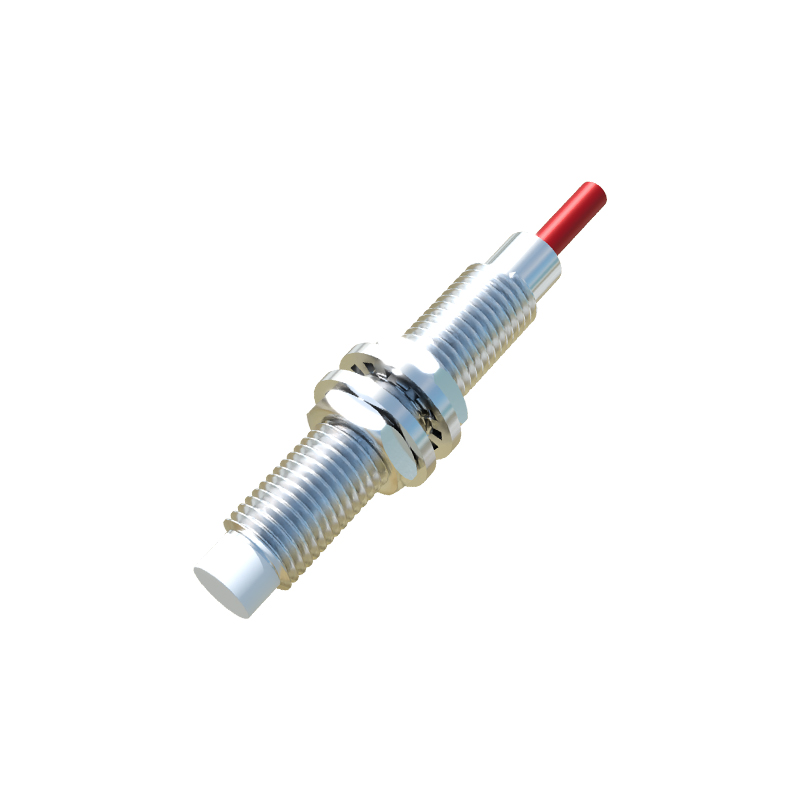
Finally, think about physical characteristics. The housing shape—barrel-style, rectangular, or block—must fit your mounting space. Thread size (like M8, M12, M18, M30) is a standard consideration. Some applications may require specialized sensors with embedded amplifiers or particularly small form factors.
In summary, the right proximity sensor is defined by: what you need to detect (material), how far away it is (range), the required signal (output), and where it will operate (environment). By systematically evaluating these factors against your application's demands, you can select a sensor that delivers reliability, longevity, and precision, ensuring your system operates smoothly and efficiently. Always consult specific datasheets and, when in doubt, reach out to sensor manufacturers or distributors with your application details for their expert recommendation.