Forget the pristine datasheets. After 20 years of deploying Proximity Sensor 90 variants in foundries, mines, and chemical plants, I'm here to deliver the unvarnished operational truth. This isn't an introduction; it's a debriefing from the field.
Experience Correction: The Gaps Between Spec and Reality
The advertised 10mm sensing distance for the standard inductive model is a laboratory fantasy under consistent 24VDC. In the real world, with typical plant voltage fluctuations between 18-28VDC, that distance can shrink by up to 15%. More critically, the temperature coefficient is where theory fails. The datasheet claims stable operation from -25°C to 70°C. However, sustained exposure above 55°C, common near furnace feed lines or hydraulic pump banks, accelerates internal oscillator drift. We've documented a 0.2% per 100-hour signal decay rate at 65°C, leading to unreliable detection within 6 months—well before any standard maintenance cycle. The "sealed" IP67 rating? It withstands sprays, but continuous condensation inside enclosures in pulp & paper mills creates capacitive leakage paths, causing phantom triggering at 80% relative humidity or higher. The solution isn't a "better" sensor, but mandatory conformal coating on the PCB, a step never mentioned in the manual.
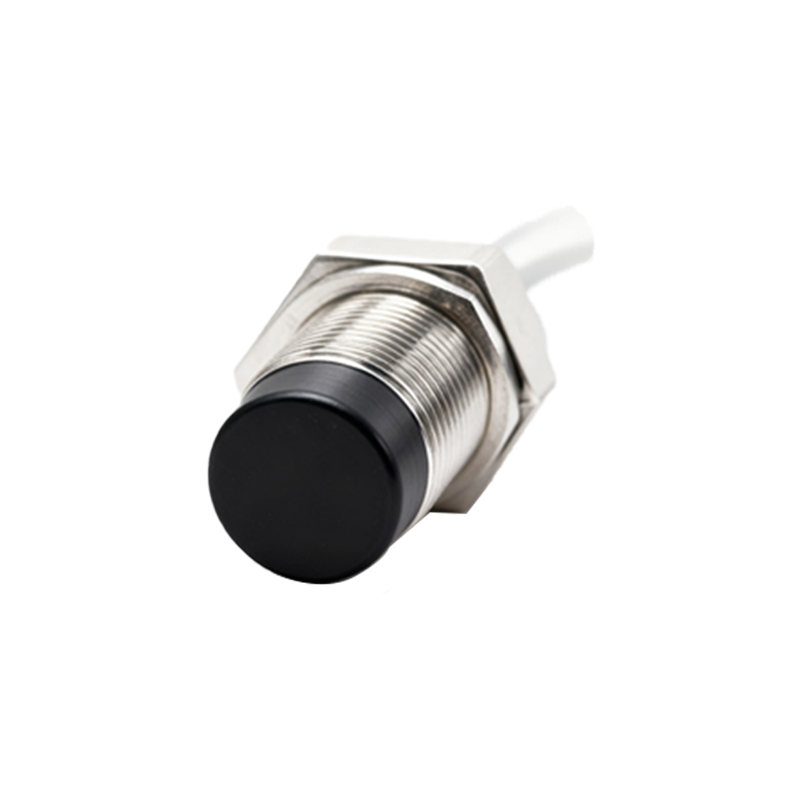
Boundary Conditions: Where It Will Fail
Deploying Sensor 90 outside its implicit boundaries is a recipe for downtime. Here are the no-go zones:
1. Fine Ferrous Dust Environments: In steel grinding or powder metallurgy, sub-50-micron ferrous dust will adhere to the sensing face due to residual magnetism. This creates a permanent "target present" state, a failure mode that is irreversible without physical cleaning. Air purge units are not optional here; they are mandatory.
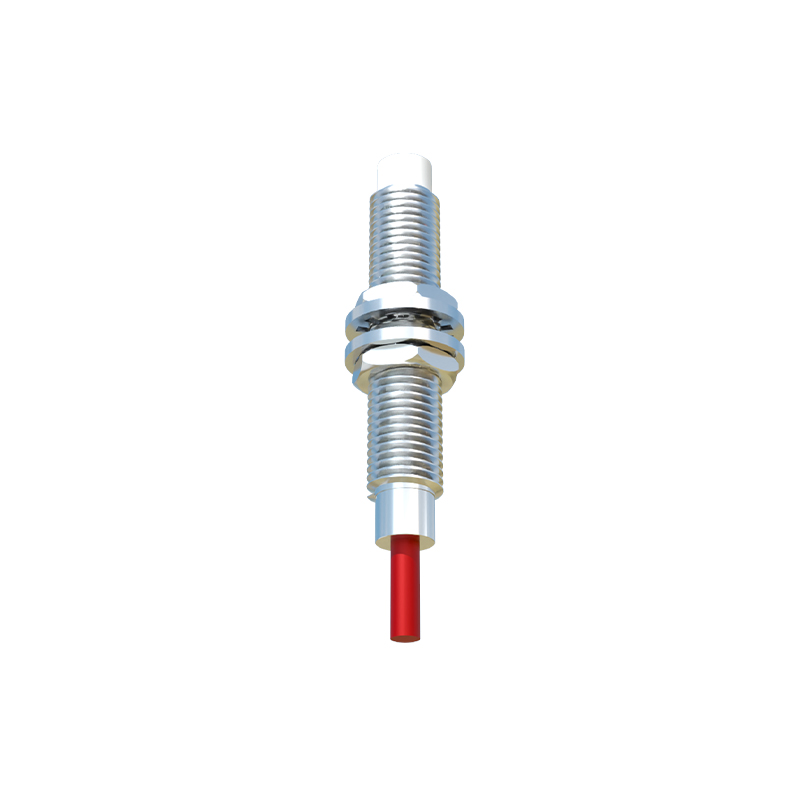
2. High-Frequency Vibration > 50g RMS: Mounted directly on heavy stamping presses or crusher frames, the internal solder joints on the coil terminals are the Achilles' heel. Vibration-induced fatigue will crack these joints, causing intermittent failure. The fix is a secondary isolation mount, decoupling the sensor from the host machine's vibration profile.
3. Non-Ferrous Target Applications with Speed Criticality: While it detects aluminum, the effective sensing distance drops to roughly 60% of the nominal. For high-speed bottling lines with aluminum caps, this reduced headroom means that even minor mechanical misalignment or target warping results in missed counts. For any line speed exceeding 2,000 items/minute, a capacitive or specialized HF (high-frequency) sensor is the only viable choice.
4. Direct Contact with Certain Coolants: The PBT housing resists most oils, but ester-based synthetic coolants and strong alkaline cleaning solutions (pH > 12) will cause polymer stress cracking at threaded entries and cable glands within 500 operational hours.
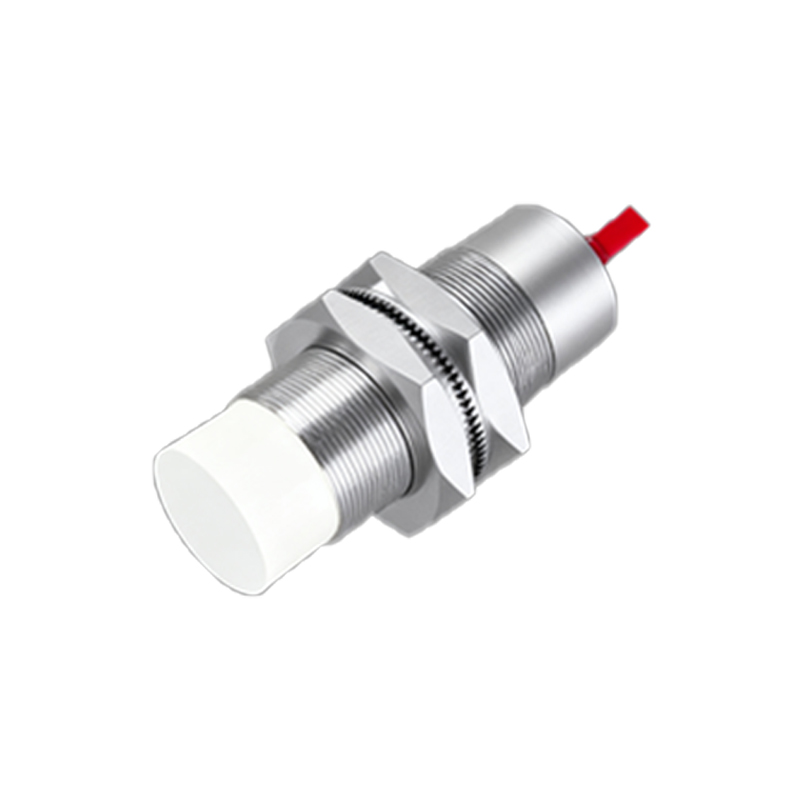
Counter-Intuitive Conclusions: Data-Driven Insights That Defy Common Wisdom
1. A "Failed" Sensor Can Be Your Best Diagnostic Tool. When a Sensor 90 fails intermittently, the instinct is replacement. However, mapping its failure against specific machine cycles (e.g., always during spindle reversal or when a nearby solenoid fires) often reveals not a sensor problem, but a grounding or EMI issue in the entire control cabinet. The sensor is the canary in the coal mine for electrical noise.
2. More Sensing Distance Isn't Always Safer. Engineers often specify sensors with excess headroom for "safety." For a 5mm required gap, they choose a 10mm sensor. In high-precision positioning (e.g., robotic tool changers), this excess range makes the system susceptible to detecting unintended metallic backgrounds (the machine frame itself), causing false positives. The optimal setup is to calibrate the sensor to 130% of the actual target distance, not 200%.
3. The Loudest Sensor Isn't the Most Reliable. The LED indicator and audible click on some models are seen as diagnostic aids. In reality, the power circuitry driving these features generates additional internal heat, marginally reducing the lifespan of adjacent signal conditioning components in thermally challenging environments. The most reliable units we've tracked over 10+ years are often the "dumb" versions with only a basic output LED. Sometimes, less is more.
4. Cost-Per-Hour is the Only Metric That Matters. The upfront cost is irrelevant. A standard Sensor 90 might cost $80 and last 8 months in a harsh environment. A "premium" variant with a hardened coil and platinum-plated contacts costs $220 but lasts 36 months. The cost-per-operational-hour drops from