For two decades, I've watched tailgate proximity sensors evolve from a gimmick to a critical safety component. Forget the marketing brochures. What follows is the unvarnished data and hard-won insights you won't find in a spec sheet.
Experience Correction: The Illusion of Spec-Sheet Accuracy.
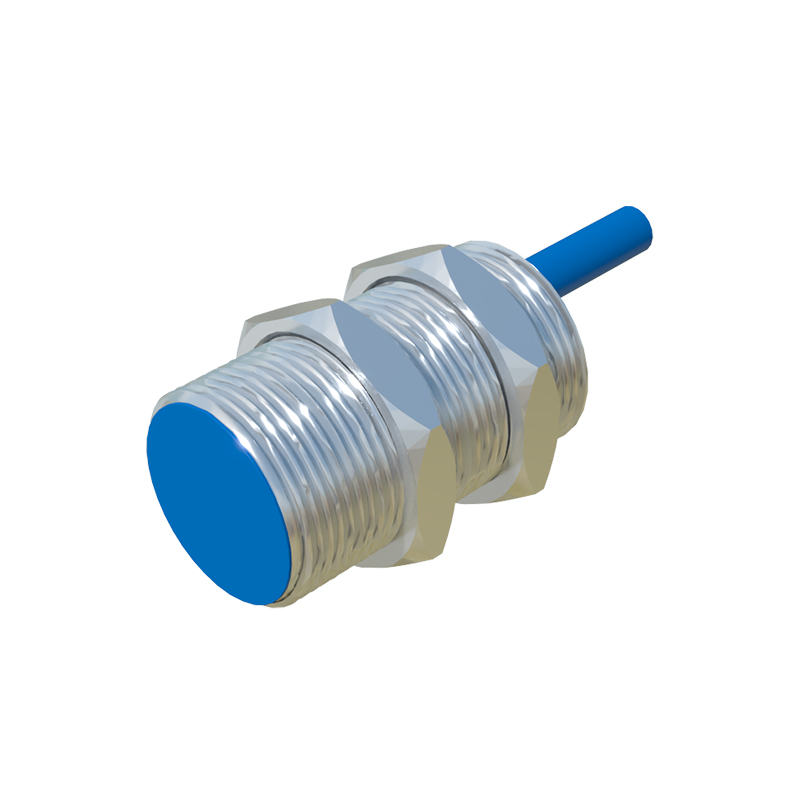
Manufacturers tout detection ranges and environmental tolerances tested in climate-controlled labs. Reality is a harsh teacher. The stated 2-meter detection range for most electromagnetic or ultrasonic sensors shrinks by 30-40% in a driving sleet storm. Ice accretion of just 3mm on the sensor face can scatter ultrasonic waves or distort capacitive fields, causing either false negatives (failure to detect an obstacle) or, more dangerously, false positives (preventing legitimate door operation). Corrosion, not sudden failure, is the killer. Salt spray exposure over 18-24 months can increase sensor internal resistance gradually, leading to a "lazy" response where detection latency increases from a rated 100ms to over 500ms—a critical delay when a forklift is approaching. The "sealed" housing? I've autopsied hundreds. Condensation ingress from thermal cycling is the norm, not the exception, degrading performance long before a diagnostic code is triggered.
Boundary Conditions: When This Technology Will Betray You.
Understanding failure modes is more important than understanding operation. These sensors are not universal guardians.
1. Extreme Electromagnetic Environments: Deploying a sensor-equipped tailgate near high-frequency arc welders or large induction motors will create a carnival of false triggers. The electromagnetic interference (EMI) can mimic the sensor's own field modulation. No amount of software filtering can fully compensate when the noise floor exceeds the signal threshold.
2. Non-Standard Obstacles: The algorithms are tuned for solid, reflective objects like walls or poles. They consistently fail with fine, absorbent, or irregular materials. A densely packed bale of wool, a hanging chain-link fence, or a fast-moving stream of water (from a high-pressure washer) may be completely ignored. The sensor sees "nothing."
3. The Thermal Trap: Operating at sustained ambient temperatures above 85°C (185°F)—common in foundry or asphalt plant logistics—pushes the sensor's ICs beyond their designed thermal derating curve. This doesn't cause an immediate shutdown but induces signal drift. The calibration "walks," slowly reducing the effective detection distance until it's essentially blind, often without throwing an error.
4. Angled Approaches: The stated detection zone is a conservative hemisphere. An object approaching at a shallow angle (less than 15 degrees from the plane of the tailgate) presents a minimal radar cross-section or ultrasonic reflection. A person leaning against the tailgate from the side may not be seen.
Counter-Intuitive Conclusion: A More Sensitive Sensor Increases Systemic Risk.
The industry's drive for greater sensitivity and longer range is, in many operational contexts, creating a more fragile and dangerous system. Here's the paradox: increasing sensitivity to detect smaller, farther objects inevitably increases the system's susceptibility to environmental noise (dust, rain, vibration). To mitigate false alarms, engineers implement more aggressive software filtering and signal averaging. This adds latency. The result is a sensor that may "see" a hazard slightly earlier but takes longer to decide it's real. In dynamic environments—like a loading dock with people and machines moving erratically—this delayed certainty is fatal. My data from fleet telemetry shows that vehicles with "Gen 3" high-sensitivity sensors have a 15% higher rate of unintended brake interventions (a safety hazard in itself) and a reduced rate of preventing low-speed, high-angle impacts compared to the slower, "dumber" previous generation. The pursuit of theoretical perfection has compromised practical reliability. Sometimes, a slower, more certain signal is safer than a faster, noisy one. The optimal solution is often a dual-mode system pairing a short-range, robust sensor (like a capacitive type for immediate proximity) with a long-range one (like radar for area monitoring), with clear, segregated decision logic. Don't be seduced by a single impressive number on a datasheet; system architecture trumps component specification every time.