Capacitive proximity sensors are a cornerstone of modern industrial automation, offering non-contact detection of a wide range of objects. Unlike their inductive counterparts, which only sense metals, capacitive sensors can detect virtually any material, including liquids, powders, plastics, and wood. This versatility stems from their operating principle, which is based on changes in capacitance. Understanding the key parameters of these sensors is crucial for selecting the right device and ensuring reliable operation in any application.
The fundamental working principle involves an oscillator circuit. The sensor's active surface forms one plate of a capacitor, with the target object acting as the other plate, and the air gap as the dielectric. When an object enters the sensor's electrostatic field, it alters the capacitance of the system. This change in capacitance affects the oscillator's amplitude. Once the amplitude reaches a predetermined threshold, the sensor's output state switches, signaling detection.
Several critical parameters define a capacitive sensor's performance and suitability for a task. The most prominent is the rated sensing distance (Sn). This is the nominal operating distance under standardized conditions, typically defined by IEC 60947-5-2. It is crucial to remember that this is a theoretical value. The actual sensing distance can be influenced by the target material's properties.
This leads directly to the concept of reduction factor. Since different materials have different dielectric constants (εr), they affect the electrostatic field differently. A reduction factor indicates how much the sensing range decreases for a given material compared to the reference target (usually steel). For instance, water has a high dielectric constant and might be detected at nearly 100% of Sn, while a plastic with a low εr might have a reduction factor of 0.5, halving the effective sensing range. Engineers must always account for this factor during design and installation.
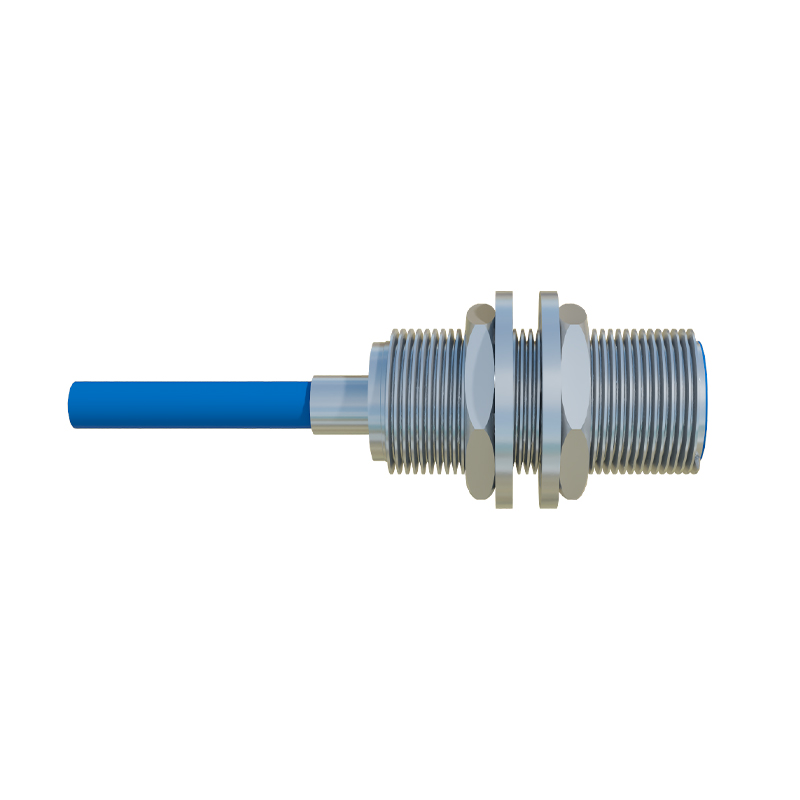
Hysteresis is another vital parameter, expressed as a percentage of the sensing distance. It is the difference between the switch-on point (when the object approaches) and the switch-off point (when the object moves away). Hysteresis prevents output chatter or rapid switching when an object is positioned right at the sensing edge due to vibration or minor fluctuations. A typical hysteresis value is around 10% of Sn, providing stable switching behavior.
The response frequency specifies how quickly the sensor can react, measured in switching cycles per second (Hz). A sensor with a 100 Hz frequency can detect up to 100 objects per second. This parameter is essential for high-speed applications like counting small items on a conveyor belt. It is inherently linked to the sensor's response time, which is the delay between the sensing event and the output change.
Temperature drift is a specification often overlooked. It defines how much the sensing distance may vary with changes in ambient temperature. A quality sensor will have minimal drift, ensuring consistent performance in environments with significant temperature swings, such as near ovens or in outdoor applications.
For installation, the built-in or non-flush mounting characteristic is key. Non-flush (also called shielded) sensors can be embedded in metal without their field being disturbed, allowing for a flush, protected installation. In contrast, non-shielded sensors have a larger sensing field that extends laterally, but they cannot be mounted flush with surrounding metal without causing false triggers.
Finally, output configuration is a fundamental selection parameter. Sensors come with PNP (sourcing) or NPN (sinking) transistor outputs, as well as analog (4-20 mA or 0-10V) or IO-Link versions for continuous distance measurement. The choice depends entirely on the control system's input card requirements.
In practice, selecting the right capacitive sensor involves a careful analysis of these parameters against the application's needs. For level detection of a conductive liquid like water in a plastic tank, a non-flush sensor with a high response frequency might be ideal. For detecting a wood panel through a thin plastic cover, understanding the combined reduction factor is critical to ensure the sensing distance is sufficient. Proper adjustment of the sensitivity potentiometer, present on most models, allows fine-tuning the sensing field strength to ignore the container wall and focus on the target material.
By mastering these capacitive parameters—sensing distance, reduction factor, hysteresis, frequency, and environmental specs—engineers and technicians can deploy these robust sensors to solve complex detection challenges reliably, enhancing efficiency and automation system integrity across countless industries.