For two decades, I've watched servo motor laser sensors evolve from lab curiosities to factory floor staples. Yet, the gap between catalog promises and real-world performance remains a chasm most vendors won't acknowledge. Forget the basics. Let's talk about what happens when the rubber meets the road—specifically, a greasy, vibrating, electromagnetically noisy road.
Experience Correction: The Myth of "Micron-Level" Precision in the Wild.
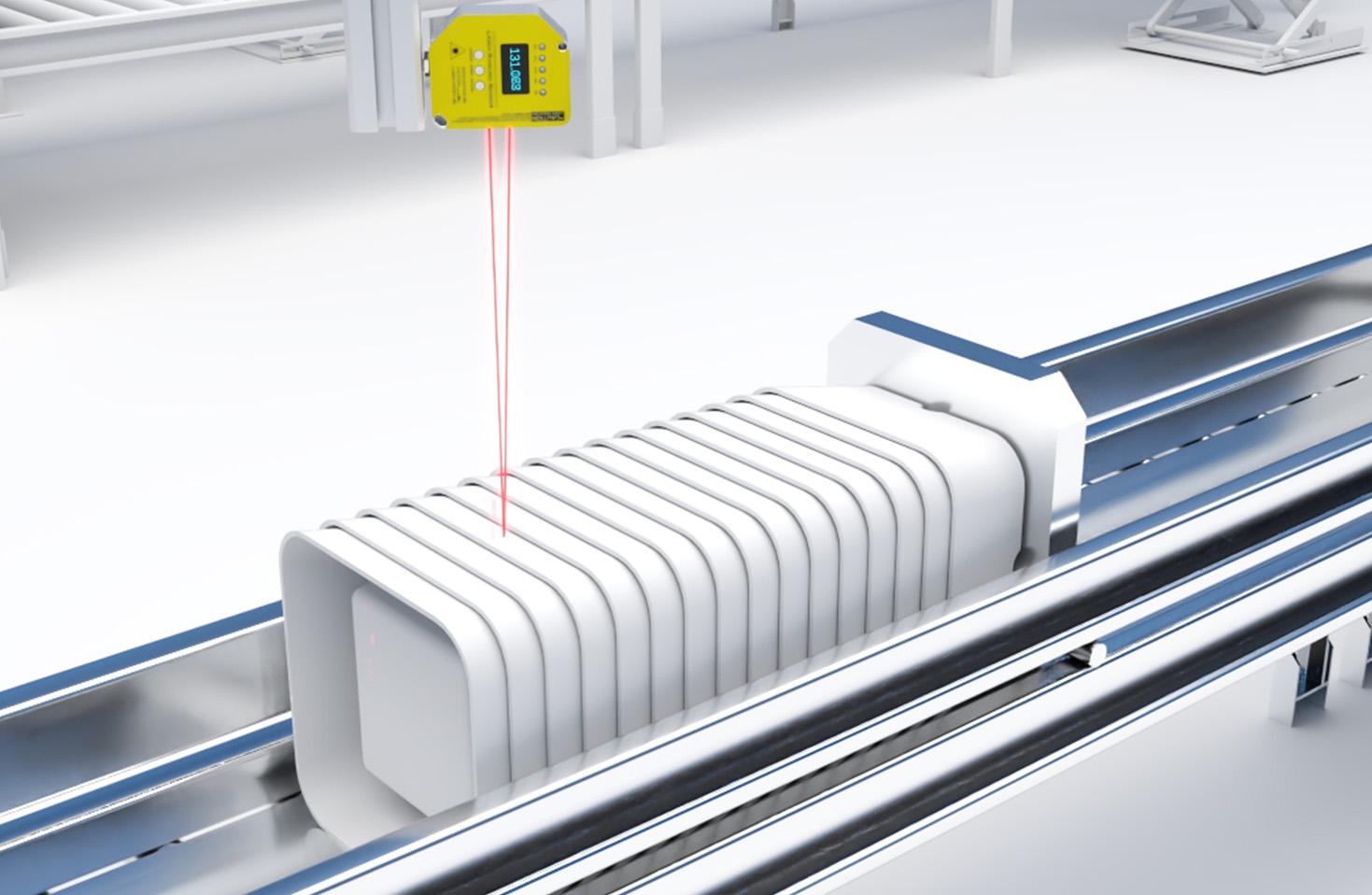
The data sheet boasts ±5µm repeatability. In a controlled, 22°C lab, it might achieve that. Now, mount it on a high-speed pick-and-place arm in an unheated warehouse. Thermal drift from the servo motor's own heat sink can induce a 15-20µm offset within an hour of operation, a error multiplicative with distance. The sensor's internal compensation algorithms, calibrated for a "typical" ambient, are blind to this localized thermal plume. Furthermore, the 1kHz update rate is theoretical. In practice, enabling advanced filtering to handle machine vibration (a necessity) can slash effective bandwidth by 40%, creating a lethal lag in closed-loop systems running at >500Hz cycle times. The real precision figure? Under dynamic industrial loads, budget for ±25-30µm and design your tolerance stack accordingly.
Boundary Conditions: Where This Technology Will Fail You.
Laser triangulation sensors are not universal tools. Deploying them in the following scenarios is an invitation for downtime:
1. High-Concentration Submicron Aerosols: Cutting fluid mist or powder coating overspray isn't just "dirty air." It creates a volumetric scattering field that can return a false signal, tricking the sensor into seeing a phantom surface. The result isn't just noise; it's a coherent, believable, and catastrophically wrong measurement.
2. Specular (Mirror-like) or Transparent Surfaces: This is well-known, but the critical failure mode is often missed. On mildly specular curved surfaces, the sensor may not simply fail to read. It can lock onto a secondary reflection path, providing a stable, repeatable, but geometrically incorrect measurement—a silent failure that inspection will not catch until assembly fails.
3. High-G Shock and High-Frequency Torsional Vibration. While rated for 10-15g shock, the failure point is often the mechanical interface, not the sensor. The rigid mounting required for accuracy turns the sensor into a perfect resonator for high-frequency torsional vibrations from nearby gearboxes or impact tools. This leads to solder joint fatigue and internal optic misalignment within 6-12 months, manifesting as a gradual, irreversible calibration drift.
Counterintuitive Conclusion: Sometimes a "Worse" Sensor Delivers Better System Performance.
The pursuit of the highest specification is often a systems engineering error. Here’s the paradox: In a high-speed packaging line monitoring cardboard box flap position, a robust, diffuse-mode laser sensor with a 50µm resolution and a 3mm laser spot will outperform a precision 1µm, 10µm-spot sensor every time. Why? The larger spot integrates over surface texture and minor tears, providing a stable average position. The ultra-precise sensor will see every fiber and flaw, causing the control system to jitter violently as it chases measurement ghosts. The system-level stability, and thus throughput, is higher with the technically "inferior" device. The insight: Optimize the sensor's *character* to the application's *chaos*, not just its nominal precision to a static target. Another non-obvious point: In the presence of intense variable EMI from VFDs and welders, an analog output (4-20mA) often provides greater long-term stability than a digital bus (EtherCAT, IO-Link). The digital signal, while precise, can suffer from intermittent packet corruption or latency spikes under electrical noise, causing the controller to receive no data or wildly outdated data. The slow, dumb analog signal simply rides through the noise with a manageable amount of superimposed ripple that can be filtered.
The bottom line is this: Selecting and deploying a servo motor laser sensor is an exercise in managing compromises under stress. The key metrics aren't found on the first page of the brochure. They are buried in the interaction between the sensor's physics, your machine's unique disturbance profile, and the ultimate goal of system-level reliability. Specify for the worst day, not the best.