In the rapidly evolving landscape of industrial automation and smart technology, wireless proximity sensors have emerged as a pivotal innovation, fundamentally altering how machines interact with their environment. Unlike their wired predecessors, these sensors operate without physical connections, transmitting detection data via radio frequency, Bluetooth, or other wireless protocols. This shift is not merely a matter of convenience; it represents a significant leap in system design, installation flexibility, and operational intelligence.
The core principle of a proximity sensor remains detecting the presence or absence of an object within a specific range without physical contact. Traditional inductive, capacitive, or photoelectric sensing methods are now integrated with advanced wireless communication modules. This integration allows the sensor to function as an independent node within a larger network, such as the Industrial Internet of Things (IIoT). A typical wireless proximity sensor comprises the sensing element, a microprocessor, a wireless transceiver, and a power source, often a long-life battery or energy-harvesting system.
The advantages of adopting wireless proximity sensors are substantial and multifaceted. First and foremost is the drastic reduction in installation complexity and cost. Eliminating conduit, cable trays, and extensive wiring runs saves significant time and material expenses, especially in large facilities or hard-to-reach areas. This simplicity also translates to enhanced scalability; adding new sensor points to monitor additional machinery or zones becomes a straightforward task.
Furthermore, wireless sensors enable unprecedented mobility and flexibility in system layouts. Equipment can be rearranged, or sensors can be temporarily deployed for diagnostic purposes without the constraints of fixed wiring. This is particularly valuable in dynamic environments like flexible manufacturing cells or warehouse logistics. The reliability of these systems has improved remarkably, with modern designs offering robust resistance to interference, secure data encryption, and impressive operational ranges.
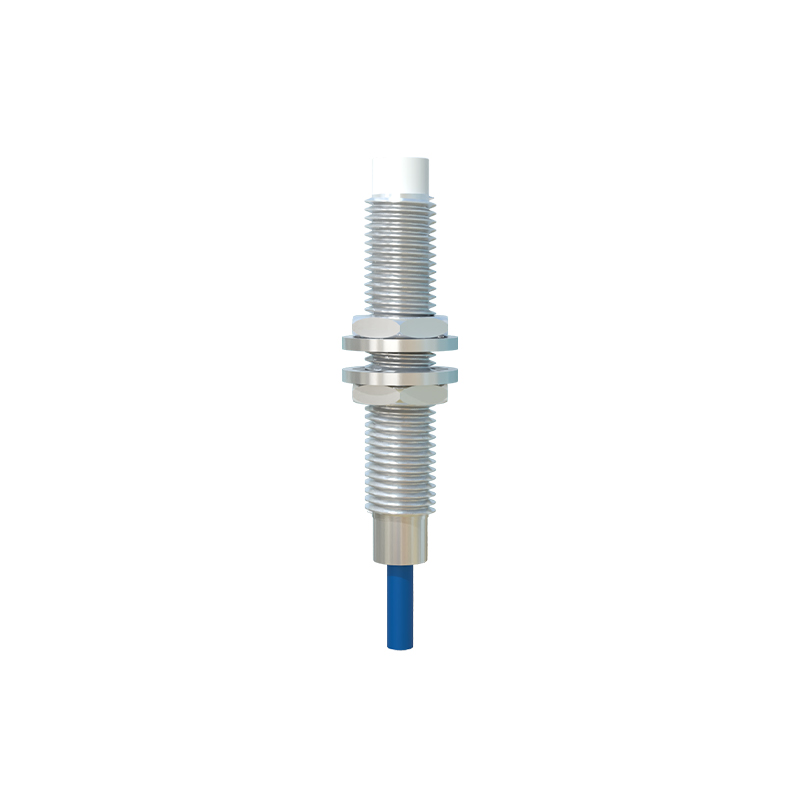
From an application standpoint, wireless proximity sensors are the silent workhorses enabling smarter operations. In manufacturing, they facilitate precise part counting, machine guarding, and robotic guidance without the clutter of wires that can snag or degrade. Predictive maintenance is another critical application; sensors monitoring vibration or position on rotating equipment can transmit data to a central system, flagging anomalies before a catastrophic failure occurs.
In building automation, they contribute to energy efficiency by controlling lighting and HVAC systems based on room occupancy. The logistics and supply chain sector utilizes them for real-time asset tracking within warehouses, ensuring inventory accuracy. Even in agriculture, wireless sensors monitor equipment positions and gate status over vast areas.
However, the implementation of wireless sensor networks requires careful consideration. Power management is paramount, as battery life dictates maintenance intervals. Selecting the appropriate wireless standard—be it Zigbee, LoRaWAN, Wi-Fi, or proprietary protocols—depends on the required data rate, range, and network topology. System integrators must also address potential cybersecurity vulnerabilities to protect sensitive operational data.
Looking ahead, the convergence of wireless sensing with edge computing and artificial intelligence promises even greater autonomy. Sensors will not only detect presence but also begin to interpret context, making preliminary decisions at the network's edge to reduce latency and cloud dependency. Advancements in energy harvesting, such as using vibration or thermal differences, aim to create truly maintenance-free sensors.
In conclusion, wireless proximity sensors are far more than just cable-free versions of old technology. They are foundational components of a connected, data-driven industrial ecosystem. By providing reliable, flexible, and intelligent sensing capabilities, they are removing physical and logistical barriers, paving the way for more adaptive, efficient, and safer automated systems across every sector of the modern economy. Their continued evolution will be integral to realizing the full potential of Industry 4.0 and beyond.