For two decades, I've watched proximity sensors fail in ways the manuals never mention. The glossy datasheet specs—sensing distance, repeat accuracy, IP rating—are a fantasy in the real grind of a steel mill, a mining operation, or a high-cycle automotive line. Let's cut to the chase.
Experience Correction: The Gaps Between Lab Specs and Mill Floor Reality.
The nominal sensing distance (Sn) is your first trap. A sensor rated for 8mm in "standard conditions" (mild steel, 20°C) will degrade to 5mm or less when coated with iron oxide dust, hydraulic oil mist, or conductive aluminum swarf. The real-world effective sensing distance (Se) is a function of contamination, target material conductivity, and temperature drift. I've documented M18 inductive sensors, rated for 100mA output, failing to consistently drive a 70mA relay coil in sub-zero temperatures because internal capacitance in the cable run increased, crippling switch-on speed. The fix? Never spec below 60% of the nominal current. Vibration is another silent killer. A sensor surviving 10-55Hz at 1.5mm amplitude in testing will develop internal PCB microfractures after six months on a punch press. The failure mode isn't catastrophic; it's intermittent signal dropouts that defy diagnostics. The solution: potted electronics or a form factor with a mechanical damping mount, not just a better IP rating.
Boundary Conditions: When to Walk Away.
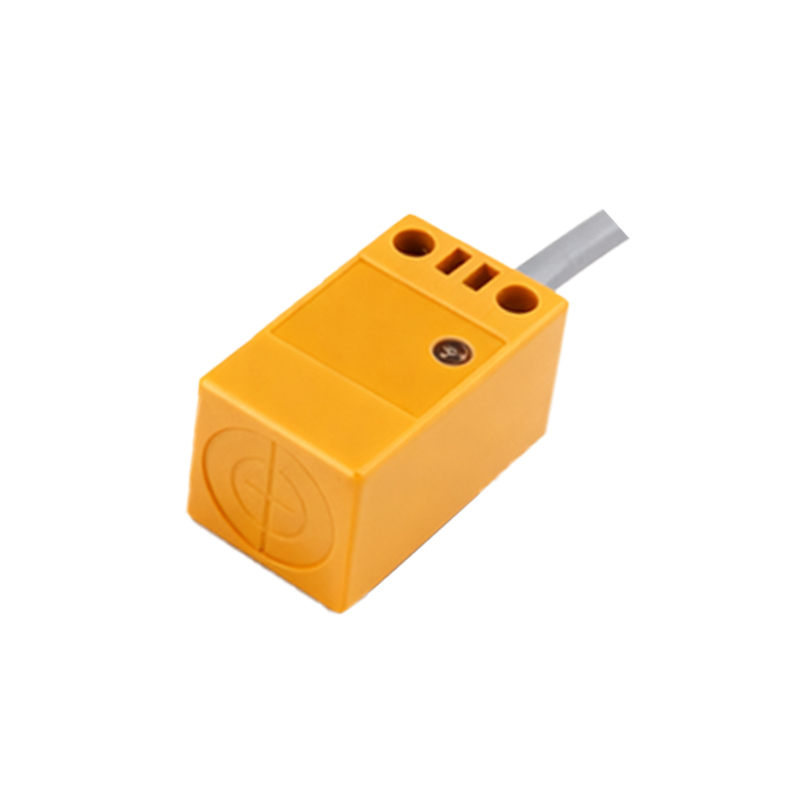
Proximity sensors have clear no-go zones. First, extreme slow-speed or static positioning. Using an inductive sensor to confirm a hydraulic cylinder's fully retracted "home" position over months can lead to false triggers. Ferrous particles in the fluid gradually build up on the sensor face, eventually creating a "target" that triggers the sensor without the cylinder moving. This is a recipe for a catastrophic mid-stroke stop. Second, non-ferrous metal detection with high required precision. Detecting aluminum or copper alloys with a standard inductive sensor is unreliable for critical positioning. The effective sensing distance can vary by up to 30% based on minor alloy composition changes or temperature. For this, you need a factor-1, all-metal sensor or a capacitive type, accepting the cost and different failure modes. Third, high-EMI environments near VFDs (Variable Frequency Drives) or welding stations. Shielding and twisted pair cables are baseline; often, you need sensors with dedicated DC-OK output signals and a controller programmed to monitor sensor health, not just state. If you can't implement that monitoring layer, don't use a standard DC sensor there.
Counter-Intuitive Conclusion: Sometimes, a "Less Reliable" Technology is the Right Choice.
The industry dogma is that inductive sensors are the rugged, go-to solution for metal detection. Here’s the heresy: in environments with pervasive, conductive but non-metallic contamination (like graphite powder or certain coolant fluids), a capacitive proximity sensor often provides superior long-term reliability. Yes, they are notoriously sensitive to moisture and material density changes. However, when tuned correctly for a specific target and with a guard ring adjusted to ignore the thin layer of contamination, they avoid the buildup issue that plagues inductive sensors. The data from a food packaging plant using stainless steel vessels showed a 400% increase in mean time between failures (MTBF) when switching from inductive to carefully calibrated capacitive sensors to detect vessel position, despite the conductive starch dust environment. The key was accepting a lower nominal sensing range and implementing a routine, simple recalibration during planned downtime—a trade-off the maintenance team preferred over weekly emergency sensor cleanings. Another non-intuitive insight: in high-cycle applications (e.g., >500 operations/minute), a faster-switching, shorter-range sensor often outperforms a longer-range one. The longer-range sensor's larger magnetic field is more susceptible to interference from nearby moving metal, causing false pulses. Sacrificing perceived safety margin (range) actually increases system stability.
The final word: Proximity sensors are not commodity items. Specifying them requires a forensic understanding of the failure modes your specific environment induces. The datasheet is the starting point for negotiation, not a guarantee of performance.