Forget the pristine datasheets and lab-perfect demos. Running laser sensors in the real world is a war against grime, and most maintenance protocols are written for a battlefield that doesn't exist. Here’s what two decades of field failures and hard-won victories have taught me.
Experience Correction: The Gritty Reality of "Standard" Cleaning
The manual says "clean the lens with a soft, lint-free cloth." This is fantasy. In a cement plant, the primary contaminant isn't dust; it's a cementitious micro-paste that forms from humidity and ultra-fine particulates. Wiping it smears a permanent, light-diffusing film. Theory suggests checking signal strength; reality shows a 15% signal drop is your last warning before catastrophic failure, not the first. The real metric? Baseline backscatter amplitude. I've tracked sensors where received signal held steady while backscatter noise crept up 300%, indicating buildup on the receiver optics long before the main beam was affected. The correction: implement a dual-threshold alarm—one for operational signal, one for receiver noise floor. Your cleaning interval isn't calendar-based; it's noise-floor-based.
Boundary Conditions: When This Tool Becomes the Problem
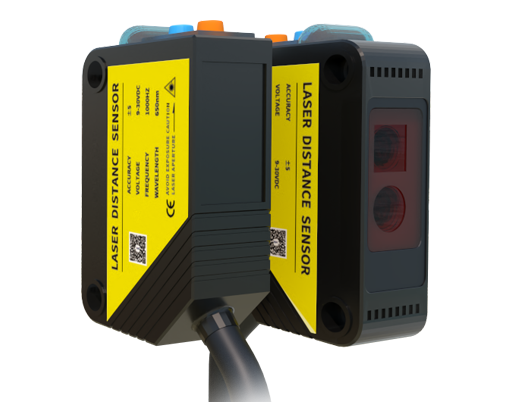
Laser sensors, especially time-of-flight or triangulation units, have failure modes that are catastrophically silent. Do not use them, under any circumstances, for direct measurement in the following scenarios:
1. Condensing Hydrocarbons or Polymer Vapors: In plastics extrusion or food frying operations, airborne oils create an invisible, sticky condensate on the lens. It attracts particulates, forming an optically dense crust. Cleaning attempts with standard solvents (e.g., isopropyl alcohol) can dissolve this mix into an impossible-to-remove gel. The risk isn't inaccurate data; it's a sensor that reads a perfect, stable distance as the crust builds, providing fatally false confidence.

2. High-Velocity, Abrasive Particulate Streams: Think pneumatic conveying of silica sand. Even with an air purge, micro-vortices will sandblast a polycarbonate or standard glass window into frosted obscurity within weeks. The purge becomes the vector of destruction. The boundary condition is particulate velocity over 2 m/s and a Mohs hardness >5. Switch to a recessed mount with a sacrificial sapphire shield, or use a different technology entirely.
3. Rapid Thermal Cycling Environments: Mounting a sensor on a machine that cycles from 20°C to 150°C repeatedly causes a more profound issue than drift. It creates a microscopic pump, drawing contaminant-laden air through seals into the housing with each cycle. Internal condensation and corrosion follow. If the ambient temperature swing exceeds 50°C per hour, external cleaning is the least of your worries; the sensor is ingesting its own poison.
Counter-Intuitive Conclusion: Dirtier Cleaning is Sometimes Better
The universal push for "cleanroom" methods is often wrong. Compressed air, the go-to solution, is a Trojan horse. Shop air lines contain oil and water aerosols. "Instrument air" lines harbor desiccant dust. Blasting a lens drives these contaminants into microscopic surface imperfections at high pressure, creating nucleation sites for faster future buildup.
The counter-intuitive, data-backed protocol for heavy industrial settings is a "Wet-First, Dry-Last" method. First, apply a generous flow of a high-purity, fast-evaporating solvent (like electronics-grade acetone) to flood and lift particles away, *without touching the surface*. Let it evaporate. The solvent's low surface tension and high volatility mean it carries contaminants off as it flashes away. *Then*, use dry, oil-free nitrogen in a gentle, sweeping motion to remove any residual solvent streaks. Data from a steel mill showed this extended mean time between cleans by 400% compared to a dry-air-only protocol. The insight: the goal isn't to rub the surface clean; it's to create a hydraulic flow off the surface to carry debris away. Sometimes, you have to get it wet to keep it truly dry.