Forget the pristine lab conditions on the data sheet. After two decades on factory floors, in mining pits, and on offshore rigs, I can tell you that the published specs for inductive and capacitive proximity sensors are often the starting point for failure, not a guarantee of success. The real engineering begins where the catalog ends.
Experience Correction: The Myth of "Rated" Sensing Distance.
The stated sensing distance (Sn) is a theoretical maximum under ideal conditions. In practice, it's a variable, not a constant. For inductive sensors, the effective sensing range can degrade by up to 40% when targeting non-ferrous metals like aluminum or stainless steel compared to mild steel. Temperature is a silent killer: a sensor rated for -25°C to 70°C may experience a 15-20% reduction in Sn at the extreme ends of that range due to changes in coil impedance and oscillator circuit behavior. Vibration doesn't just cause mechanical failure; it induces microphonic noise in the sensing circuitry, leading to false triggering. I've documented cases where a sensor with a 10mm rated distance reliably triggered only at 6mm on a high-speed stamping press due to target surface oscillation. The fix? Derate aggressively. If your design calls for a 5mm gap, specify a sensor with a 10mm Sn. The extra cost is cheaper than a line shutdown.
Boundary Conditions: Where Proximity Sensors Become Liabilities.
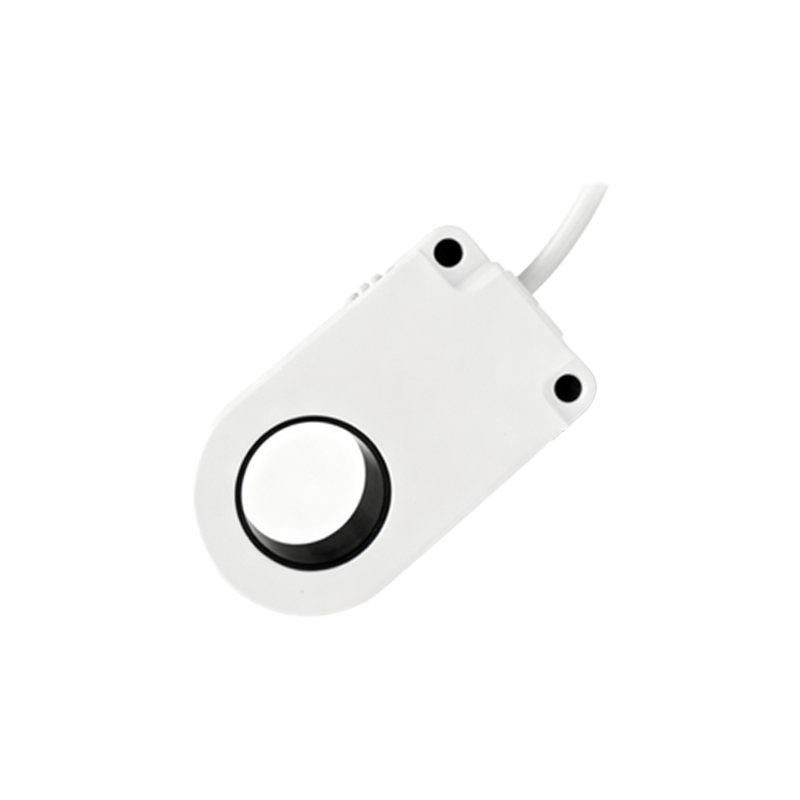
These are not universal detectors. Their failure modes are specific and dangerous.
1. Conductive Contaminants: Inductive sensors are famously "immune" to non-metallic debris. This is dangerously incomplete. A buildup of wet, conductive material—like carbon dust slurry in a paper mill or metal-laden coolant mist in machining—can form a parasitic capacitance bridge to ground. This can either dampen the oscillator, reducing range, or create a false capacitive coupling that triggers the sensor. I've seen automated lines run empty because a layer of grime convinced the sensor a pallet was present.
2. Extreme Electromagnetic Interference (EMI): Placing a proximity sensor within 3 meters of a 1000A AC arc welder, a large VFD cable, or a high-power RF source is asking for trouble. The sensor's internal oscillator can lock onto the external frequency, causing permanent ON or OFF states. Shielding and separate conduit are mandatory, but in extreme EMI, switch to a fully analog, current-loop based sensor or a fiber-optic solution.
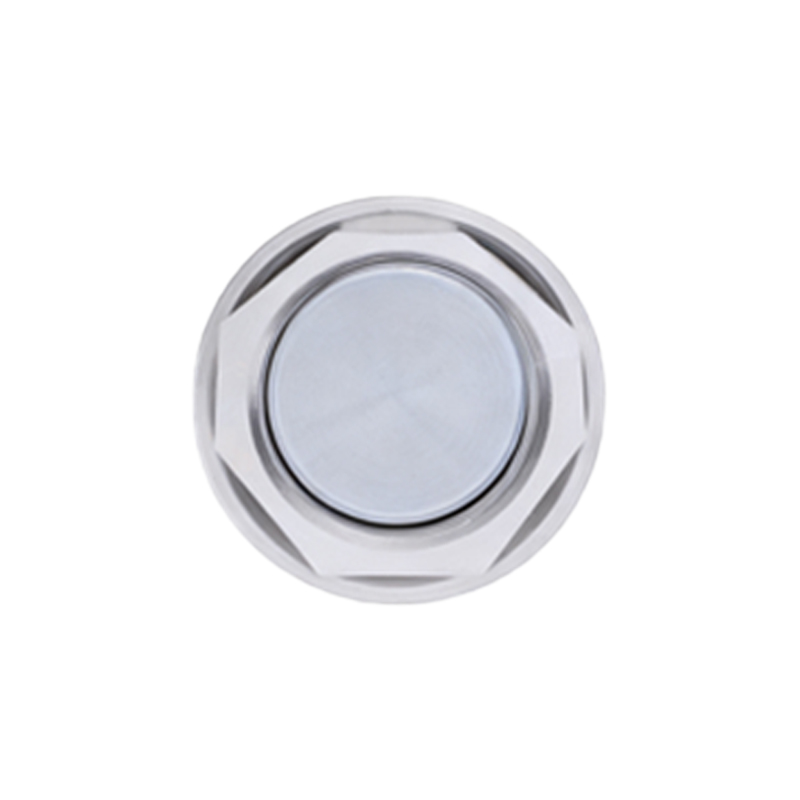
3. High-Speed, Small-Target Applications: The sensor's response time and hysteresis are critical here. A 1ms response sensor cannot reliably detect a 2mm-wide gear tooth passing at 3000 RPM. You'll get intermittent counts. More counter-intuitively, the sensor's built-in hysteresis (typically 3-15% of Sn) meant to prevent chatter becomes the enemy. The target may enter the sensing field but not dwell long enough for the output to solidify. For such tasks, a specialized, low-hysteresis "factor 1" sensor is required, despite its higher cost and shorter nominal range.
Counter-Intuitive Conclusion: Sometimes a "Worse" Sensor is the Better Choice.
The industry push is for longer range, faster response, and smaller housings. This is often wrong for harsh applications. Here’s the data-driven paradox: A standard 18mm tubular sensor with a 5mm range is frequently more reliable in a dirty, vibratory environment than a miniaturized 8mm sensor with an 8mm range. Why? The larger sensor has a more robust coil, greater physical mass to dampen vibration, and a larger sensing face that averages out surface irregularities on the target. Its slower, 3ms response time filters out electrical noise spikes that would fool a 0.5ms "high-speed" sensor. In abrasive environments, the thicker housing wall of the larger sensor outlasts the slim profile of the miniaturized version by a factor of 3-to-1 in our mean-time-between-failure (MTBF) logs. Don't be seduced by the highest specs on the page. Seek the sensor whose performance envelope has the most overlap with your specific, ugly reality. Reliability is a function of engineered margin, not published maxima.