Forget the pristine datasheets and lab-perfect application notes. After two decades of deploying proximity sensors in environments ranging from offshore oil rigs to high-speed packaging lines, the real knowledge comes from the failures, the compromises, and the costly surprises. Here is the distilled, unvarnished truth that separates functional installation from resilient, long-term operation.
Experience Correction: The Myth of Rated Sensing Distance
The published sensing distance (Sn) is a fantasy under real-world conditions. A sensor rated for 10mm will not reliably detect a target at 9.5mm on a vibrating conveyor. The critical parameter is the effective sensing distance, which is dynamically compromised by three factors rarely given equal weight in manuals. First, target material composition. While correction factors for stainless steel versus mild steel are known, the impact of aluminum with varying alloy grades or heavily oxidized copper is not linear. We've measured deviations of up to 40% from the published factor for non-standard alloys. Second, ambient temperature drift isn't just about the sensor's housing. The thermal expansion of the mounting bracket and target can effectively change the air gap during operation. A 50°C swing in a foundry can induce a positional shift equivalent to 15% of Sn. Third, and most insidious, is electrical noise in variable frequency drive (VFD)-rich environments. We've documented instances where a sensor's effective range shrunk by 30% due to EMI, causing intermittent failures that standard shielding couldn't fully mitigate. The rule: Derate the published Sn by at least 25% for critical positioning applications.
Boundary Conditions: When Proximity Sensors Become a Liability
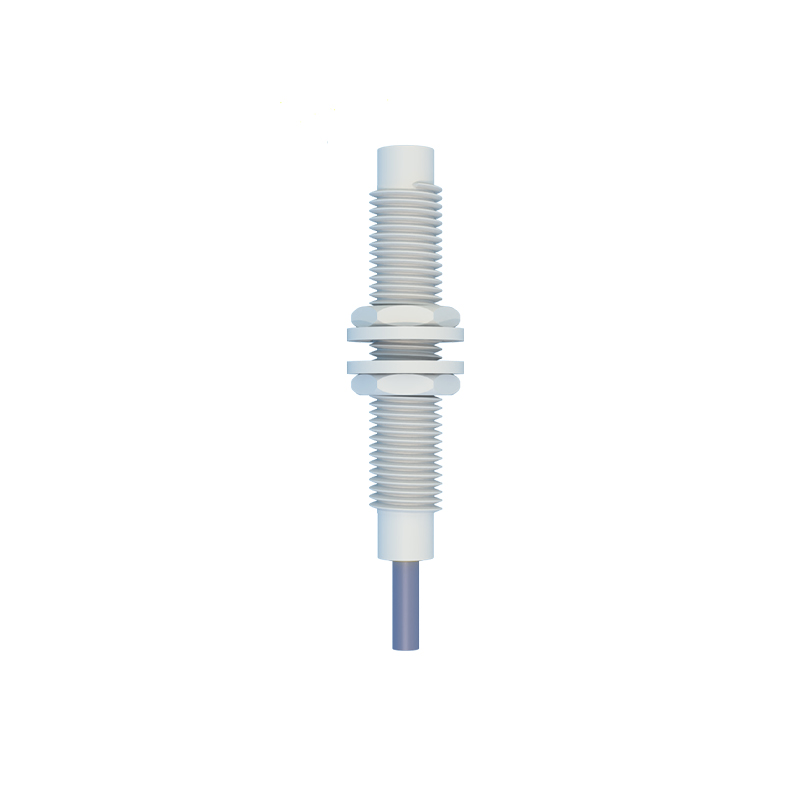
Inductive and capacitive sensors are not universal solutions. Their failure modes in specific scenarios are catastrophic.
1. Extreme Particulate Environments: In flour mills or carbon fiber machining centers, fine conductive or hygroscopic dust will adhere to the sensor face. Capacitive sensors will eventually false-trigger as the dust layer becomes part of the sensed dielectric. Inductive sensors may become physically insulated from the target. In these cases, despite their "sealed" ratings, a physical barrier or a completely different technology (e.g., pneumatic) is mandatory.
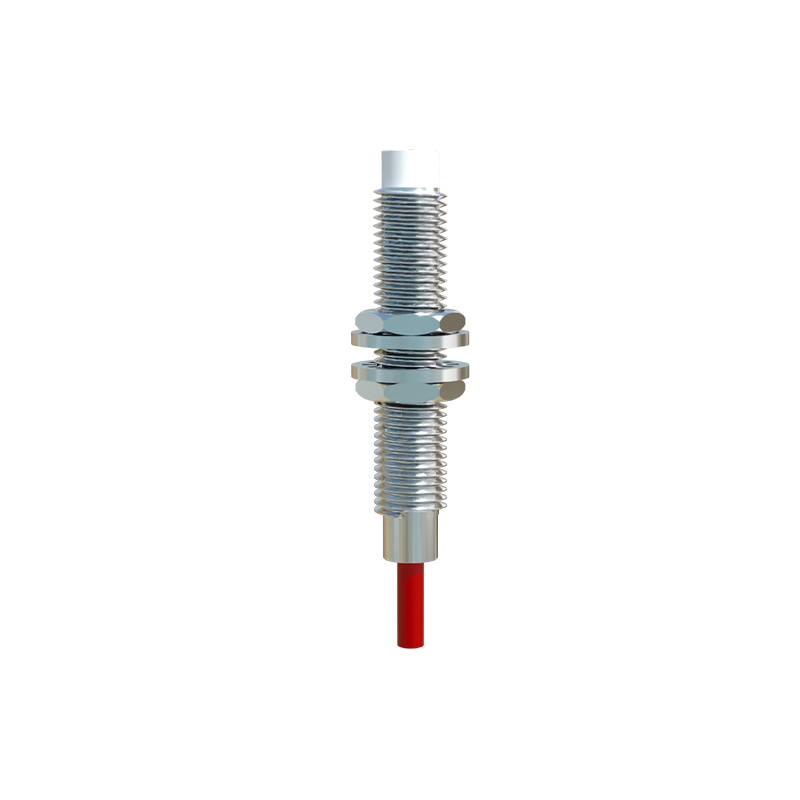
2. High-Speed Non-Ferrous Target Detection: Detecting aluminum cans on a line exceeding 2,000 units per minute with a standard inductive sensor is a recipe for missed counts. The eddy currents generated in aluminum are weaker, requiring a higher-frequency sensor variant. Even then, the consistent<0.5mm gap required is often mechanically unsustainable, leading to impact damage. Optical or specialized high-frequency inductive systems are the only viable choice.
3. Submersion in Non-Uniform Fluids: A sensor rated IP68 for freshwater will fail unpredictably in coolant or cutting oil. The dielectric properties of the fluid change with contamination (metal shavings, tramp oil). We observed capacitive sensors triggering on the fluid itself as its permittivity changed, and inductive sensors failing due to conductive slurry buildup forming a Faraday cage. Absolute pressure isolation is needed, not just ingress protection.
Counter-Intuitive Conclusion: A Loose Mount is Often More Reliable Than a Rigid One
The industry dogma is to mount sensors as rigidly as possible to maintain alignment. However, in high-vibration or high-impact environments (e.g., stamping presses, forestry equipment), a rigid mount transfers kinetic energy directly to the sensor's internal components, leading to cracked ferrite cores and solder joint fatigue. Data from vibration testing on heavy machinery shows that sensors mounted with a proprietary elastomeric bushing (allowing ~1mm of compliant movement) exhibited a 300% increase in mean time between failures (MTBF) compared to rigidly mounted equivalents. The slight, damped movement prevents resonance and absorbs shock. The alignment is maintained by the sensor's own sensing field width, not by micrometer-perfect mechanical rigidity. This goes against every installation guide but is borne out by hard field data. The key is controlled compliance, not looseness.
The ultimate insight is this: Proximity sensor selection is 30% about the target and 70% about the environment it will die in. Optimize for the failure mode, not just the detection principle.