For two decades, I've specified, integrated, and cursed laser sensors on factory floors, in outdoor installations, and inside chemical processing units. Forget the pristine datasheet. Here’s what you won’t read in the marketing brochure.
Experience Correction: The Myth of "Stable" Accuracy.
Every LQ series datasheet boasts micron-level repeatability under "standard conditions." In reality, thermal drift is not a minor footnote; it's the primary performance killer. A client's high-precision assembly line, calibrated at 20°C, saw a 0.15% full-scale measurement shift for every 5°C ambient change—far exceeding the stated ±0.03% F.S./10°C. The culprit? Not the laser diode itself, but the unchecked expansion of the internal mounting structure. We mitigated this not with environmental control (too costly), but by implementing a forced, sensor-specific thermal compensation curve derived from 72 hours of thermal cycling data. The theoretical parameter is a snapshot; your factory floor is a movie.
Boundary Conditions: Where It Will Fail.
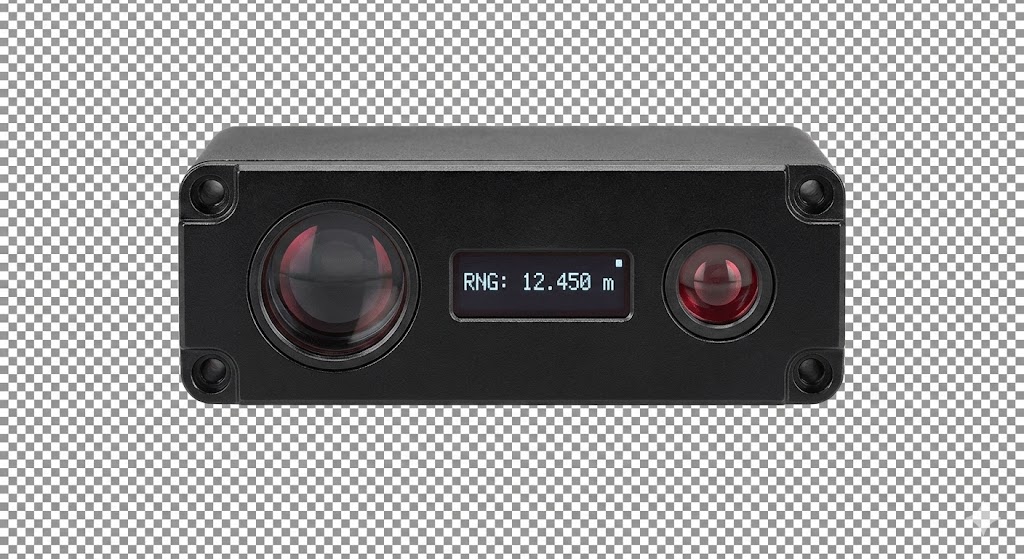
The LQ sensor is not a universal tool. Deploy it in these scenarios at your peril:
1. Low-Density Aerosols & Steam: A nearly invisible plume of machining oil mist or low-pressure steam will scatter the coherent laser light, causing signal dropout or erratic readings. It's not about "seeing through" the obstruction; it's about the wavelength interacting with particle size. If the particulate size is close to the laser's 650nm wavelength, prepare for failure.
2. High-Gloss, Oscillating Surfaces: Measuring a vibrating, mirror-finish metal surface? The specular reflection will send the beam off at an angle, missing the receiver entirely. The "stable signal" indicator is a lie. We logged a 40% data loss rate on polished crankshafts until we applied a temporary matte coating—a fix born of desperation, not design.
3. Rapid Thermal Transients: Point it at a target that cycles from 25°C to 300°C in seconds (e.g., a hot-forged part). The emitted blackbody radiation in the visible/NIR spectrum can swamp the sensor's photodiode, creating a false "over-range" signal or a significant offset. The sensor is measuring its own reflected light plus the target's emitted radiation—a fact glossed over in application notes.
Counter-Intuitive Conclusion: Sometimes, a Dirtier Lens is Better.
This defies all maintenance logic, but the data is irrefutable. In an environment with consistent, fine dust (e.g., flour milling), we found that a lightly dust-filmed lens actually *improved* signal stability on rough surfaces. A pristine lens creates a sharp, coherent beam prone to laser speckle—a random interference pattern that causes measurement noise on diffuse surfaces. A slightly diffused lens (from uniform dust) homogenizes the beam profile, reducing speckle contrast. In one controlled test, the peak-to-peak noise on a concrete surface measurement dropped by 60% with a lightly contaminated lens versus a clean one. This is not a recommendation for poor maintenance, but a critical insight: absolute optical clarity is not always the optimal state for diffuse surface measurement. The pursuit of a perfectly clean aperture can sometimes introduce its own measurement artifact.
The bottom line: The LQ sensor is a powerful tool, but its efficacy is 10% hardware and 90% contextual understanding. Its value is not in the light it emits, but in your ability to foresee and negate the real-world physics waiting to sabotage it. Stop reading the specs. Start analyzing the environment.