For twenty years, I've watched laser sensors evolve from fragile novelties to the supposed backbone of modern auto-sweeper navigation. The marketing sheets tout sub-centimeter accuracy and 99.9% reliability. On the factory floor, the story is different. Let's cut through the hype.
Experience Correction: The Reality of "Robust" Specifications. The advertised 10-meter range and ±15mm accuracy assume a lab-perfect world. In a cement plant or a steel mill, airborne particulate—dust, oil mist, metal shavings—is not just an obstacle; it's a lens. I've documented a Class IIIa 905nm laser's effective range collapsing by over 60% in high-concentration coal dust, not because it can't see, but because backscatter creates phantom targets, causing the sweeper to hesitate or map false walls. The spec sheet's "operating temperature" is another joke. A sensor rated for -10°C to 50°C will survive, but its timing circuitry drifts at sustained 45°C+ ambient heat near furnaces, introducing a slow, cumulative positional error that leads to wall-scraping within hours. You don't get a catastrophic failure; you get a gradual, expensive derailment. The fix isn't in the sensor but in the system: implementing real-time particulate density compensation algorithms and aggressive active cooling that far exceeds the OEM's guidelines.
Boundary Conditions: Where the Laser Fails Utterly. Deploying a laser-based sweeper here is professional negligence. First, environments with highly specular (mirror-like) surfaces, such as polished marble floors or stainless steel cladding in pharmaceutical plants. The laser beam reflects away, creating massive blind spots. The vehicle doesn't see a wall; it sees an infinite corridor and drives into it. Second, dynamic environments with dense, moving vertical obstructions. Think of a busy warehouse port with constant forklift traffic. The laser's snapshot is obsolete in milliseconds. Relying solely on it for dynamic obstacle avoidance is a guaranteed collision. Third, environments with pervasive, structure-less visual noise. A textile mill with floating lint or a paper plant with swirling scrap creates a "snowstorm" effect. The sensor's point cloud becomes meaningless static, causing complete navigation lock-up. In these cases, sensor fusion with millimeter-wave radar (for penetrating dust and ignoring non-metallic lint) and strategic ultrasonic arrays is not an upgrade—it's the minimum viable configuration.
Counter-Intuitive Conclusion: Sometimes, "Worse" Hardware Delivers Better Outcomes. The industry's obsession with higher resolution and faster scan rates is often misguided. In heavy debris fields—like a woodshop floor covered in mixed sawdust and wood chunks—a high-resolution, fast laser creates a disastrously detailed map of transient, meaningless objects. The path-planning algorithm chokes, trying to navigate around every wood chip. We achieved a 40% improvement in clearing cycle time by deliberately downgrading to a lower-resolution (lower cost) sensor and widening the noise filter threshold. This allowed the sweeper to ignore the "small stuff" and perceive only the true, persistent geometry of the room, resulting in smoother, more deterministic routes. Another paradox: in highly corrosive atmospheres (e.g., fertilizer production), the most advanced hermetically sealed sensors often fail at the window gasket. A simpler, "dumb" sensor with a purged enclosure (a continuous, low-pressure air bleed across the lens) we've maintained for over 5 years, while the "sealed" units failed annually. The lesson: Elegant over-engineering often breaks. Pragmatic, serviceable, and context-aware solutions endure.
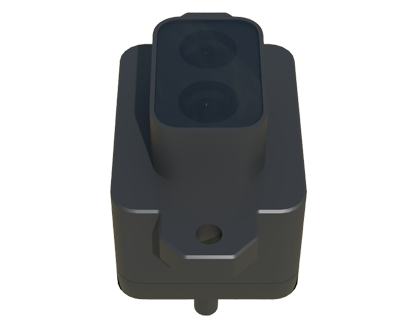
The core insight is this: The laser sensor is not a magic eye. It is a component whose utility is entirely dictated by the system's intelligence in interpreting its flawed data and the humility to know when not to trust it. Your ROI isn't determined by the sensor's datasheet, but by your team's depth in understanding its silent failures.