For two decades, I've specified, integrated, and cursed proximity sensors in applications ranging from semiconductor lithography to deep-sea ROVs. Forget the datasheet poetry. When we talk about minimizing sensor diameter—pushing below M3, M2, even M1.5—the game changes from electrical engineering to material science and battlefield triage.
Experience Correction: The Gritty Reality of "Theoretical" Sensing Distance
The catalog lists a 1mm nominal sensing distance for that M1.4 tubular sensor. In a clean lab, maybe. In practice, that figure is a fantasy. The core deviation isn't just from temperature or supply voltage drift; it's from magnetic permeability contamination. A microscopic ferrous dust particle—invisible to the eye, endemic in any industrial environment—adhering to the sensor face can permanently alter its magnetic field distribution, causing a 15-30% reduction in effective sensing distance within hours of deployment. This isn't a calibration drift; it's a fundamental shift. The smaller the active face, the more catastrophic the effect. A 2mm diameter sensor sees a 10% shift from the same particle that causes a 40% shift in a 1mm sensor. The fix isn't better sealing (impossible at that scale), but designing the system for a de-rated sensing distance of no more than 60% of nominal from day one. Your mechanical engineers will hate you. Do it anyway.
Boundary Conditions: Where Ultra-Miniature Sensors Become Liabilities
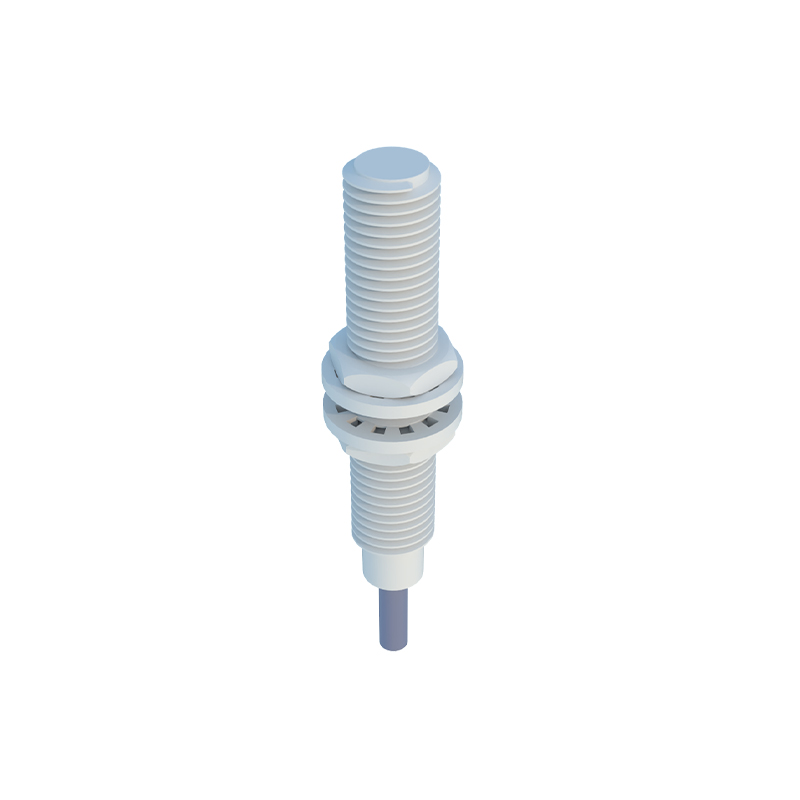
Deploying sub-2mm sensors is an act of calculated risk. They fail categorically in these scenarios:
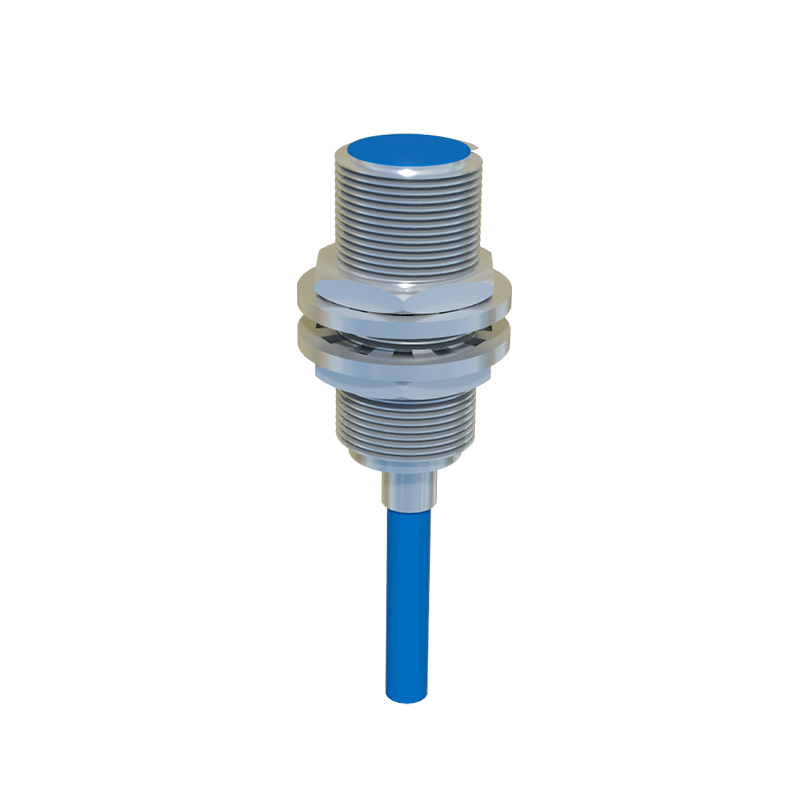
1. Any Non-Rigid Mounting: The threadless, epoxy-mounted housings common below M2 cannot tolerate lateral force. A 0.5N lateral load—the weight of a small cable tug—can misalign the core by microns, killing repeatability. They are unusable in assemblies subject to thermal expansion mismatch between housing and substrate.
2. Media with High Dielectric Constant: Sensing non-ferrous metals or through barriers? Water (ε_r ~80) or hydraulic fluid within 0.5mm of the face will capacitively couple with the oscillator, causing false triggers. The fringe field from a tiny sensor is disproportionately affected. If your target isn't in a vacuum or dry air, abort.
3. High-Cycle Applications (>50 Hz): The limiting factor isn't electronics, but eddy current heating in the tiny ferrite core. At 100Hz actuation on a mild steel target, core temperatures can reach 120°C within minutes, degrading the epoxy bond and shifting inductance. Datasheet switching frequency is a DC figure. For dynamic duty, derate by 70%.
Counter-Intuitive Conclusion: A Smaller Diameter Can Reduce Spatial Resolution
The universal assumption: a smaller sensor yields finer positional resolution. This is dangerously wrong for inductive proximity sensors. Below ~M1.5, the magnetic field's "spot size" does not scale linearly. The field spread (the fringing) becomes a larger percentage of the total field volume. A 1mm sensor doesn't give you a 1mm precise detection zone; it gives you a diffuse, weak field that's easily influenced by adjacent non-target metals—a neighboring bolt, the machine frame—causing "electrical shadowing." In a dense assembly, a 2mm sensor often provides better target discrimination than a 1mm sensor because its field, while larger, is more robust and directional. Choosing the smallest possible sensor can increase, not decrease, false triggering from background clutter. The pursuit of miniaturization must be subordinate to system-level EMI and magnetic hygiene, a lesson learned after a million-dollar assembly line halted due to a sensor "seeing" a fastener 5mm away from its intended target.
The drive for miniaturization is relentless, but below M2, you are no longer buying a sensor; you are buying a system of compromises. Specify the largest diameter your form factor can tolerate, not the smallest. Your mean time between failures (MTBF) logs will thank you.