Forget the pristine lab conditions of the datasheet. After two decades on factory floors, in mining pits, and on offshore rigs, I've learned that the true performance of a proximity sensor is defined not by its nominal specs, but by its failures. Here’s the unvarnished truth you won't find in marketing brochures.
Experience Correction: The Gritty Reality of "Standard" Specs
The quoted sensing distance is a fantasy in real-world applications. A sensor rated for 15mm will reliably achieve perhaps 12mm when new and clean. Introduce conductive dust (metal shavings, carbon powder), and its effective range can collapse by 30-40%. The reason isn't just physical obstruction; fine conductive particles create a parasitic capacitance field, tricking the sensor into premature switching or causing signal drift. I've documented instances in CNC machining centers where aluminum swarf accumulation reduced a 10mm sensor's reliable range to 6mm within a week, leading to undetected tool magazine misalignment. The fix wasn't a more expensive sensor, but a simple, focused air purge nozzle—a solution never mentioned in the installation manual. Similarly, the touted "10-30V DC" operating range is a trap. At the far end of a long, undersized cable in a high-vibration environment, voltage drop and induced noise can push a sensor operating at 24V nominal into a brownout state, causing intermittent failures that are nearly impossible to diagnose. Always derate voltage by 20% for critical applications.
Boundary Conditions: Where Proximity Sensors Become a Liability
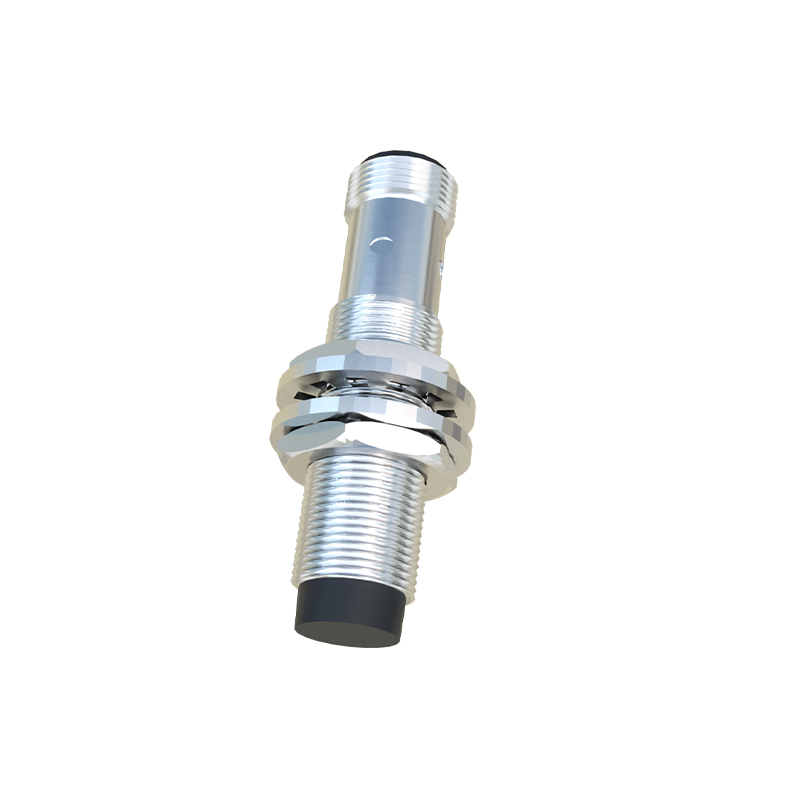
Inductive sensors are often deployed near welding stations. This is a catastrophic error. The high-frequency, high-current transients from arc welding can induce voltages in the sensor's circuitry an order of magnitude above its rating, leading to immediate, permanent damage or a slow degradation of internal components. The EMI field can also latch solid-state outputs permanently ON. In these zones, only sensors with specific welding-resistant designs (heavy shielding, specialized filtering) and physical isolation via non-metallic extension brackets should be used.
Another high-risk zone is any environment with fast-moving ferrous objects. A sensor tasked with detecting a gear tooth may be specified based on size and speed. However, if a larger, unrelated metal object (like a passing forklift fork) moves rapidly through its peripheral field, it can generate a false pulse. I've seen this cause phantom counts on production lines, leading to batch errors. In dynamic, cluttered metal environments, the sensor's physical orientation and shielding are more critical than its switching frequency. Finally, avoid using standard inductive sensors for precise end-position detection on hydraulic cylinders. The inherent hysteresis (difference between switch-on and switch-off point) can vary with temperature and cylinder barrel wear, leading to a positional drift of up to ±0.5mm. For precision below 0.2mm, you've entered the domain of analog-output sensors or entirely different technologies.
Counter-Intuitive Conclusions: Data That Defies Convention
1. A "Faster" Sensor Can Slow Down Your System. A 5kHz sensor isn't automatically better than a 1kHz model. The higher-frequency sensor has a shorter sampling window and is significantly more susceptible to noise from VFDs (Variable Frequency Drives) and switching power supplies. In a panel full of motor drives, the "slower" sensor often provides rock-solid reliability, while the "faster" one jitters. Speed is meaningless without signal integrity.
2. The Most Reliable Sensor Isn't the Most Expensive One; It's the Most Appropriately Protected One. Investing in a premium, long-range sensor is futile if you neglect its environment. A mid-range sensor housed in a properly rated IP69K stainless steel barrel, with a braided metal conduit for its cable entry, will outlive and outperform a top-tier sensor with a compromised cable gland or polymer housing in a washdown or abrasive environment. The housing and installation often contribute 70% to the sensor's operational lifespan.
3. Sometimes, You Must Reduce Sensitivity to Make it Work. Facing erratic triggering from background metal? The instinct is to seek a more sensitive or shielded unit. However, the most effective solution is often to de-tune the sensor. Many modern sensors have a potentiometer or teach-in function. By deliberately reducing its gain so it only detects the target at a closer, definitive range, you eliminate noise from the ambient environment. It’s a lesson in robust design: reliability often comes from rejecting unwanted signals, not just capturing desired ones.
The final verdict is this: Proximity sensors are not commodities. Selecting one is an exercise in defining failure modes. Specify not just