For two decades, I've watched pristine lab data meet the unforgiving reality of the factory floor, the mining pit, and the open sea. The standard working formula for a laser time-of-flight (ToF) sensor—Distance = (Speed of Light × Time of Flight) / 2—is a beautiful lie. It assumes a vacuum, a perfect reflector, and a stable emitter. Reality is a brutal correction factor. Let's move past the brochure and into the grit.
Experience Correction: The Formula's Hidden Variables
The datasheet's 0.1% accuracy vanishes when your target isn't a 98% reflective Kodak white card. Measuring a wet, dark asphalt surface? You've just introduced a 15-25% signal attenuation, translating to a potential error of several centimeters as the sensor's internal algorithm struggles with a weak return pulse. Temperature isn't just about operating range. A shift from 20°C to 45°C can cause a 0.02% drift in the timing circuit per degree—seemingly negligible until you demand 2mm repeatability over an 8-hour shift in an unregulated warehouse. The real formula is Distance = [(c * t) / 2] * (1 + αΔT) / η_target, where η_target (target reflectivity) and α (thermal drift coefficient) are the unprinted variables that determine your project's success or failure. I've seen multi-million dollar automation lines stall because engineers used the nominal 3ns pulse width spec, not accounting for the 5-10% pulse stretching that occurs with aging laser diodes, smearing the return signal edge in high-speed bottling applications.
Boundary Conditions: When to Walk Away
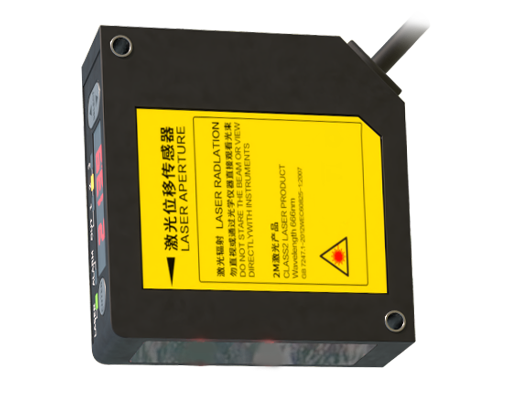
Laser sensors are not universal tools. Deploying them in these scenarios is a recipe for financial and operational disaster:
1. Condensing Atmospheres: Any environment with rapid temperature/pressure shifts causing fog, steam, or heavy condensation (e.g., food processing pasteurization zones, pulp & paper mills). Water droplets scatter 905nm or 1550nm light catastrophically. The sensor doesn't fail gracefully; it outputs random, plausible-looking data—a "silent failure" far more dangerous than an error code.
2. High-Vibration, Unsecured Mounting: If you cannot achieve a rigid, machined mounting surface, abandon the laser for a contacting probe. Micro-vibrations at frequencies above 50Hz will induce noise that filtering cannot eliminate without destroying measurement bandwidth, rendering real-time control impossible.
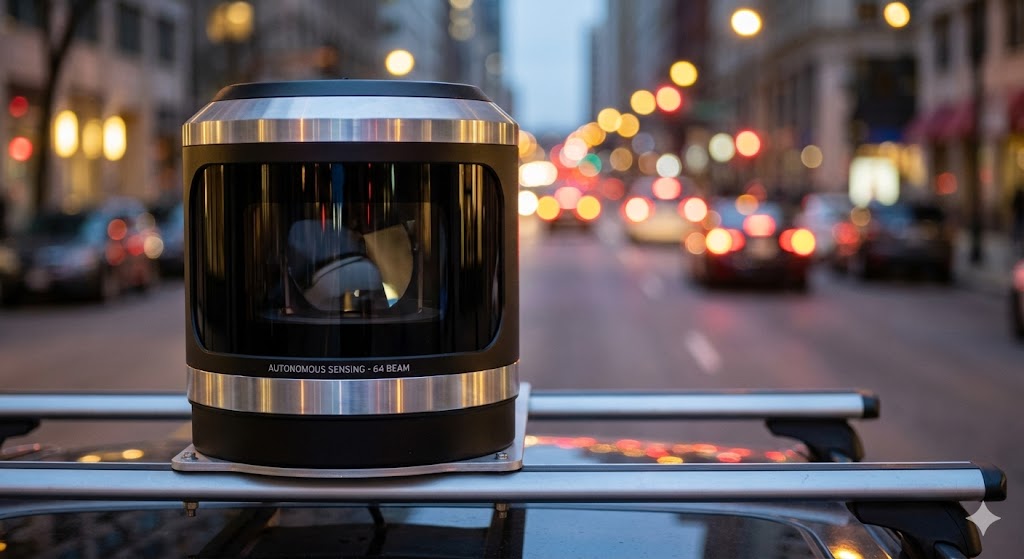
3. Ultra-High-Speed Dynamic Targets (>5m/s with<1mm precision): The physics of the photon return flight time imposes a hard limit. For a target moving tangentially, the position has changed between emission and detection. At 10m/s, this can lead to a kinematic error exceeding your tolerance. This isn't a sensor problem; it's a physics problem.
Counter-Intuitive Conclusion: Sometimes a "Worse" Sensor is the Optimal Solution
The industry's race for higher precision and smaller spot sizes is often misguided. In bulk material level sensing of coal or gravel, a high-precision, focused laser will fail by measuring individual pebbles, creating noisy, unusable data. A "lower-grade" sensor with a larger, diffuse spot (e.g., 100mm at 10m) averages the surface profile, delivering a stable, *more accurate* representation of the true level. Similarly, in the presence of airborne dust—the nemesis of optical systems—reducing the laser power can sometimes *improve* reliability. A saturated return from dust particles close to the lens blinds the receiver. By detuning the power to just above the minimum for the actual target, you increase the signal-to-noise ratio for the distant true target, not the foreground interference. I have specified 10-year-old "obsolete" sensor models with 5mm accuracy over new 0.5mm models because their longer wavelength and analog output provided superior immunity to welding arc interference in robotic cells—a problem no modern digital sensor's firmware could solve.
The takeaway is this: Selecting a laser sensor is not an exercise in comparing datasheet superlatives. It is a forensic analysis of your specific environmental contaminants, target surface pathologies, and mechanical trauma. The most critical parameter is often the one the manufacturer cannot publish because they haven't lived in your particular hell. Your validation test must replicate the worst-case operational environment, not the clean room. Spec for robustness, not just resolution.