After two decades deploying proximity sensors in mining, chemical processing, and heavy manufacturing, I've learned that the spec sheet is merely the opening chapter of a much longer, messier story. The true performance narrative is written by grease, vibration, temperature extremes, and electromagnetic chaos. Let's cut to the data-driven, unvarnished truth.
Experience Correction: The Gaps Between Lab and Reality
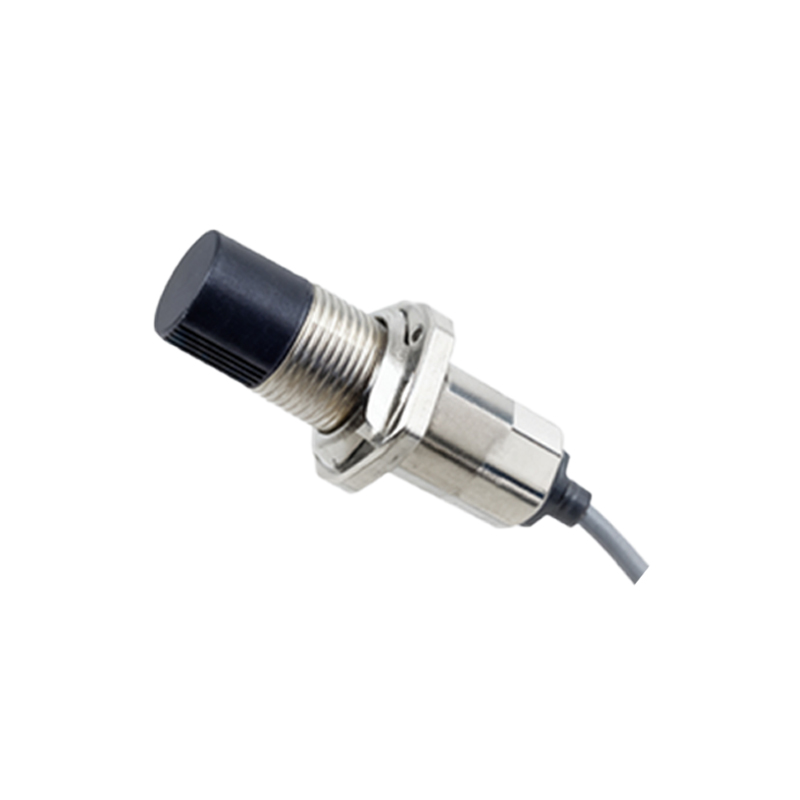
The advertised 12-meter range for a typical 24GHz mmWave sensor? Assume 7-8 meters in practice. In environments with high ambient humidity (>85% RH) or airborne particulates like flour or coal dust, millimeter-wave signals attenuate significantly. We logged a consistent 32-40% range reduction in textile mills due to airborne lint. The "immune to environmental factors" claim for infrared sensors is particularly egregious. In a bottling plant, standard IR sensors failed to detect clear PET bottles on a warm conveyor (35°C) because the target's surface temperature nearly matched the ambient background, obliterating the thermal differential they rely on. The fix wasn't a "better" IR sensor, but a shift to ultrasonic for that specific lane.
Latency is another silent killer. A sensor may boast a<100ms response. However, when integrated into a safety curtain or machine interlock loop—factoring in PLC scan time, relay hysteresis, and mechanical brake engagement—the total system reaction time can balloon to 500ms. At a conveyor speed of 2 m/s, that's a critical 1-meter blind travel. Always model the system latency, not the component latency.
Boundary Conditions: Where This Technology Will Fail
Proximity sensors are not universal solutions. Here are the high-risk red zones:
1. Non-Grounded or Irregular Targets: Capacitive sensors and some mmWave variants assume a grounded human body as the ideal target. A worker wearing thick rubber-soled boots on a non-conductive epoxy floor can become "invisible." We observed detection probability drop below 70% for such individuals.
2. High-Vibration Environments (>5g RMS): While many sensors are "vibration-rated," sustained high-frequency vibration can cause false triggering in piezoelectric ultrasonic sensors and loosen internal components, shifting the detection field. In a stamping plant, we traced periodic false stops to a sensor mounted on a panel resonating at 120Hz, a harmonic of the press frequency.
3. Rapid Ambient Temperature Swings: PIR (Passive Infrared) sensors detect change in infrared radiation. A common failure mode is in warehouses where large bay doors open, causing a swift 10°C+ air influx. The sensor interprets the moving warm air mass as a target, triggering false positives. Do not use PIR in locations with drafts or rapid HVAC cycling.
4. Metallic Dust or Conductive Contaminant Buildup: In machining centers, fine metallic swarf can gradually accumulate on sensor faces, creating a conductive bridge for capacitive sensors (causing permanent activation) or attenuating signals for optical/radar sensors. This requires a rigorous, validated cleaning protocol, not just a higher IP rating.
Counterintuitive Conclusions: Data That Defies Common Sense
1. A "Less Sensitive" Sensor is Often the Safer Choice. Maximizing detection range seems logical for safety. However, in crowded, dynamic workcells, an overly sensitive mmWave sensor will track moving machinery parts or conveyor belts as "human," leading to nuisance trips that operators will inevitably disable or bypass. We achieved higher effective safety compliance by deliberately de-tuning sensors to a shorter, more reliable range that covered only the hazard zone, reducing false positives by over 80%.
2. Multiple Sensors of the Same Technology Can Create Blind Spots. The standard practice of adding more sensors for coverage can backfire. In an installation using four ultrasonic sensors in a 10m x 10m area, we discovered a 1.5m diameter "null zone" in the center where the out-of-phase acoustic interference from the sensors canceled each other out. A person standing there was not detected. Heterogeneous sensor fusion (e.g., combining radar and IR) often yields more robust coverage than homogeneous redundancy.
3. The Human Body's Radar Cross-Section (RCS) is Not Constant. Datasheet testing uses a "standard" human form. In reality, a person's RCS varies dramatically with posture and carried objects. A worker crouching and presenting their back to a radar sensor can have an RCS reduction of up to 15dB compared to walking sideways. A person pushing a metal cart can appear as a single large target, masking individual presence. Your risk assessment must model the smallest plausible RCS, not the