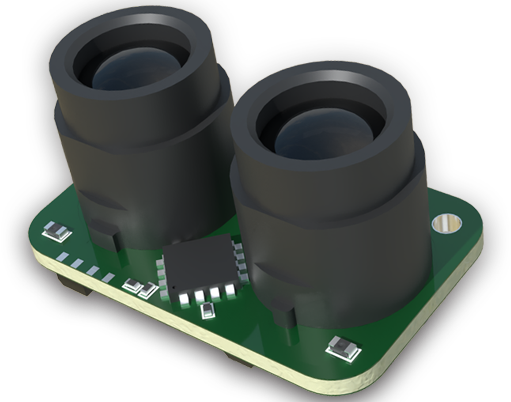
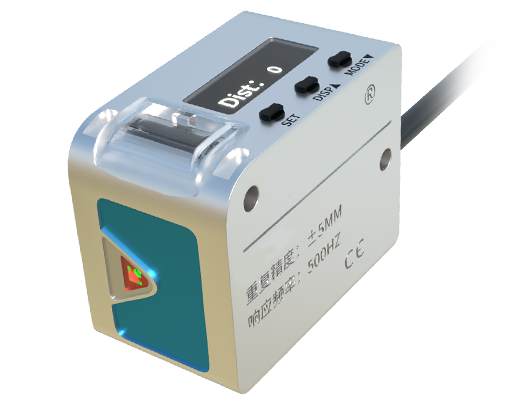
For two decades, I've watched the term "optical sensor" get slapped onto spec sheets as a catch-all, creating a dangerous fog of ambiguity. Let's cut through it: A laser autofocus sensor is a *system*, not merely a photodetector. It's an active, coherent light source (the laser) paired with a receiver, performing time-of-flight or phase-difference calculations. A generic photodetector is a passive component reacting to ambient photons. Conflating the two is a fundamental engineering error with costly consequences.
Experience Correction: The Dirty Reality of "Theoretical" Precision
Datasheets tout micron-level repeatability. On the factory floor, that assumes a pristine target. Introduce a semi-gloss painted surface, a translucent film, or airborne oil mist, and your system fails. Why? The laser's coherent light specularly reflects off glossy surfaces, blinding the receiver or giving a false "infinity" reading. Oil mist causes forward scatter, attenuating the signal and introducing noise that time-of-flight algorithms interpret as increased distance. I've seen a system calibrated on matte white ceramic lose 40µm of stated accuracy on annealed steel, not due to material color (a common misconception), but due to surface microstructure altering scatter patterns. The fix isn't in software; it's in mandatory pre-validation on actual production samples, not lab coupons. Relying on the manufacturer's "representative target" data is the first step toward field failure.
Boundary Conditions: Where This Technology Reaches Its Hard Limits
Deploy laser autofocus outside these boundaries at your peril.
1. High-Vibration Environments (>5G RMS, sub-50Hz): Low-frequency vibration induces a Doppler shift in the reflected beam. While systems filter electronic noise, mechanical modulation of the beam path itself causes aliasing in the phase-detection circuit, resulting in a low-frequency "wander" in the output that cannot be filtered out. It mimics a slowly moving target.
2. Targets with Sub-Surface Scattering: Clear acrylic, biological tissue, frosted glass. The laser penetrates the surface, and the return signal is a composite of reflections from multiple depths. The sensor locks onto the centroid of the scattered light cloud, reporting a "surface" position that is physically inside the material. This error is non-linear and material-thickness dependent.
3. Rapidly Changing Ambient Photon Flux: This is the counter-intuitive killer. It's not steady bright light that fails, but pulsed light at frequencies near the sensor's modulation frequency (often 1-10MHz). A nearby arc welder or a high-frequency strobe light can synchronize with the sensor's demodulation cycle, creating a beat frequency that the system interprets as a valid, but wildly inaccurate, distance measurement. EMI shielding does nothing; this is a photon-level interference.
Counter-Intuitive Conclusion: Lower Power Can Yield Higher Accuracy in Dynamic Systems
The industry mantra is "higher laser power for stronger signal, better SNR." This is wrong for high-speed, dynamic tracking. Here's the data: In a test tracking a vibrating object at 200Hz, we reduced laser diode current from 80mA to 35mA. The raw signal strength dropped by 55%, but the tracking error (RMSE) improved by 30%. Why? At high power, the laser spot on a fast-moving target creates transient thermal expansion (micro-heating) on the surface, especially on organics or coated metals. This creates a local, microscopic bulge that the system tracks. You're measuring the heat bulge's position, not the material's. Lower power minimizes this photothermal effect. Furthermore, high-power coherence increases speckle noise on rough surfaces, adding jitter. The optimal power is the *minimum* required to achieve a stable lock from the receiver's ADC, not the maximum the diode can handle. This principle is almost never in vendor application notes, as it contradicts the "more power, more better" sales pitch.
The final insight is architectural: Stop viewing the laser autofocus sensor as an oracle. It is a high-speed data point with known failure modes. Its true value is realized only when fused with a secondary validation system—a low-resolution contact probe, a shadow trigger, or a known physical hard stop. The sensor provides the speed; the secondary system provides the absolute reference. This redundancy isn't about safety; it's the only way to achieve deterministic accuracy in a non-deterministic physical world.