Forget the pristine lab data and marketing brochures. After two decades of deploying laser sensors in petrochemical plants, mining shafts, and grain silos, the truth about their explosion-proof housings is written in maintenance logs and near-miss reports. The certified "Ex d" or "Ex e" rating on the nameplate is merely a ticket to enter the arena, not a guarantee of survival. Here’s what 20 years of grit and failure analysis have taught us.
Experience Correction: The Gaps Between Theory and Grit
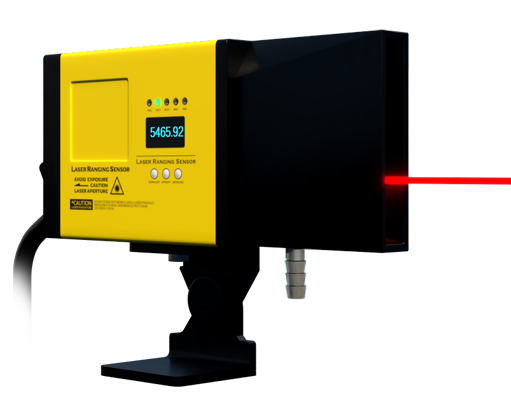
Theoretical ingress protection (IP) ratings and temperature classifications are derived under controlled, short-duration tests. Reality is a relentless, multi-variable assault. A common misjudgment involves thermal management. A housing rated for T6 (85°C surface temperature) might pass certification with its internal laser diode. However, in a confined, sun-baked space with ambient temperatures consistently at 45°C and heavy dust coating the housing, heat dissipation plummets. The actual surface temperature can creep into the T5 (100°C) or even T4 (135°C) range, invalidating its safety for certain gas groups. We've measured this delta repeatedly. Another critical deviation is in sealing integrity. Standard tests use fine talcum powder. Real-world contaminants like sticky hydrocarbon mist, conductive metal dust, or corrosive salt spray degrade elastomer gaskets and cable gland seals orders of magnitude faster. A housing "guaranteed" for IP66/67 might leak within 6 months in a fertilizer plant, leading to internal condensation that shorts electronics or, worse, creates a corrosion-induced hot spot.

Boundary Conditions: When This Solution Becomes the Problem
This technology is not a universal panacea. Its application boundaries are stark and non-negotiable.
1. Unstable or Unknown Atmospheres: If the explosive atmosphere is not well-characterized in terms of gas group (IIC, IIB, IIA) or dust ignition temperature, do not proceed. Using a housing rated for Methane (I) in a Hydrogen (IIC) environment is catastrophic. Similarly, a housing safe for organic dust may fail with conductive metal dust, which can bridge terminals.

2. Extreme Mechanical Shock and Vibration: While housings are built to withstand internal explosions, constant high-frequency vibration from heavy machinery can fatigue metal, loosen threaded joints, and cause micro-fractures in flame-path gaps. In such environments, like on vibrating screens or compressor skids, the risk of a compromised flame path is high. Supplementary mechanical restraint is mandatory.
3. Rapid Pressure Pulsation Scenarios: In locations subject to deflagration events or severe pressure waves (e.g., near burner management systems), a standard explosion-proof housing is designed to contain a steady-state internal explosion. It is not designed for the simultaneous external overpressure shockwave from a neighboring event, which can overwhelm its mechanical strength.
4. Corrosive Chemical Exposure Beyond Seals: If the process environment involves strong acids, solvents, or oxidizers that directly attack the housing material (e.g., certain aluminum alloys or gasket compounds), the material integrity degrades. Anodizing or coating offers limited protection against abrasion and chemical pitting. In these cases, a different primary protection method (e.g., pressurization 'Ex p') should be considered.
Counterintuitive Conclusion: A Heavier, Bulkier Housing Can Increase Risk
The instinct is to specify the most robust, heaviest-duty cast aluminum or stainless steel housing for maximum safety. This is often wrong. The added weight creates significant mechanical stress on mounting structures and conduit entries, especially in high-vibration or thermally cycling environments. We have documented cases where a 25kg housing, over time, caused the mounting bracket on a pipe rack to fatigue and crack, leading to a dangerous drop hazard and sheared conduit connections that breached integrity. Furthermore, the massive thermal mass of an oversized housing can hinder heat dissipation from the sensor itself, exacerbating the thermal derating issue mentioned earlier. The professional insight is to select the housing with the *minimum* sufficient volume and mass for the sensor and its heat load, while ensuring its mechanical mounting is engineered for dynamic loads, not just static weight. Sometimes, a well-engineered, smaller "Ex e" (increased safety) enclosure with carefully protected connections is a safer, more reliable solution than an over-specified "Ex d" (flameproof) tank, provided the zone classification allows it. Safety is not about over-engineering; it's about precision engineering for the specific fault scenario.