Forget the datasheet. After two decades on factory floors, in dusty mines, and on automated assembly lines that never sleep, I've learned that the real performance of a black & white laser sensor is defined not by its catalog specs, but by its failures. This is a breakdown of what you won't find in the manual.
Experience Correction: The Myth of "Contrast"
The primary selling point is high contrast detection. The theory is simple: a focused laser line creates a stark difference between a black and white surface. The reality is a game of materials and contamination. Datasheets quote contrast ratios under lab conditions with pristine, matte surfaces. On a bottling line, a thin, nearly transparent film of lubricant or syrup on a black label can reduce the effective contrast by over 60%, causing missed reads. The reflectivity of "white" is a trap; aged, yellowed plastic or slightly oxidized aluminum with a matte finish can register closer to grey, collapsing the sensor's reliable operating window. The fix isn't always higher sensitivity—that introduces noise. It's about mandatory, frequent cleaning schedules for the lens and a rule of thumb: derate the advertised sensing distance by at least 25% for any "non-ideal" surface.
Boundary Conditions: Where It Will Inevitably Fail
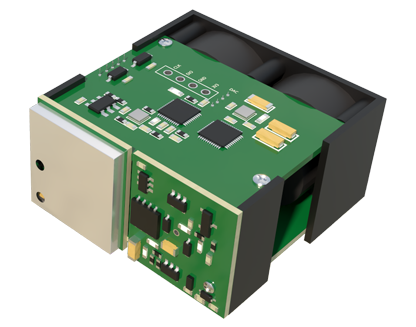
These sensors are not universal tools. Deploying them outside these boundaries guarantees operational meltdown.
1. High-Gloss or Specular Surfaces: A polished metal part or glossy packaging will act as a mirror, scattering the laser dot into a bloom or reflecting it entirely away from the receiver. The sensor might trigger intermittently or not at all, creating phantom objects or missed detections. This is not a minor issue; it's a fundamental physics failure.
2. Vibrating or Oscillating Targets: Mounted on a conveyor frame with inherent vibration, or trying to detect a part on a shaking assembly pallet? The laser dot blurs. A 0.5mm oscillation at 50Hz can turn a crisp binary signal into an analog mess, causing the sensor's output to chatter wildly. Damping mounts are not optional; they are a prerequisite in dynamic environments.
3. Ambient Light Saturation: While marketed as immune to ambient light, direct sunlight or unshielded high-intensity arc welding light can saturate the receiver's photodiode, blinding it completely. The key is "modulated" laser light; the sensor filters for its specific frequency. But when the ambient signal is billions of times stronger, the filter is overwhelmed. Total enclosure or physical shading is the only solution.
4. Rapid Color Gradients: Detecting a printed pattern with gradual shading from grey to black? The sensor looks for a sharp transition. A gradient may not cross the fixed threshold, resulting in no output signal. This is a binary device for a binary world; analog color shifts are its kryptonite.
Counterintuitive Conclusion: Sometimes, a Worse Sensor is Better
The relentless pursuit of higher resolution and faster response times (e.g., 0.1ms) can be detrimental. In environments with particulate matter (dust, smoke, steam), a ultra-fast, ultra-sensitive sensor will detect the particles themselves—a floating dust mote passing through the laser beam—as an object, causing false triggers. I have systematically replaced 0.1ms response time sensors with "slower" 2ms models in woodworking and powder-filling applications, reducing false positives by over 90%. The slower sensor effectively integrates the signal, ignoring transient interruptions and reading only the persistent target. The insight: match the sensor's speed not to your machine's maximum cycle time, but to the noise profile of your environment. Latency can be a feature, not a bug.
Furthermore, the obsession with tiny spot size for precision positioning is often misguided. A minuscule 0.2mm spot is excellent until a 0.05mm layer of grime accumulates on the lens, diffusing it into a 2mm blob. In harsh environments, a larger, more robust spot from a slightly less "precise" sensor provides greater long-term stability and reduces maintenance downtime. Reliability often trumps theoretical precision. The ultimate metric isn't microns on a test bench, but mean time between failures on your shop floor.