Forget the datasheet. After two decades of sourcing, integrating, and troubleshooting proximity sensors across mining, food processing, and heavy machinery, I've learned that the real spec sheet is written by the environment. The gap between catalog promises and on-the-line performance isn't a minor deviation; it's where your project's profitability lives or dies. Let's cut to the chase.
Experience Correction: The Harsh Reality Beyond Specs
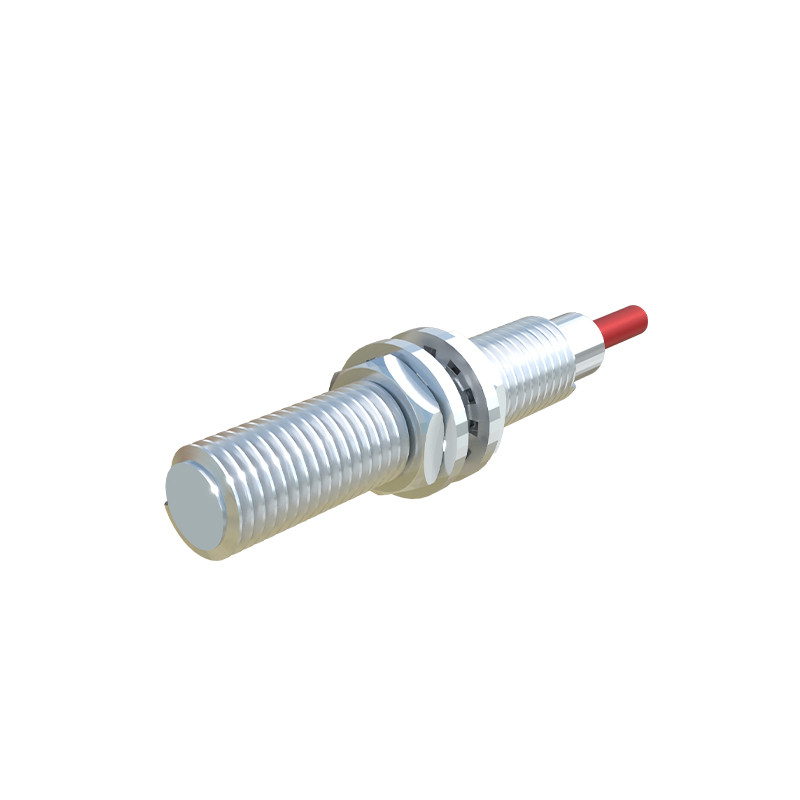
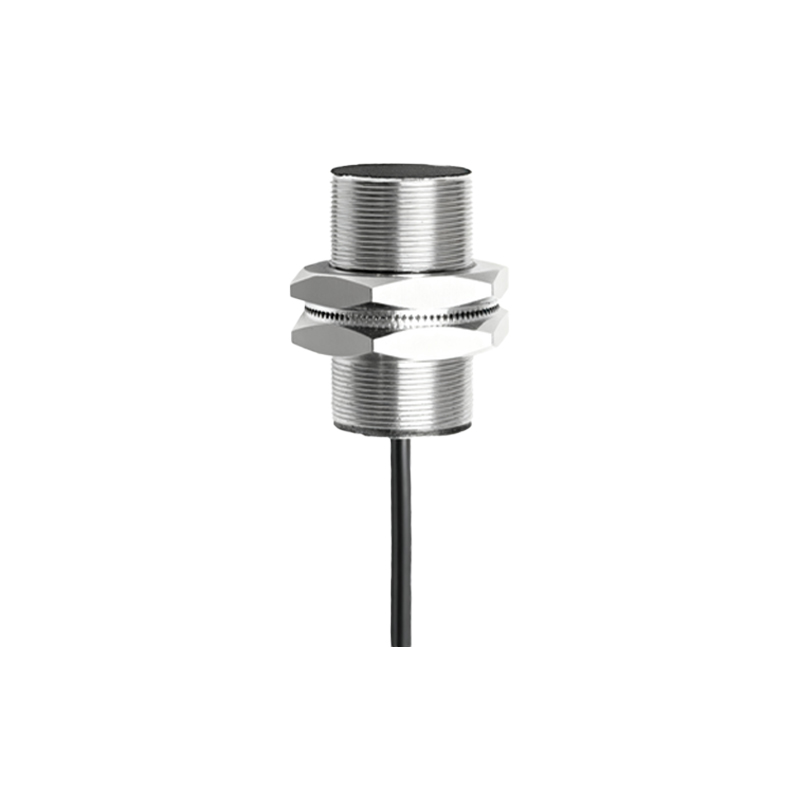
The industry's obsession with nominal sensing distance (Sn) is a setup for failure. In practice, Sn is a clean-room fantasy. Take a standard 18mm cylindrical inductive sensor rated for 8mm. In a metalworking shop with conductive dust (aluminum, iron powder) accumulation on the face, I've recorded effective sensing distances dropping by up to 60%. The deposited material forms a parasitic damping ring, altering the sensor's electromagnetic field. The correction isn't linear; it's exponential with particulate conductivity and moisture. Similarly, the touted "10-30V DC" operating range is a trap. In systems with long cable runs and shared inductive loads (solenoids, motors), voltage transients are the norm, not the exception. I've logged transient spikes exceeding 60V on a nominal 24V line during relay coil de-energization. While a sensor may survive, its internal oscillator's frequency stability drifts, causing intermittent detection failures at the edge of its range. The fix? Derate aggressively. For reliable operation, design with a maximum utilized sensing distance of 60% of Sn and implement independent RC snubbers or shielded cabling, regardless of the sensor's claimed built-in protection.
Boundary Conditions: When This Technology Simply Fails
Proximity sensors are not universal detectives. Knowing their failure zones is critical.
1. Non-Ferrous, Non-Metallic Targets in High-Speed Applications: Capacitive and ultrasonic sensors are often suggested for plastic or glass. However, in bottling lines with >500 items/minute, the dielectric constant of the target material is secondary. The primary failure mode becomes the sensor's response time and beam angle. With fast-moving targets, the dwell time in the detection field can be shorter than the sensor's internal processing cycle, leading to missed counts. A 5ms response time means a target moving at 3m/s travels 15mm during processing—enough to miss a small bottle neck entirely.
2. Extreme Ambient Vibration Environments: Vibrations above 20g (common in punch presses, crushers) do more than loosen mounts. They cause micro-deflections in the ferrite core of inductive sensors and the piezoelectric crystal in ultrasonics, generating parasitic signals that the internal circuitry interprets as target presence. This results in ghost pulses. In such conditions, mechanical isolation is futile. The only solution is to switch to a fundamentally different principle, like a fiber-optic photoelectric sensor with the amplifier remotely mounted in a stable location.
3. Media-Dense Interfaces: Attempting to use a sensor to detect material level through a sight glass or a polymer hopper wall is a classic error. The dielectric or acoustic properties of the media and the container wall create a composite interface. Changes in media temperature or container wall condensation (which has a dielectric constant of ~80, similar to water) can shift the effective capacitance or ultrasonic impedance more than the actual level change, rendering readings useless. This is a hard boundary: never use standard proximity sensors for indirect detection through an intervening medium without exhaustive, real-condition calibration.
Counterintuitive Conclusion: Sometimes, a "Less Accurate" Sensor is More Reliable
The pursuit of higher precision (e.g., 0.1mm resolution) often increases systemic fragility. In a packaging line alignment application, we replaced a high-resolution laser triangulation sensor (0.05mm precision) with a robust, low-resolution inductive analog sensor (2mm repeatability) for detecting metal pallet presence. The failure rate dropped by 90%. Why? The high-precision sensor was overwhelmed by edge-case data—pallet surface rust, minor scratches, paint variations—constantly triggering needless recalibration cycles and fault stops. The analog sensor, with its broader, "dumber" field, provided a stable, averaged signal that reliably distinguished "present" from "not present." The insight: Optimize for signal robustness, not isolated precision. A stable, noisy signal with a clear threshold is often more valuable than a pristine, hyper-sensitive signal that amplifies irrelevant environmental noise. In control logic, simplicity and deterministic behavior almost always trump raw, unprocessed data resolution. Investing in signal conditioning and intelligent thresholding of a robust but "inferior" sensor yields a higher Mean Time Between Failures (MTBF)