Forget the pristine data sheets. After two decades on factory floors, in mines, and on offshore rigs, I've seen proximity sensors fail in ways no manual predicts. The real world doesn't operate at 25°C with a clean air gap. Here’s the unvarnished truth.
Experience Correction: Where Theory Meets Grit.
The advertised sensing distance is a fantasy in dynamic environments. A sensor rated for 8mm might reliably detect only at 6mm or less when facing vibration, thermal swing, or target surface contamination. The critical factor isn't nominal sensing distance (Sn), but the effective operational distance under load. For instance, an inductive sensor's performance against "mild steel" plummets with 304 or 316 stainless steel; expect a derating of up to 40-60% in sensing range. The coil damping factor is drastically different. Relying on nominal Sn for machine design is a blueprint for intermittent faults. Furthermore, the claimed IP67/IP69K rating for washdown? It assumes perfect gasket seating and no chemical degradation. I've seen caustic cleaners eat through cable jackets and steam ingress kill sensors within months, despite their "high" IP ratings. The real metric is sustained performance under specific chemical and thermal cycling, which most datasheets omit.
Boundary Conditions: When to Walk Away.
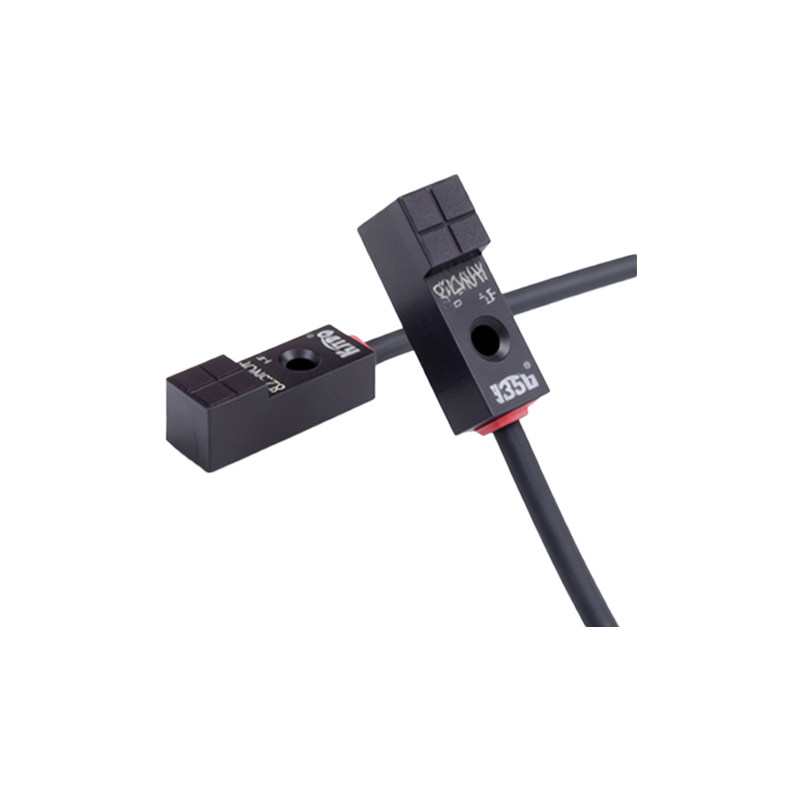
Proximity sensors have hard limits. Using standard inductive sensors for non-ferrous metal detection (like aluminum or copper) is a common misapplication. The sensing range becomes tiny and wildly inconsistent due to lower Eddy current losses. In high-speed counting applications (>1kHz), the sensor's repeat accuracy and output delay become the bottleneck, not its frequency response. The spec sheet's "switching frequency" is measured under ideal conditions; with target overshoot or vibration, you'll get double counts. In environments with heavy metallic dust (e.g., machining centers, powder metallurgy), inductive sensors can latch on due to dust accumulation, creating a permanent "on" state. Similarly, capacitive sensors are notorious in humid or adhesive-laden environments; a layer of condensation or grease on the face can trigger false positives as effectively as the target itself. They are a poor choice where the dielectric constant of the ambient medium is variable. Finally, never use a standard sensor in strong DC or AC magnetic fields (near large motors, welders). The internal oscillator can be pulled or jammed, causing failure.
Counter-Intuitive Conclusions: Data-Driven Insights.
1. A "Faster" Sensor Can Slow Down Your System. A sensor with a 0.1ms response time might seem superior to one with 1ms. However, in electrically noisy environments, the faster sensor is more susceptible to transient noise pulses, causing erratic PLC inputs. The slower sensor acts as a natural filter. Stability often trumps raw speed.
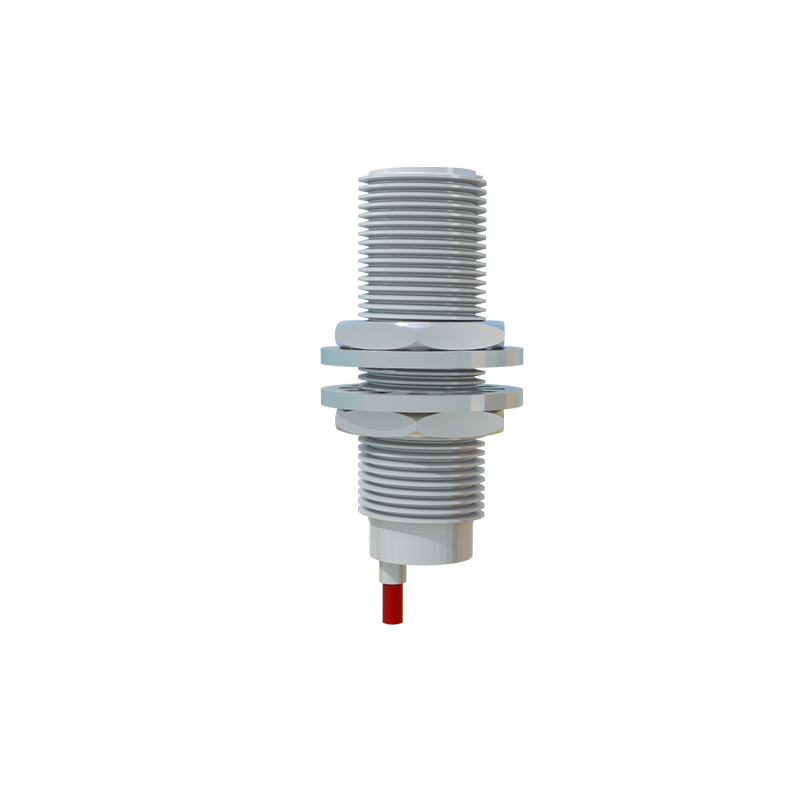
2. More Sensing Distance Isn't Always Better. A longer-range sensor has a larger electromagnetic field. In tightly packed machinery, this leads to crosstalk between sensors and increased risk of detecting unintended metal (like bolts or brackets), causing false triggers. Sometimes, a shorter-range, shielded sensor provides more reliable machine logic.
3. The Weakest Link is Rarely the Sensor. 80% of field failures I've diagnosed trace back to the cable and connection, not the sensing head. Vibration-induced cable fatigue at the gland, corrosion in the connector, and EMI ingress on unshielded cables are the primary killers. Investing in high-flex cable with proper strain relief and shielded, M12 connectors often yields a greater ROI than buying the "most robust" sensor head.
4. Analog Outputs Offer Superior Digital Reliability. For critical position feedback, a 4-20mA analog output can be more reliable than a digital PNP/NPN signal. The analog signal is continuous and easier to monitor for health (e.g., signal drop indicates failure). A digital signal is either on or off, masking a sensor that's operating at the very edge of its sensing margin, which is a pre-failure state.
The bottom line: Select sensors not by their headline specs, but by their documented performance under conditions that mirror your worst-case scenario, not the lab's best case. Audit your installation points for mechanical, chemical, and electrical reality.