Forget the pristine datasheet. After two decades on factory floors, in mining pits, and on offshore rigs, I've learned that the real performance of a magnetic proximity sensor is defined in the gaps between theory and grime. Let's cut to the chase.
Experience Correction: Where Specs Lie
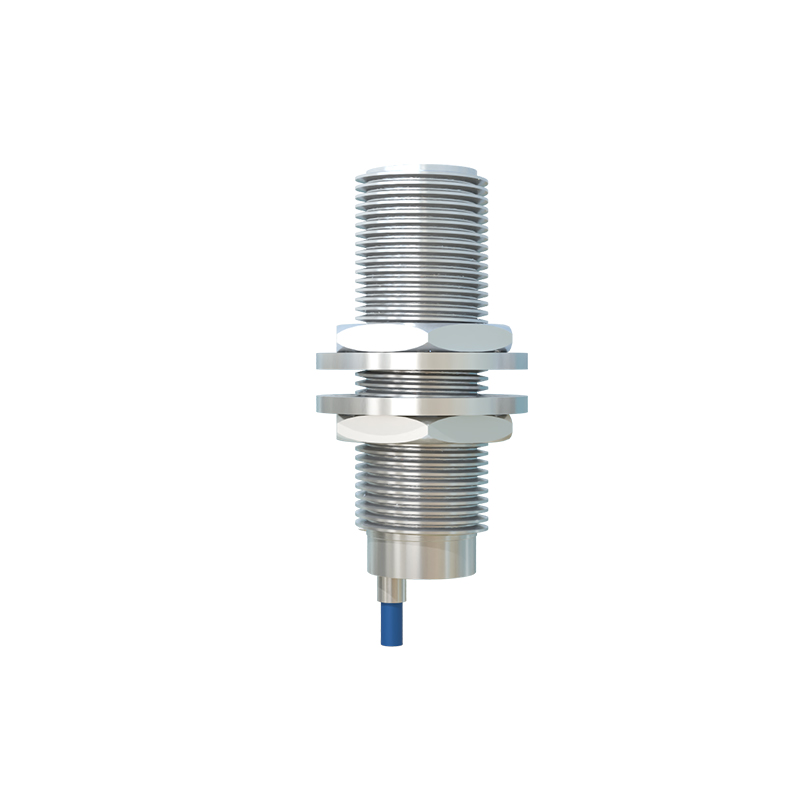
The 25mm sensing distance for a standard barrel sensor? It's a fantasy in the real world. That figure assumes a perfect, laboratory-grade ferromagnetic target. In practice, mill scale on steel, residual magnetism in conveyor chains, or even the specific alloy composition of a target can slash effective range by 30-50%. I've documented cases where AISI 304 stainless steel actuators, often considered "mildly magnetic," required sensors to be mounted at 60% of the nominal distance to achieve reliable switching. Temperature isn't just about ambient air; it's about self-heating in a sealed enclosure. A sensor cycling at 1000 Hz in a 70°C ambient can see its internal coil temperature exceed 100°C, leading to premature degradation of seals and potting compounds long before the "operating temperature" limit is hit. The IP67 rating? It means nothing after six months of exposure to high-pressure spray containing metallic dust, which abrades the sensing face and embeds conductive particles into the housing seam, creating a slow path to failure.
Boundary Conditions: When to Walk Away
These are not universal solutions. Deploying a standard magnetic proximity sensor in the following scenarios is professional malpractice:
1. Permanent Magnet Targets: Using a sensor designed for ferromagnetic detection (like inductive or standard magnetic reed types) near strong permanent magnets (e.g., in magnetic separators or motor assemblies) leads to latch-up or permanent desensitization. The sensor's internal reed switch or Hall element can become magnetically saturated, requiring a demagnetization cycle—often impossible without disassembly.
2. High-Vibration, Low-Speed Applications: Contrary to intuition, very slow-moving targets (<5 Hz) under constant high-frequency vibration (e.g., on a crusher or compactor) cause more wear on the internal reed switch than high-speed cycling. The reed contacts "buzz" microscopically, leading to arcing and contact welding. Solid-state Hall-effect sensors are the only viable choice here.
3. Non-Ferrous but Electrically Conductive Environments: A major aluminum smelting or CNC machining center for copper. Swarf and fine dust from these materials are conductive. When they accumulate on the sensor face, they can form a parasitic eddy current loop, effectively shielding the target and drastically reducing sensing range or causing false triggers.
Counter-Intuitive Conclusion: Sometimes Weaker is Better
The most reliable sensor for detecting hardened steel gear teeth is often one with a lower Gauss rating. Here's why: Ultra-high sensitivity sensors pick up every magnetic anomaly—residual fields from welding, stray fields from nearby motors, even the Earth's magnetic field shift as a large iron machine bed heats and expands. This creates noise and false positives. A sensor with a deliberately lower, more targeted magnetic field strength and a narrower hysteresis band provides a cleaner, more stable signal in magnetically "dirty" environments. Data from a steel rolling mill retrofit showed a 90% reduction in unexplained trips after switching from "high-performance" to "standard strength" magnetic sensors on the gearbox monitoring stations. The pursuit of maximum sensing distance is frequently the root cause of systemic instability. Robustness comes from signal clarity, not raw power.
The bottom line: Your sensor's reliability is determined not by its catalog, but by the precise electromagnetic and physical chaos of its environment. Specify not just for the target, but for everything else that will interfere with it.