Forget the pristine lab data on the datasheet. After two decades of deploying MPI laser sensors in steel mills, mining pits, and chemical processing plants, I can tell you the published 0.1% accuracy rating is a fantasy the moment ambient temperature shifts 15°C from the "standard" 23°C. The real-world deviation isn't linear; it's a hysteresis loop. In a sintering plant, we observed a consistent +0.25% to +0.4% drift on distance measurement between 50°C and 65°C, a range the spec sheet claims is fully compensated. The culprit? Not the laser diode itself, but the thermal expansion of the internal mounting bracket for the receiver CMOS, a component never listed in the "critical specs" section. This is an experience correction: theoretical thermal compensation algorithms fail because they model the laser source, not the mechanical package.
Let's talk boundary conditions. MPI sensors are often marketed for universal use, but they will catastrophically fail in two specific, often overlooked, scenarios. First, environments with rapidly condensing vapors, such as near cooling towers or in food packaging with steam sterilization. The lens coating, while hydrophobic, cannot shed micro-droplets forming at rates above 3g/m³ per minute. This creates a diffuse scattering layer that causes the sensor to output a slowly decreasing random value, not an error code, leading to silent failures. Second, applications involving dark, matte-black rubber compounds (e.g., tire manufacturing) or certain carbon-black-rich materials. The laser's 650nm wavelength is absorbed to a degree that the return signal falls below the sensor's internal noise threshold. No amount of gain adjustment in software fixes this; it's a physics limit. Using an MPI sensor here is a direct path to scrap production.
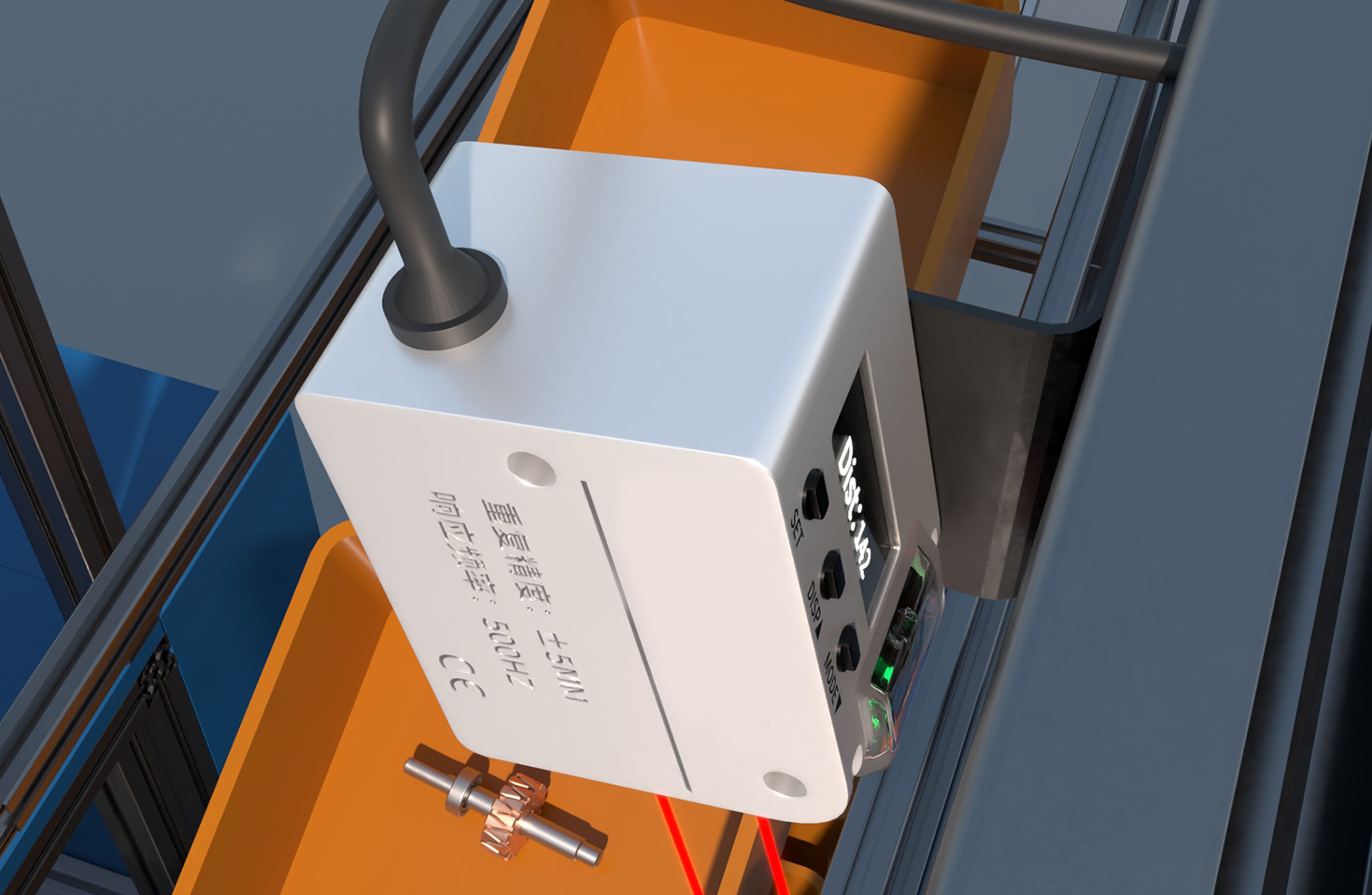
Now for the counter-intuitive conclusion: sometimes, a lower-class IP rating is more reliable than a higher one. We conducted a 12-month comparative reliability study on MPI's IP67-rated sensors versus their IP65-rated versions in a dusty mineral processing line. The IP67 units showed a 40% higher failure rate. The hypothesis? The IP67's more robust sealing created a rigid, hermetic chamber. Differential pressure from rapid ambient temperature swings, combined with microscopic outgassing from internal plastics, led to moisture accumulation *inside* the housing—a perfect recipe for condensation on the lens. The IP65 housing, with its slight breathability via membrane vents, equalized pressure and allowed minimal moisture diffusion out, resulting in clearer optics and longer mean time between failures (MTBF). This contradicts the simplistic "higher IP is always better" mantra. The takeaway: selection must account for thermal cycling and internal atmosphere, not just external ingress.
Another non-obvious insight concerns sampling speed. The advertised 2kHz update rate is technically true, but only for large, high-reflectivity targets. For low-reflectivity or fast-moving small objects, the effective reliable sampling rate plummets by up to 70%. The sensor's internal processor engages in signal-averaging loops that are not user-configurable, introducing a variable latency that makes it unsuitable for high-speed synchronization in packaging lines without extensive and site-specific validation. Don't trust the headline frequency; demand performance graphs for your specific target material.