Forget the pristine datasheets. After twenty years of watching sensors fail in steel mills, mining pits, and offshore rigs, I’m here to cut through the marketing gloss. The Three-One inductive proximity sensor is a robust workhorse, but its real-world performance is defined by deviations, not ideals. Let's talk about what actually happens when theory meets grit.
Experience Correction: The Myth of "Rated" Sensing Distance
The published sensing distance (Sn) is a laboratory fantasy. In practice, factors you rarely see highlighted erode it consistently. First, the target material. While datasheets account for steel, they often gloss over the dramatic drop with austenitic stainless steel (like 304/316). Expect an effective sensing distance reduction of 25-30% immediately. It's not a flaw; it's physics, but one that catches new engineers off-guard.
Second, temperature isn't just about operational range. A sensor rated for -25°C to 70°C will see its output current derate significantly at the extremes. At 70°C ambient, continuous duty cycle can cause thermal drift, shortening the actual Sn by up to 15% if housing isn't allowed to dissipate heat effectively. The "universal" DC 3-wire models are particularly susceptible to heat buildup from leakage current in the "OFF" state when paired with low-end PLCs. The fix? Derate aggressively. If your design calls for a 10mm sensor, install an 15mm one. This isn't over-engineering; it's field-proofing.
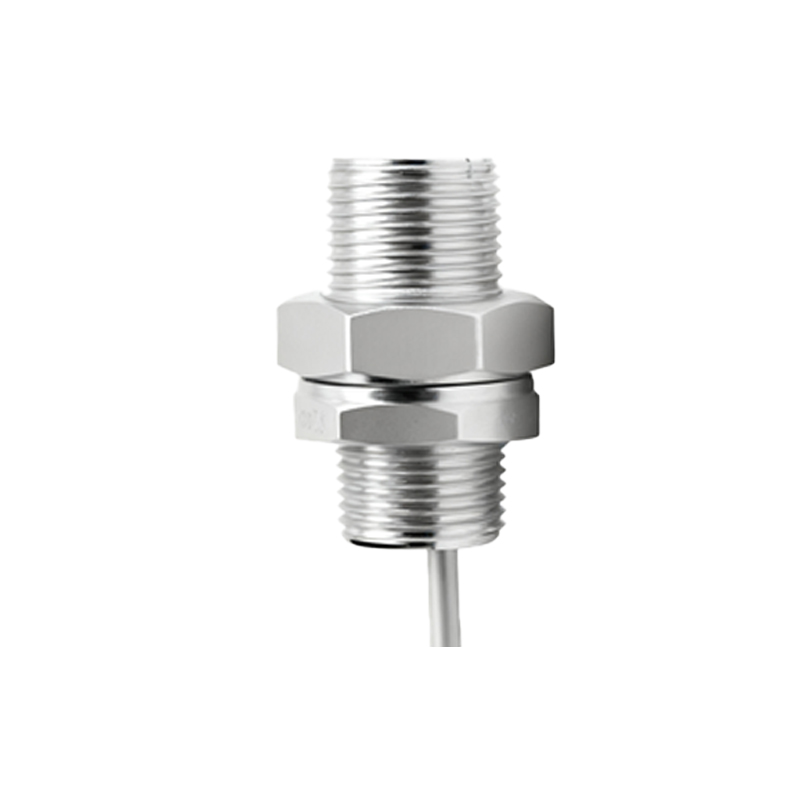
Boundary Conditions: Where This Sensor Will Fail You
This is not a universal solution. Deploy it in these scenarios at your peril:
1. Fine Metallic Dust Environments: Foundries or machining centers with airborne conductive dust (aluminum, iron powder) are a silent killer. The dust accumulates on the face, creating a false capacitive bridge. The sensor may latch "ON" permanently, causing critical failures. Regular cleaning is not a solution; it's a maintenance trap. In these conditions, a capacitive or physically isolated sensor (with a protective membrane) is mandatory, despite higher cost.
2. High-Speed Vibration with Non-Ferrous Targets: Monitoring aluminum can shafts or copper plates on equipment with >50Hz vibration? The damped oscillation of the sensor's LC tank circuit can interact with the vibration frequency, causing intermittent pulse dropout at what appears to be a perfect sensing position. The failure is sporadic and nearly impossible to diagnose without an oscilloscope. The solution is to switch to a factor-1 (steel) target or use a sensor with a significantly higher switching frequency (>1kHz) and heavy damping.
3. Extreme Electromagnetic Interference (EMI) Sources: Near large VFDs (Variable Frequency Drives) welding equipment, or high-frequency furnaces. The sensor's internal oscillator can be pulled or jammed by external RFI/EMI, leading to chaotic behavior. Shielding and conduit are often insufficient. The counter-intuitive fix is sometimes to use a less sensitive sensor or one with a lower operating frequency, trading range for EMI immunity.
Counter-Intuitive Conclusion: Sometimes a "Weaker" Sensor is Stronger
Here’s the insight that contradicts every procurement manager's instinct: In high-reliability, dirty industrial environments, the premium-brand, ultra-long-range, ultra-sensitive proximity sensor is often the wrong choice. Its high-gain amplifier is more susceptible to noise, false triggering from conductive fluids, and EMI. I have consistently achieved higher mean time between failures (MTBF) by specifying standard-range sensors from the same family. Their lower amplification factor provides a narrower, more definitive switching window, making them less likely to react to environmental artifacts. You are trading "spec sheet superiority" for "real-world stability." Data from a conveyor system monitoring in a coal handling plant showed a 40% reduction in false triggers after downgrading from the "HD" long-range model to the standard variant, with zero loss in operational reliability because the target was well within the standard range.
Another non-obvious practice: In corrosive (salt spray, acid mist) environments, do not specify sensors with integrated LED status indicators. The LED port is a microscopic breach in the housing's hermetic seal. Corrosive agents migrate through this port, attacking internal circuits. The "feature" becomes the failure point. Opt for the no-LED version and use external diagnostics.