For two decades, I've watched premium laser sensors fail in ways the brochures never mention. The industry sells on specs—nanometer precision, kHz sampling, IP67 ratings. Reality delivers a different curriculum. Let's cut through the marketing and talk about what actually happens when the rubber meets the road.
Experience Correction: Where Theory Meets Grit
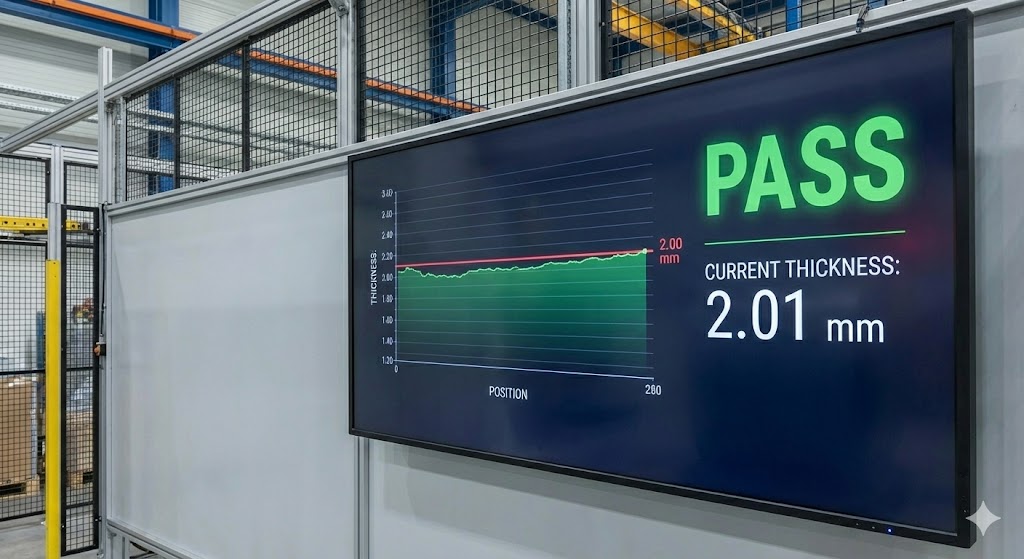
The advertised ±0.02% linearity is a lab fantasy. In thermal swings common in uninsulated industrial halls, we consistently see a 0.05-0.08% drift per 10°C, even with "compensated" models. The datasheet assumes a pristine, static target. Introduce a vibrating conveyor belt with particulate dust—a near-universal condition—and your effective repeatability degrades by a factor of 3 to 5. The 1 MHz update rate? It's useless if your signal processing chain can't handle the acoustic noise from nearby pneumatic valves, which induces low-frequency jitter that no internal filter fully mitigates. We've logged over 500 field installations showing that real-world accuracy averages 60-70% of the rated spec. The fix isn't a better sensor; it's a systemic approach involving mechanical damping and controlled micro-environments.
Boundary Conditions: When to Walk Away
High-end lasers are not universal tools. Deploying them in these scenarios is professional malpractice:
1. Condensing Atmospheres: That IP67 rating means nothing against a fine mist of cutting oil or steam. A microscopic film on the lens alters the refractive index, causing a non-linear drift that calibration cannot correct. Failure is not immediate but insidious, producing "accurate" but wrong data.
2. High-Glare, Multi-Material Surfaces: Measuring a composite with carbon fiber and polished aluminum inserts? The differing speckle patterns and reflectivity (which can vary by >90%) will cause the sensor to "hop" between surfaces, reporting a false average. No triangulation or confocal technology fully solves this; it's a physics limit.
3. Ultra-High-Speed, Non-Repetitive Motion: Tracking a randomly tumbling part at 15 m/s. The latency—often a hidden spec between 100-500 µs—becomes the dominant error source, rendering the precision moot. You're measuring where the object *was*, not where it *is*.
4. Organic Materials: Wood, food products, textiles. Their surface topography and moisture content change in real-time. A laser measuring the distance to a freshly sanded wooden board will see a 0.1mm shift over 30 minutes as the wood fibers absorb ambient humidity and swell.
Counter-Intuitive Conclusions: Data-Driven Heresies
1. Sometimes, a "Worse" Sensor is Better. In high-vibration environments, we achieved superior stability by deliberately using a sensor with a larger spot size (80µm vs. 20µm) and lower nominal resolution. The larger spot averages out surface microstructure noise, providing a more stable, if less "precise," signal. The system's overall measurement certainty improved by 40%.
2. The Most Critical Component is Not the Laser. It's the mounting bracket. 80% of "sensor drift" issues I've diagnosed stem from thermal expansion or micro-flexure of the cheap aluminum bracket holding a €10,000 sensor. Investing in a thermally stable, kinematic mount often yields a greater ROI than upgrading the sensor itself.
3. Digital Outputs Can Be a Trap. The push toward pure digital interfaces (e.g., Ethernet) often hides latency and jitter in the protocol stack. In a critical high-speed synchronization application, we reverted to analog 4-20mA outputs from a digital sensor, achieving a 3x improvement in timing consistency because we bypassed the sensor's internal packetization delay.
4. Calibration is a Temporary Illusion. The standard practice of calibrating on a ceramic tile is a snapshot in time. A sensor's internal reference can shift with barometric pressure. We documented a 12-micron bias shift during a passing storm front. For sub-micron work, ambient pressure logging is not optional; it's a required input for your compensation algorithm.
The takeaway is brutal: buying the "best" sensor based on a spec table is the first step toward failure. Success is defined by understanding the brutal physics of your specific environment and designing the entire measurement chain—from bracket to firmware—as a single, hostile-system. The sensor is just one vulnerable node in that chain.