Forget the pristine lab curves and idealized spec sheets. After two decades of deploying proximity sensors in mining, heavy manufacturing, and chemical processing, I can tell you the real performance data is written in the grime, vibration, and electromagnetic chaos of the field. The true cost of a sensor isn't on the invoice; it's in the unplanned downtime it causes when theory meets reality. Let's cut to the chase.
Experience Correction: Where Theory Fails
The advertised sensing range is the first casualty. A sensor rated for 15mm in a clean, static, 25°C environment might deliver only 60-70% of that in practice. The culprit is rarely the sensor itself but the target material and surface contamination. Manufacturers calibrate using mild steel (Fe360). Switch to austenitic stainless steel (e.g., 304, 316), and your effective range drops by 30-40% due to lower permeability. A layer of dust, grease, or conductive swarf (common in machining) can attenuate the field by another 15-20%. Temperature is another silent killer. While specs list an operating range of -25°C to 70°C, the thermal drift of the oscillator circuit near the extremes can cause a 5% shift in switching point. In a high-precision assembly application, that 5% is a catastrophic miss. The solution isn't a "better" sensor but a systemic derating: never design a system to use more than 60% of the nominal range in critical applications.
Boundary Conditions: When to Walk Away
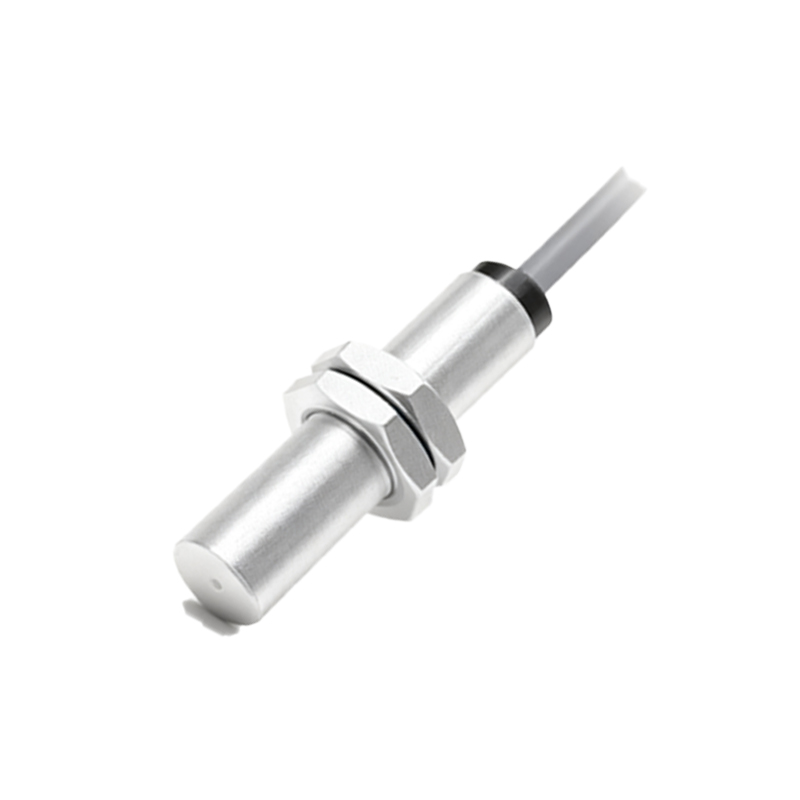
Inductive proximity sensors are not universal tools. Their failure modes are predictable and severe.
1. Ferrous Slurries and Powders: In coal handling or iron ore processing, airborne conductive dust will slowly accumulate on the sensor face, forming a conductive "beard." This mass becomes part of the sensing field, causing the sensor to latch ON permanently. Ultrasonic or capacitive technologies are mandatory here, despite their other trade-offs.
2. Extreme Pulsed EMI Environments: Near large VFD-driven motors (especially older generations), welding stations, or plasma cutters, the pulsed electromagnetic interference can induce phantom signals in the sensor's coil and amplifier circuit. The result is erratic, non-repeatable switching. The standard "shielded" (flush-mountable) housing offers no protection against this. The only mitigation is physical distance (often impractical) or switching to a fully analog current-output sensor and filtering the signal in the PLC, adding cost and latency.
3. High-Speed Non-Ferrous Targets: Detecting aluminum cans or copper contacts at speeds above 1kHz? Forget standard AC/DC models. The eddy currents generated in non-ferrous metals are weaker, requiring a higher-frequency oscillator. Standard sensors struggle with signal-to-noise ratio, leading to jitter. You need a purpose-built "non-ferrous" or "all-metal" sensor with a specialized oscillator frequency, and even then, expect a 50% range reduction compared to steel.
Counter-Intuitive Conclusion: Sometimes a "Worse" Sensor is Better
The industry pushes for higher switching frequencies and smaller housings. Here’s the heresy: for ultimate reliability in harsh, dirty environments, seek out an older-technology, low-frequency (sub-100Hz), larger-housing sensor. Why? Resilience. A larger ferrite core in a bigger housing generates a stronger, deeper electromagnetic field that is less susceptible to minor positional misalignment and the dampening effect of surface contaminants. The lower-frequency oscillator is inherently less sensitive to interference from RF noise and conductive dust accumulation. I’ve seen M18 sensors from the 1990s outlast modern M8 "high-performance" models in a vibrating conveyor application because their robust field punched through a layer of iron oxide dust that completely blinded the newer, more sensitive unit. Don't be seduced by specs. In reliability-critical applications, brute-force signal strength and circuit simplicity often beat elegant, high-frequency sensitivity. Your goal isn't maximum detection range; it's unwavering, repeatable detection at the required distance, year after year. Choose the tool that gives you the widest operational margin, not the prettiest datasheet.