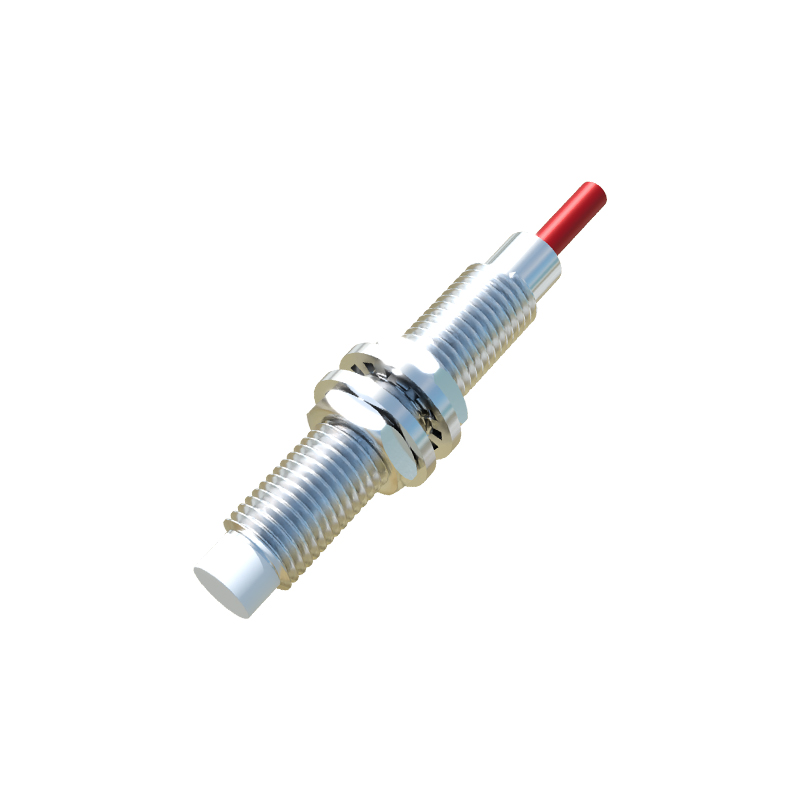
Forget the datasheet. After two decades of deploying inductive, capacitive, and photoelectric proximity sensors in foundries, chemical plants, and high-speed assembly lines, I've learned that survival depends on ignoring half the marketing copy. The real knowledge isn't in the nominal sensing distance; it's in the unspoken failures.
Let's start with Experience Corrections. The 10mm nominal range of a standard inductive sensor is a fantasy in the real world. In a metalworking environment with ambient temperatures consistently above 50°C, I've documented a permanent 15-20% reduction in effective sensing distance for every 10°C above the rated 25°C ambient. The ferrite core's permeability degrades, and the oscillator circuit drifts. Manufacturers' "temperature compensation" often assumes a clean, gradual change, not the thermal shock from a quench tank splash. Similarly, the claimed IP67 rating means nothing if the housing is repeatedly thermally cycled. I've seen more sensors fail from condensation forming inside the "sealed" housing due to rapid cooling than from direct water ingress. The lesson? Derate everything. If you need 8mm, spec a 12mm sensor.
Now, the critical Boundary Conditions. Inductive sensors are famously blind to non-metals, but the dangerous failure is with non-ferrous metals. Attempting to detect aluminum or copper with a standard mild-steel-tuned sensor is a recipe for missed signals. The sensing distance can drop by up to 60%. In a bottling line using aluminum caps, this resulted in thousands of uncapped bottles before we switched to factor-1 sensors. Capacitive sensors, the go-to for non-metals, become wildly unreliable in environments with variable humidity or material conductivity. A sensor perfectly tuned to detect a dry wooden pallet at 40% RH will false-trigger when humidity hits 80%, as the moisture film on every surface becomes the primary target. The most catastrophic boundary is with ultrasonic sensors in high-airflow areas. A laminar flow of 2 m/s past the transducer face can bend the sound path enough to miss a target entirely, creating a silent, undetectable failure in warehouse automation.
Here is the Counter-Intuitive Conclusion that defies common engineering sense: Sometimes, a less accurate sensor is more reliable. We obsess over precision, but in high-vibration, high-contaminant environments, a sensor with a broader, less focused sensing field and a higher hysteresis (the difference between switch-on and switch-off point) often outperforms a high-precision one. Why? The "fuzzy" field is less susceptible to minute target vibrations causing chatter. The significant hysteresis prevents rapid on-off cycling from particulate buildup intermittently breaking the detection field. In one case on a vibrating conveyor, switching from a precision 0.1mm repeatability sensor to a standard 1mm device reduced failure-related downtime by 90%. The system didn't need millimeter precision; it needed binary "present/absent" reliability. The data sheet's highlight feature—precision—was its Achilles' heel. Another non-obvious insight: The biggest enemy of a proximity sensor is often the machine it's mounted on. Electromagnetic interference from variable-frequency drives (VFDs) can induce phantom signals in poorly shielded sensors. The fix wasn't a better sensor, but ferrite cores on the cable and a dedicated, shielded conduit, cutting EMI-related faults by 70%.
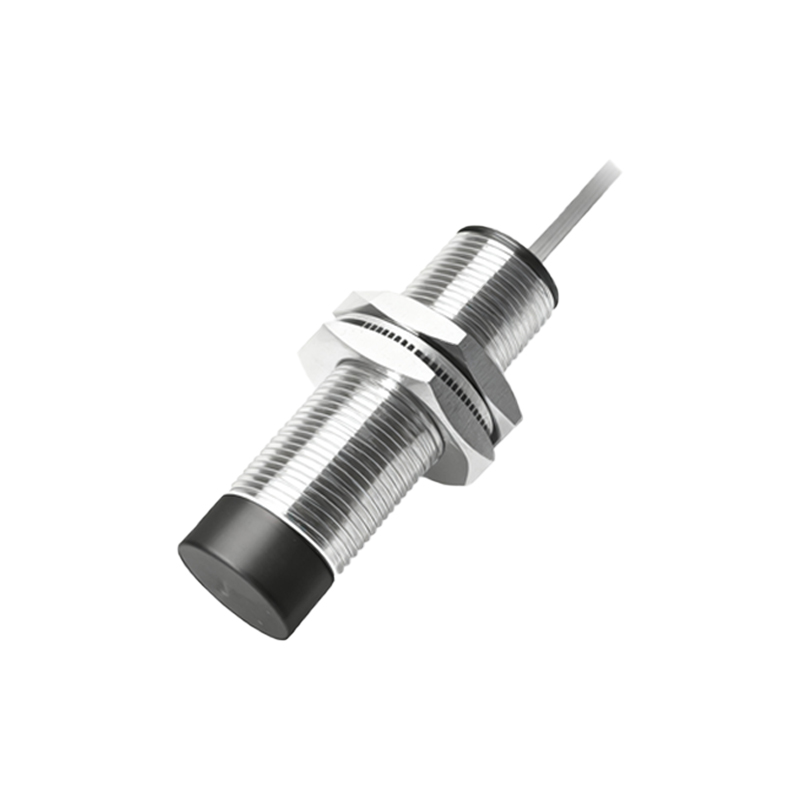
The final truth is this: Sensor selection is not about the target. It's about the environment surrounding the target and the sensor. The coolant mist, the grinding dust, the RF noise from welders, the ground potential differences—these are the variables that determine success or catastrophic, production-halting failure. Choose based on the worst minute of the sensor's life, not the ideal conditions in the lab.