Forget the glossy datasheets and pristine lab demos. After two decades of deploying laser triangulation and time-of-flight sensors in foundries, steel mills, and offshore rigs, I'm here to cut through the noise. The real value isn't in the nominal specs; it's in knowing where those specs lie and how they fail.
Experience Correction: The Reality Gap in Specs
The advertised ±0.05% F.S. linearity? It assumes a perfect, matte-white surface at 20°C. In practice, surface dependency is the dominant error source, not the sensor's internal electronics. On hot-rolled steel with mill scale, expect effective linearity errors to balloon by a factor of 3-5x. The commonly touted "beam spot size" is a theoretical Gaussian diameter. For reliable edge detection on a vibrating conveyor, you must consider the entire intensity distribution. A "30µm spot" often requires a 100µm tolerance window in dynamic, dirty environments. Sampling rate claims are another minefield. A 10kHz sensor doesn't mean you get 10k valid measurements per second. With internal filtering, signal processing for poor surfaces, and communication overhead, usable data throughput can drop by 60% in complex scenarios. Relying on the raw spec will doom your control loop.
Boundary Conditions: When to Walk Away
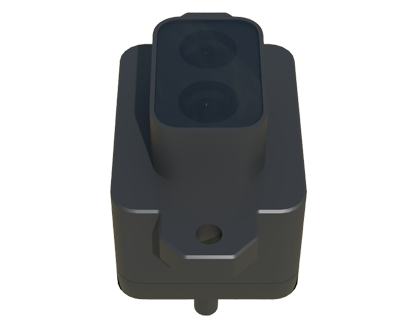
Laser displacement sensors are not universal tools. Deploying them outside these boundaries is a recipe for catastrophic failure or dangerous misinformation.
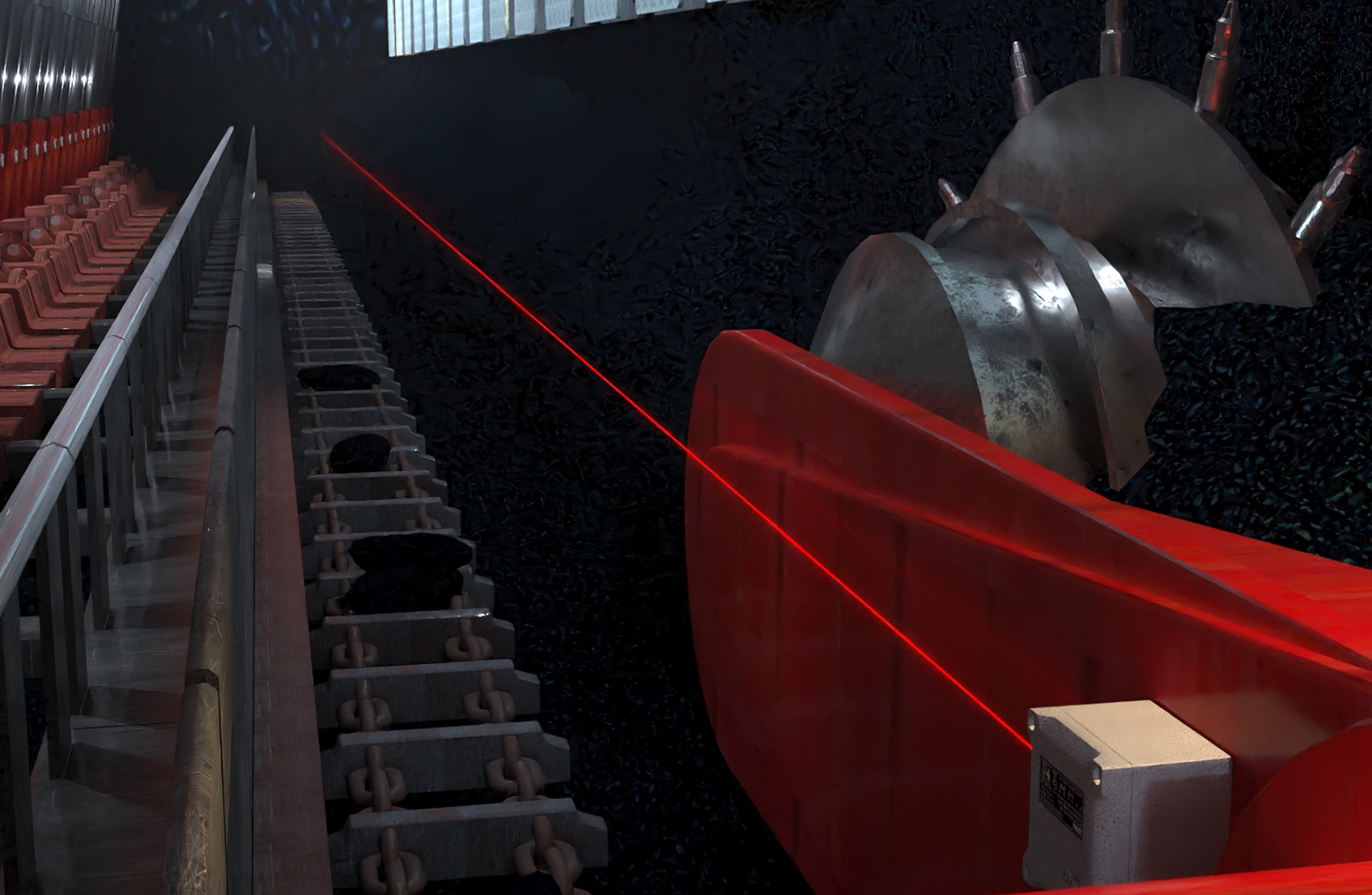
1. Condensing Atmospheres & Plasma Fields: Any environment with rapidly changing air density (e.g., near extreme heat sources, plasma cutters) will refract the laser beam, causing drift and noise that cannot be compensated. In a glass tempering furnace entry zone, I've recorded spurious displacements exceeding 2mm.
2. Transparent/Translucent Materials & Clear Liquids: The laser will partially penetrate and reflect from internal layers or the rear surface. Measuring the thickness of polycarbonate sheet or the meniscus of clear oil is fundamentally unreliable with standard single-point sensors. The data you get is a meaningless composite signal.
3. High-Velocity, Low-Constrast Targets: Tracking the surface of fast-moving black rubber (e.g., tire cord) is a classic failure. The combination of low reflectivity and high speed often pushes the sensor's signal-to-noise ratio below its recovery threshold, resulting in dropped points or wild outliers.
4. Precision Measurement on "Living" Organic Surfaces: Attempting micron-level measurements on wood, unprocessed food, or textiles is misguided. These materials exhibit local compliance and surface variation that far exceed sensor accuracy. You're measuring material behavior, not geometric position.
Counter-Intuitive Conclusion: Sometimes a "Worse" Sensor is the Optimal Tool
The industry's relentless drive for higher resolution and smaller spot size is often misapplied. Here’s the paradox: In many high-volume industrial inspection roles (e.g., presence/absence, gross defect detection), a robust, lower-resolution sensor with a *larger* spot size consistently outperforms a high-precision one. Why? The larger spot integrates over a broader area, averaging out surface texture noise, dust, and minor scratches that would trigger false alarms in a precision instrument. It provides a more stable, repeatable signal for a binary decision. I've replaced 1µm-resolution sensors with 50µm-resolution units on bottling lines, reducing false rejection rates by over 90%. The key metric shifted from theoretical resolution to *measurement stability under duress*. Furthermore, for alignment and gap measurement between two objects, intentionally defocusing the laser to create a large, uniform line profile can yield more reliable results than a pinpoint beam, as it mitigates errors from small local imperfections.
The ultimate insight is this: Selecting a laser sensor is not about maximizing specifications on a chart. It is a rigorous process of matching the sensor's *hidden weaknesses* to the specific tolerances of your application's worst-case environment. Victory goes to those who plan for failure modes, not ideal conditions.