In the rapidly evolving landscape of industrial automation and smart device design, space is a premium commodity. Engineers and designers are constantly challenged to integrate more functionality into smaller footprints. This is where the short type proximity sensor emerges as a critical component, offering reliable non-contact detection in an exceptionally compact form factor. Unlike their standard counterparts, these sensors are engineered with a minimized housing length, making them the ideal choice for applications where mounting depth is severely restricted.
The fundamental operating principle remains consistent with standard inductive or capacitive proximity sensors. Inductive short type sensors generate an electromagnetic field to detect the presence of metallic objects, while capacitive variants can sense both metallic and non-metallic materials, including liquids and plastics. The key differentiator is their physical design. By optimizing internal circuitry and component layout, manufacturers have successfully reduced the sensor's length, often by 30% to 50%, without sacrificing core performance metrics such as sensing range, switching frequency, or environmental robustness. This miniaturization is achieved through advanced surface-mount technology (SMT) and innovative coil designs.
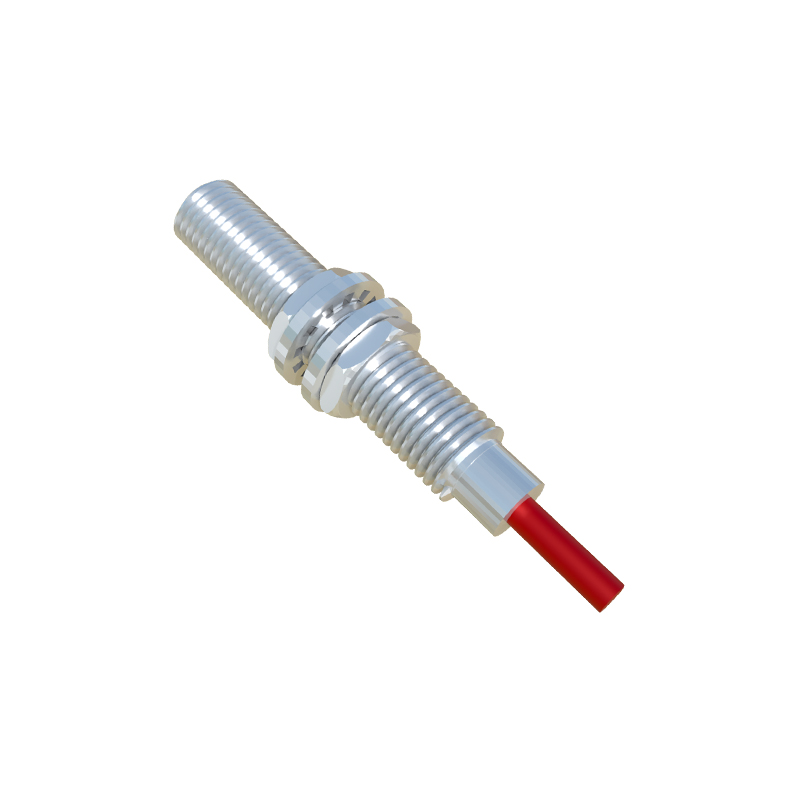
The applications for short body proximity sensors are vast and growing. In the automotive industry, they are indispensable within tight engine compartments, transmission systems, and in robotic welding arms where space between components is minimal. Semiconductor manufacturing equipment, known for its ultra-high density of components, relies heavily on these slim sensors for precise wafer handling and positioning. Furthermore, the rise of collaborative robots (cobots) demands compact, lightweight sensors that can be integrated into the robot's joints or grippers without hindering movement or safety. In packaging machinery, they enable detection in areas where standard sensors would physically interfere with the product flow or other mechanisms.
Selecting the right short type proximity sensor requires careful consideration of several parameters beyond just the dimensions. The rated sensing distance, often specified for a standard target, is crucial. It's important to note that the reduced size might influence the field shape and effective range compared to a longer sensor. The housing material, typically nickel-plated brass or stainless steel, must be chosen based on the environmental conditions, including exposure to coolants, oils, or washdowns. Electrical specifications such as operating voltage (commonly 10-30V DC), output type (PNP/NPN, NO/NC), and current rating are equally vital for seamless integration into the control system. Many models also feature built-in protection against short-circuits, overload, and reverse polarity, enhancing system reliability.
Installation of these sensors demands precision. Their compact nature means there is little room for error in mounting alignment. Utilizing precise brackets and ensuring the correct sensing face orientation relative to the target is paramount. Designers must also account for the reduced space for cable connections; many short type sensors feature built-in, fixed cables or compact M8/M12 connectors to save space. A critical best practice is to maintain the recommended lateral and axial distance between multiple sensors to prevent mutual interference of their electromagnetic fields, which can cause erratic switching.
The future trajectory of short type proximity sensors points toward even greater integration and intelligence. We are seeing the incorporation of IO-Link communication, which transforms a simple sensor into a smart device capable of reporting diagnostic data, parameter changes, and process values. This facilitates predictive maintenance and finer process control. Additionally, advancements in materials and manufacturing are pushing the limits of temperature resistance and resistance to physical shock, expanding their usability in harsher environments.
In conclusion, the short type proximity sensor is not merely a smaller version of a standard sensor. It represents a specialized engineering solution tailored for the dense, complex machinery of modern industry. By delivering uncompromised detection performance in a minimized package, these sensors empower designers to break through spatial constraints, enabling more innovative, efficient, and compact automated systems. Their continued evolution will be intrinsically linked to the ongoing trend of miniaturization across all technological fields.